A clean-looking SUV can still carry a salvage brand, a mileage discrepancy, or a prior theft record that changes the deal completely. That is where the vehicle score vs history report question matters: one gives you a fast risk signal, while the other shows the records behind it. Smart buyers, dealers, and fleet teams use both.
A score helps you decide where to focus. A history report helps you verify why. Treat either one as the whole answer, and you risk missing the vehicle's real story.
What a vehicle score tells you
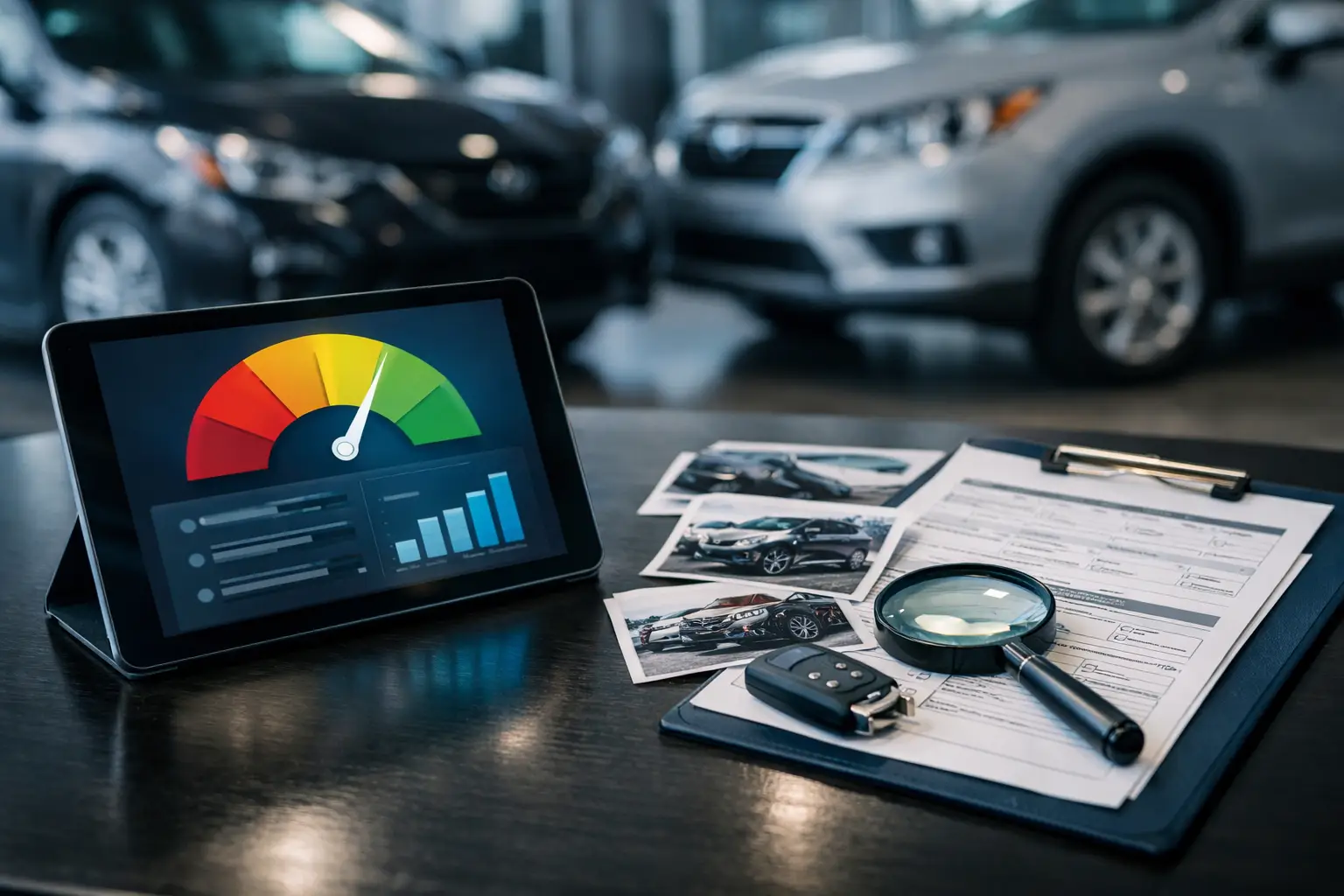
A vehicle score is a simplified assessment of a vehicle's risk profile. It takes multiple history factors and converts them into a single, easy-to-read number, commonly on a 0-100 scale. Higher scores generally indicate fewer or less serious recorded risk indicators. Lower scores signal that the vehicle deserves closer review before you make an offer, list it for sale, or add it to a fleet.
The value is speed. If you are comparing eight similar trucks at an auction, reviewing a dealer trade-in list, or narrowing online listings after work, you do not have time to interpret every record from scratch. A score gives you a consistent starting point across every VIN.
That does not mean a score can predict whether a vehicle will be mechanically perfect. It cannot inspect brake wear, confirm the quality of a collision repair, or reveal a problem that was never reported. It is a risk-based decision signal based on available vehicle data, not a substitute for a pre-purchase inspection.
The best scoring models weigh factors differently because not every event carries the same risk. A minor cosmetic damage entry is not equivalent to a salvage title. An older accident with complete repair documentation may be less concerning than a recent odometer inconsistency. The purpose is not to punish a vehicle for having a past. It is to make that past visible and easier to evaluate.
What a vehicle history report tells you
A vehicle history report is the evidence layer. It presents the individual records associated with a VIN, such as title status and brands, reported accidents or damage, theft and recovery events, ownership history, odometer readings, open recalls, specifications, safety information, and market valuation data.
This detail matters because the same score can mean different things for different vehicles. Two cars may each receive a midrange score, but one could have a single minor damage event while the other has a rebuilt title and multiple ownership changes in a short period. The number gets your attention. The report tells you whether the risk is acceptable for the price and intended use.
For a retail buyer, the report can expose a listing that is priced like a clean-title vehicle but carries a title brand. For a dealer, it can prevent an acquisition that will be difficult to finance, insure, retail, or explain to a customer. For a fleet manager, it can reveal recall exposure, mileage anomalies, and ownership patterns that affect operating risk.
A history report also gives context for legitimate questions to ask the seller. If the record shows damage, ask for repair invoices and photographs. If the title changed states repeatedly, ask why. If odometer readings do not progress logically, pause the transaction until the discrepancy is resolved.
Vehicle score vs history report: the practical difference
The simplest distinction is this: a vehicle score answers, “How much attention does this VIN need?” A history report answers, “What happened, and what does it mean for this deal?”
A score is especially useful at the top of the funnel. It lets you sort a long list by risk before spending time on vehicles that do not meet your threshold. This is valuable for auction buyers and inventory managers processing dozens of vehicles, but it also helps individual shoppers avoid emotional decisions based on photos, trim level, or a seller's claims.
The history report takes over once a vehicle makes the shortlist. At that stage, you need records, dates, title details, mileage entries, and recall status. You also need to compare those findings against the asking price, the vehicle's condition, and the seller's disclosures.
Neither tool should replace the other. A report without a score can force you to manually judge the relative risk of every vehicle. A score without report detail can create false confidence or unnecessary concern. The most efficient workflow starts with the score and ends with evidence.
When the score should change your next move
A high score is a reason to continue evaluating a vehicle, not a reason to skip verification. Review the report, inspect the vehicle, test-drive it, and confirm that the VIN on the vehicle matches the VIN in the listing and records. If the price is unusually low, ask why. A good history profile does not protect you from a current mechanical issue or a misleading seller.
A middle-range score calls for context. This is where a history report can separate a manageable issue from a deal breaker. A vehicle with one older, properly repaired damage event may still be a sensible purchase if the price reflects it. A vehicle with an unusual ownership sequence, unresolved recall, or inconsistent odometer history deserves more caution.
A low score does not automatically mean “walk away,” either. It means the burden of proof is higher. A rebuilt vehicle may be appropriate for a buyer who understands the repair history, has it independently inspected, can insure and finance it, and receives a meaningful discount. It may be a poor fit for a first-time buyer who needs predictable resale value and low transaction risk.
The score should guide your effort. The report should guide your decision.
How to use both before you buy or acquire inventory
Start by running the VIN before you negotiate. Do not rely on a plate lookup, a seller-provided screenshot, or a verbal assurance that the vehicle has a clean history. The VIN is the identifier that connects the vehicle to its recorded past.
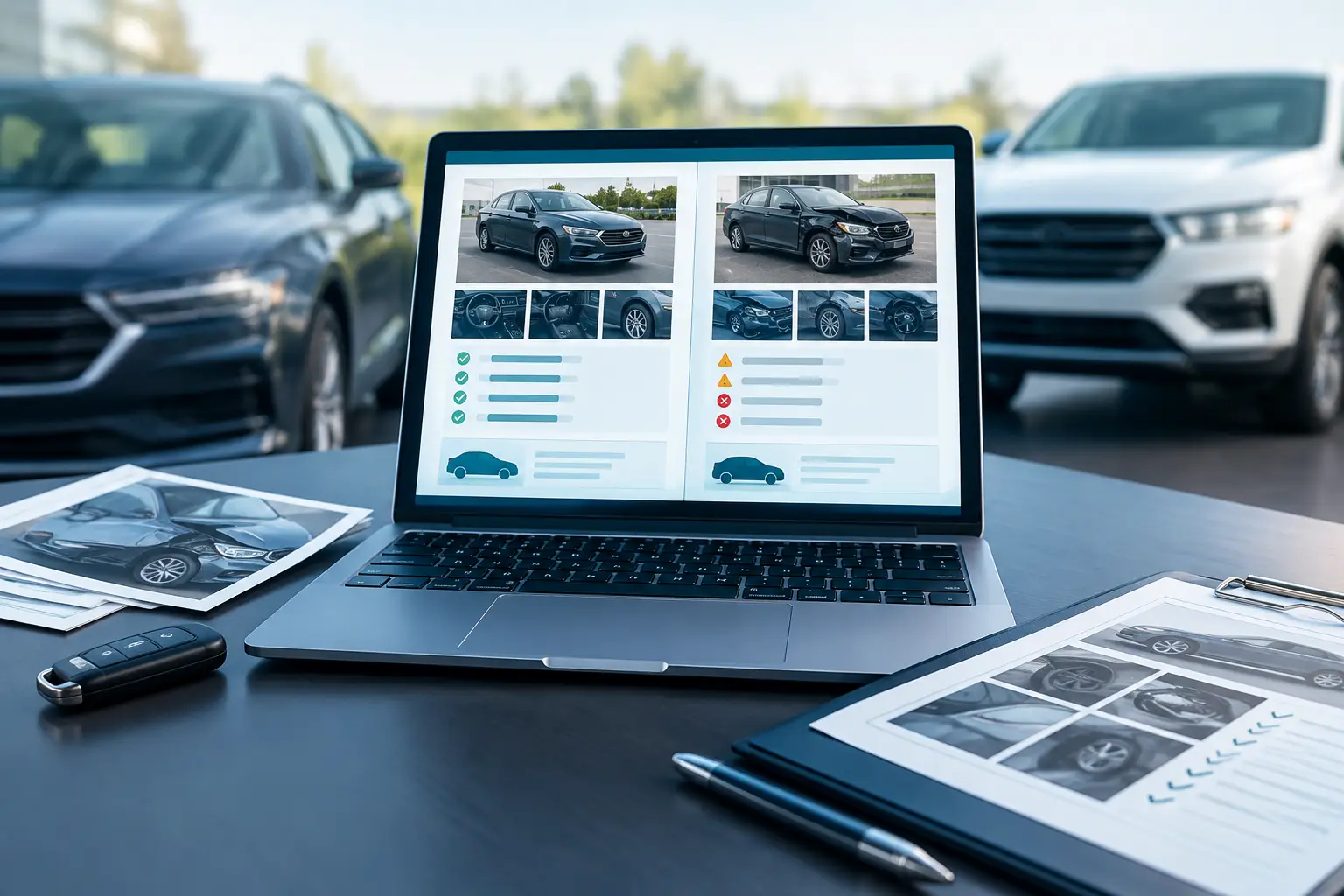
Next, compare similar vehicles side by side. This is where scoring becomes more valuable than reviewing isolated reports. A slightly cheaper vehicle may stop looking like a bargain when its score and title history are compared with a clean alternative. Conversely, a vehicle with a disclosed minor incident may be priced fairly and offer better value than a higher-priced competitor.
Then review the records that have the greatest effect on ownership and resale: title brands, accident or damage entries, theft history, odometer consistency, recall status, and ownership timeline. Match those records to what the seller disclosed. A seller who is transparent about an old repair is different from one who dismisses or conceals a material issue.
Finally, validate what data cannot prove. Arrange an independent inspection, check service documentation, inspect paint and panel gaps, test every major system, and confirm applicable title and registration requirements in your state. Vehicle intelligence reduces uncertainty. It does not eliminate the need to inspect the actual vehicle.
Common mistakes that create expensive surprises
The first mistake is treating “no reported accidents” as proof that no accident occurred. Records depend on what was reported and available through source channels. Some repairs are paid out of pocket, some damage is never documented, and timing can affect what appears in a report. Use the report as verified evidence, while still looking for physical signs of prior repair.
The second is focusing only on title status. A clean title is meaningful, but it is not the only factor. Odometer issues, theft records, repeated short-term ownership, open recalls, and substantial damage history can all affect value and risk without changing the title to salvage.
The third is overlooking price. A history issue is not always disqualifying, but it should be reflected in the transaction. If the market value does not account for the vehicle's documented history, the buyer is absorbing risk without receiving value in return.
The fourth is reviewing one vehicle at a time with no consistent standard. That approach favors the best-looking listing, not necessarily the best acquisition. A centralized comparison workflow, such as the one offered by DriveEvidence, makes it easier to save VINs, sort by score, review records, and export findings without losing the thread between multiple candidates.
Build a decision process, not a guess
The right vehicle is rarely the one with the shortest report or the highest score alone. It is the vehicle whose documented history, condition, price, and intended use all make sense together.
Use the score to identify where risk is concentrated. Use the history report to examine the proof. Then let an inspection and a clear price threshold make the final call. That process turns a VIN from a sales claim into evidence you can act on.