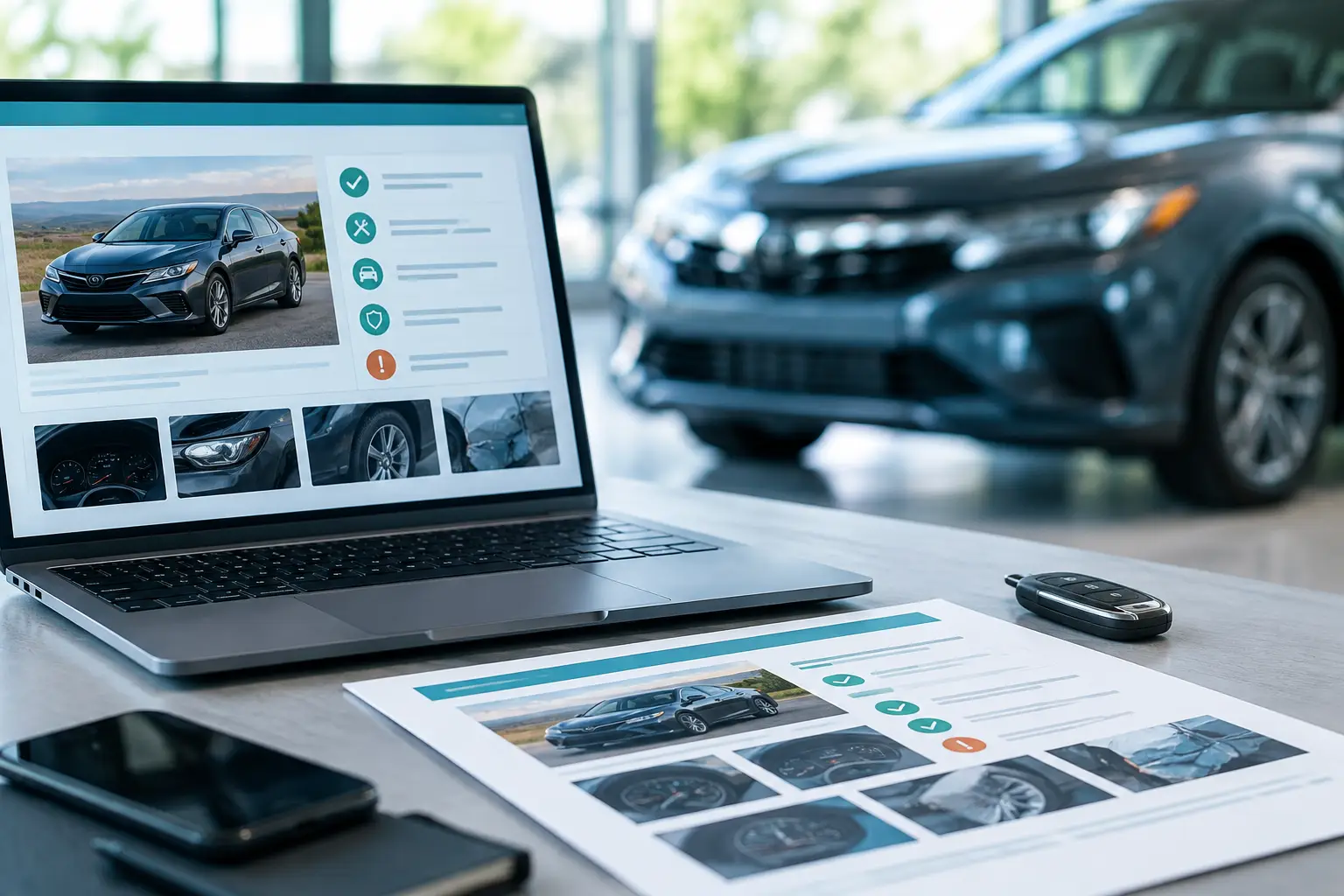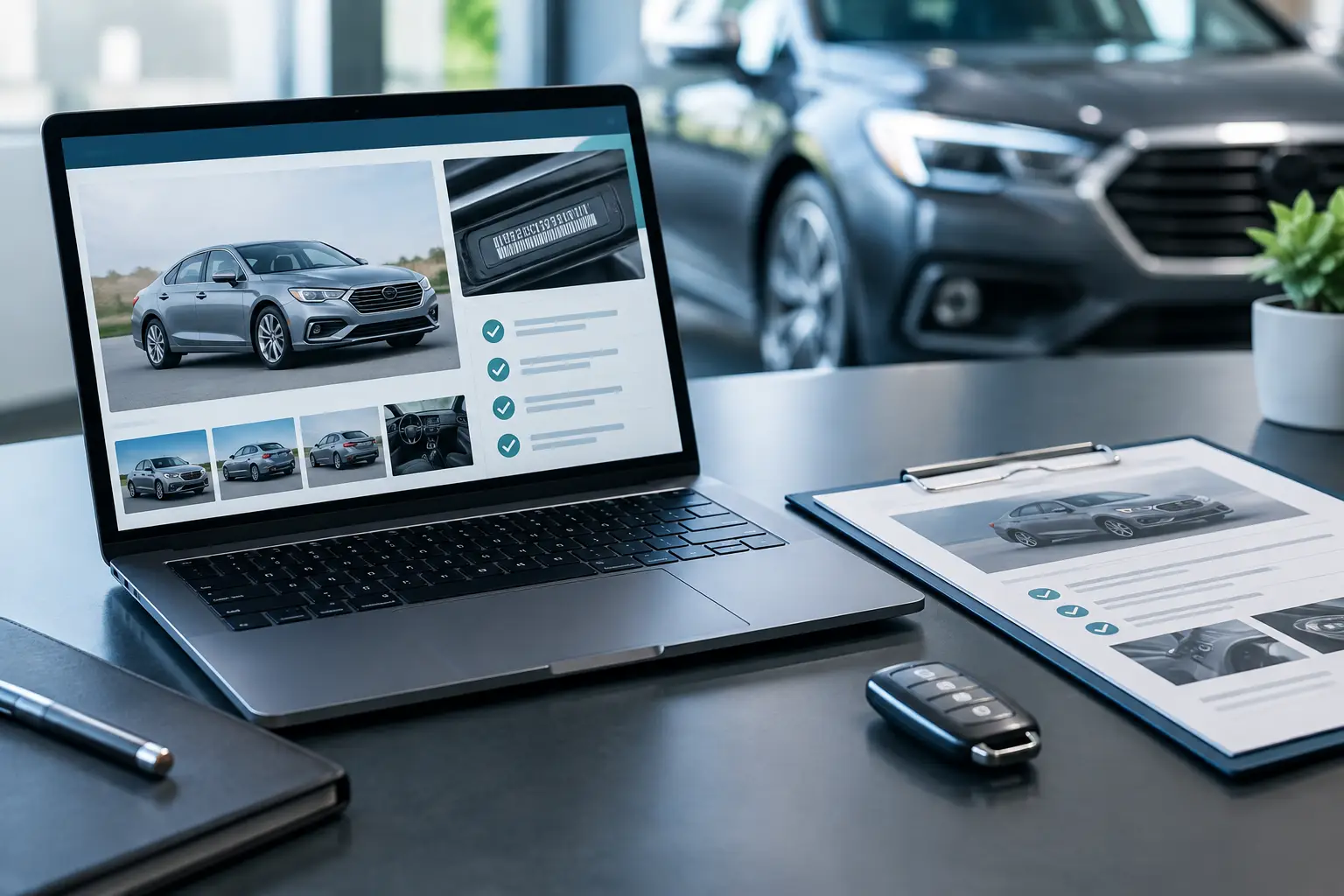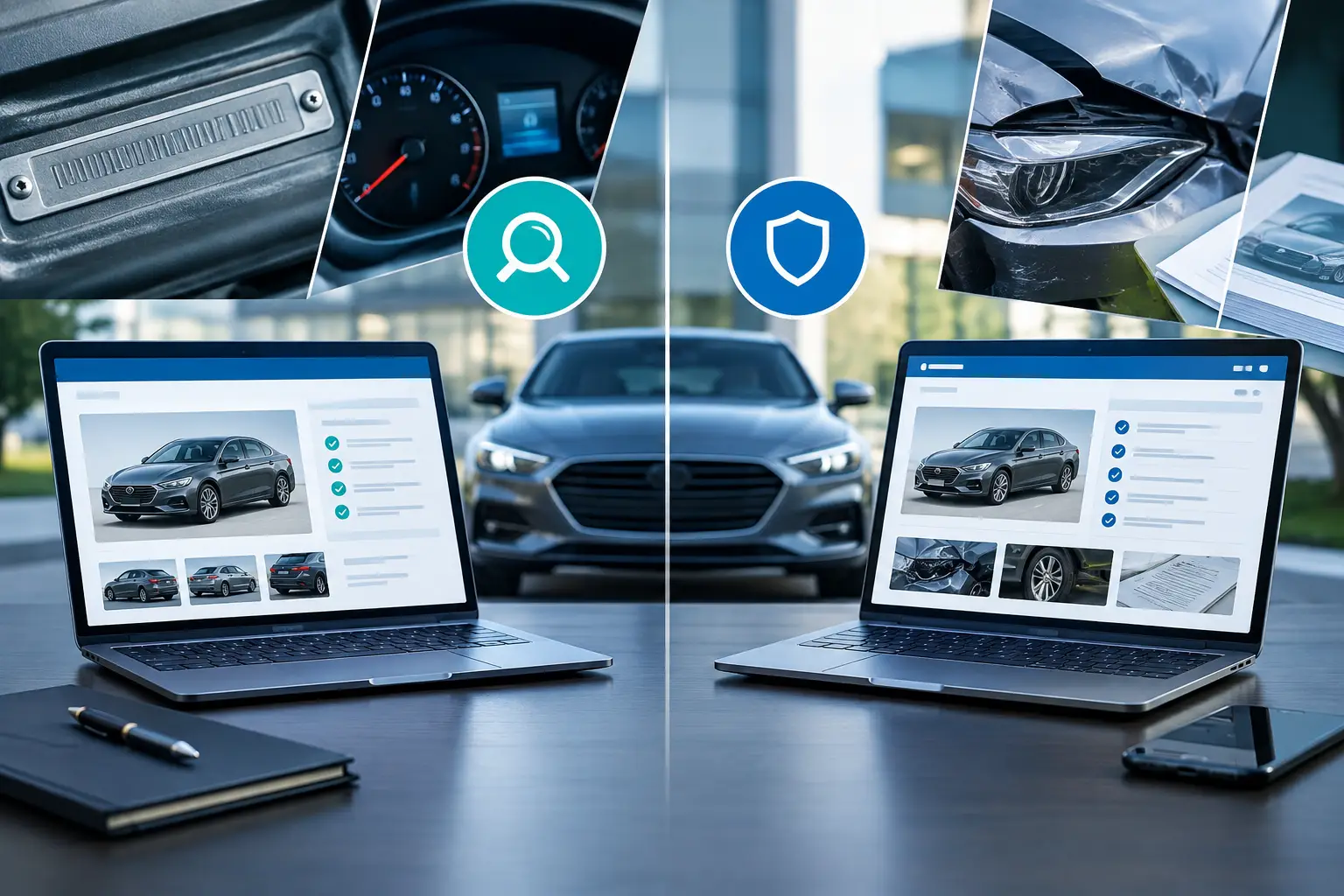
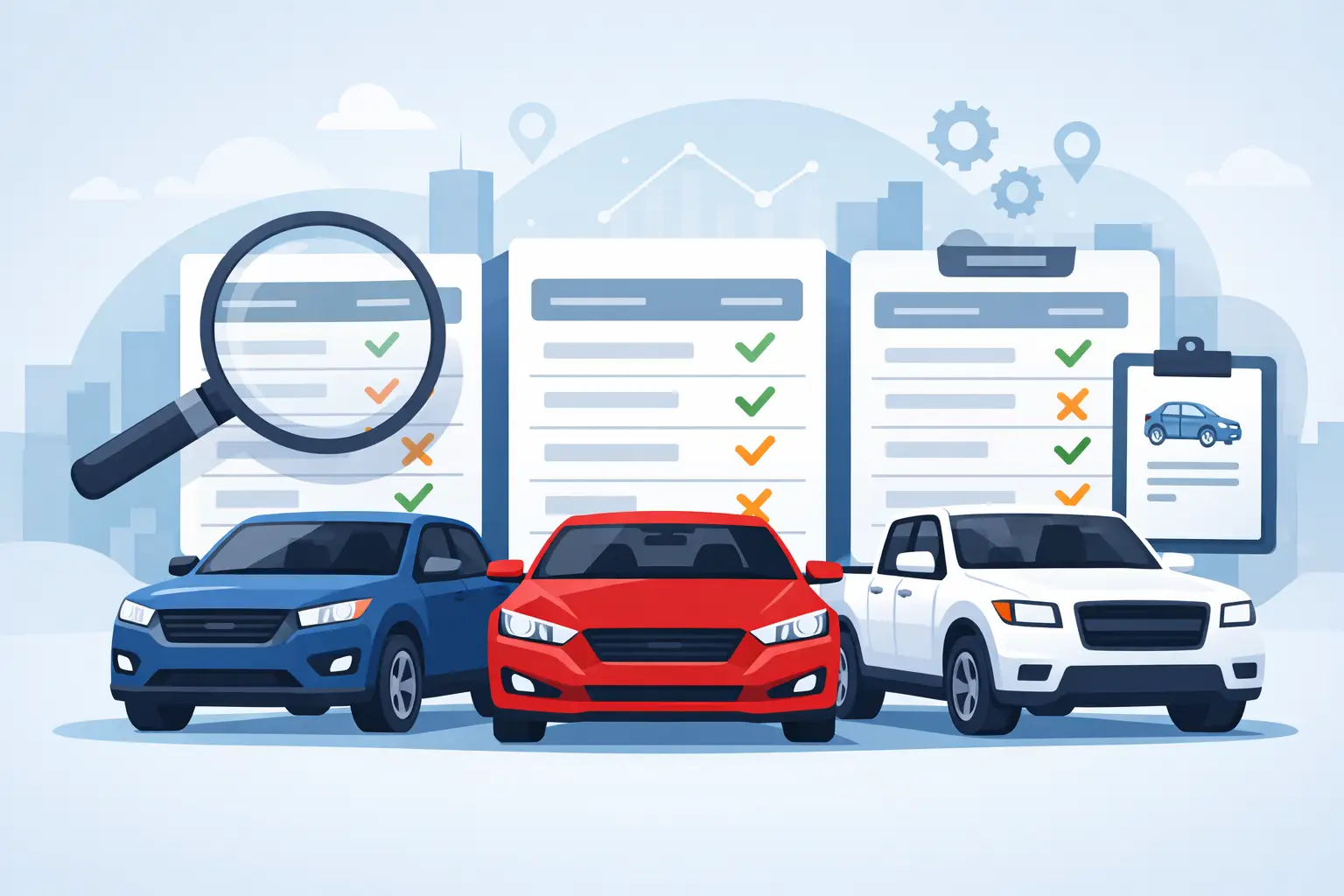
A clean listing can fall apart the moment you put it next to two better vehicles. That is why serious buyers, dealers, and fleet teams compare multiple VINs side by side instead of judging each car in isolation. A single report can tell you whether one vehicle has problems. A side-by-side view tells you which vehicle is the smarter bet.
That difference matters more than most shoppers realize. Two trucks with similar mileage, similar asking prices, and the same trim can carry very different risk. One may have a branded title, a prior theft recovery, and a valuation that does not match the seller's price. Another may have a cleaner ownership pattern, stronger market alignment, and fewer unresolved concerns. Looking at them one by one makes those gaps easy to miss.
Why compare multiple VINs side by side at all?
Vehicle decisions are rarely made from one option. Most buyers are choosing between three to five candidates. Dealers may be sorting through dozens from trade-ins, auctions, or wholesale channels. Fleet managers may be screening entire groups for acquisition or replacement. In all of those cases, speed matters, but speed without structure creates mistakes.
Comparing VINs side by side gives you structure. Instead of flipping between disconnected reports, screenshots, and browser tabs, you can evaluate the factors that actually change risk and value in one view. That usually includes title status, accident history, theft records, ownership count, odometer consistency, open recalls, specifications, and pricing signals.
The real advantage is context. A minor damage event might not be a deal breaker until you see that a competing vehicle at the same price has no damage history at all. A high ownership count might seem acceptable until it sits next to a vehicle with a cleaner chain of custody and better value retention. Side-by-side comparison turns raw history into a decision.
What a useful VIN comparison should actually show
Not every comparison is worth your time. If the tool only lines up basic specs, you are still missing the proof behind the vehicle. To compare multiple VINs side by side in a way that protects your money, the view needs to include both vehicle identity and risk signals.
Start with the basics: year, make, model, trim, engine, drivetrain, and body style. These are the filters that make sure you are comparing true alternatives instead of loosely similar listings. After that, the important layer is history. Title brands, salvage records, prior accidents, theft and recovery events, ownership changes, and odometer readings should be visible without forcing you to open five separate pages.
Valuation also belongs in the same frame. History without price context only tells half the story. A vehicle with a minor issue may still be worth buying if the pricing reflects that risk. A supposedly clean vehicle may still be a bad purchase if it is overpriced relative to market and specification.
For many users, a scoring framework helps cut through noise. That is where a system like the DriveEvidence Score becomes practical. A clear 0-100 risk-based signal does not replace the underlying records, but it helps prioritize attention. If you are screening a batch of similar vehicles, score-based sorting can show you where to look first and which units deserve deeper review.
The biggest mistakes people make when comparing VINs
The first mistake is comparing listings instead of vehicles. Seller descriptions are marketing. VIN-based data is verification. If you rely on listing claims like "clean car" or "well maintained" without checking the record behind the VIN, you are comparing stories, not facts.
The second mistake is overvaluing mileage while undervaluing title history. Buyers often treat lower mileage as the deciding factor, even when another vehicle has a cleaner title and more stable ownership history. Lower mileage helps, but it does not erase prior damage, title brands, or odometer inconsistencies.
The third mistake is treating every negative record the same. Not all history events carry equal weight. A single minor damage report is different from structural damage. Two owners over eight years is different from five owners in three years. Open recalls also vary. Some are easy to remedy. Others may affect safety or resale timing. Good comparison means judging severity, not just counting incidents.
How buyers should compare multiple VINs side by side
For private buyers, the goal is simple: avoid overpaying for hidden risk. The fastest way to do that is to narrow your list to vehicles that truly match your budget and use case, then compare them on proof, not presentation.
Begin with fit. Make sure the vehicles are close enough in trim, age, mileage, and configuration that the comparison is fair. Then check title status first. A clean title versus a rebuilt or salvage brand changes the conversation immediately. After that, look at accident and damage records, theft history, and odometer verification. These are the categories most likely to expose major downside.
Next, bring in value. If two vehicles look similar but one has a weaker history, the price should reflect it. If it does not, move on. The cleanest purchase is not always the cheapest listed unit. It is often the one with the strongest record relative to its price.
Finally, use ownership history as a tie-breaker. A stable pattern can suggest consistency in use and care, while repeated turnover may raise questions. It is not a rule by itself, but in a close decision, it matters.
How dealers and fleets should use side-by-side VIN comparison
For professionals, this is less about curiosity and more about throughput. You are not just asking whether a vehicle is acceptable. You are deciding which units deserve capital, lot space, reconditioning effort, or customer-facing attention.
That changes the standard. Dealers need to screen faster without lowering discipline. Side-by-side VIN comparison helps identify which inventory candidates carry title issues, inconsistent odometer readings, weak value positioning, or record patterns that could slow retail sale. Instead of reviewing one report at a time, teams can sort and compare groups of vehicles in a dashboard built for volume.
Fleet managers have a different angle. They need to balance acquisition cost, service life, compliance, and downstream remarketing value. Comparing vehicles one by one slows the process and makes it harder to document why a certain unit was selected or rejected. A centralized comparison view supports cleaner decisions and stronger internal accountability.
This is where export and save functions become operational tools, not convenience features. If multiple people are involved in purchasing, approvals, or inventory planning, the ability to preserve and share a side-by-side analysis keeps everyone working from the same evidence.
What side-by-side comparison still cannot do
A strong VIN comparison can reveal a lot, but it is not the whole investigation. It will not tell you how the transmission shifts today, whether the tires are mismatched, or whether flood exposure left behind subtle corrosion that was never formally recorded. That is why the smartest workflow combines verified VIN data with inspection, test drive, and pricing discipline.
There is also an "it depends" factor with older vehicles, collector cars, and certain auction units. A branded title on a rare enthusiast vehicle may be acceptable if the price, repair quality, and buyer intent align. A fleet unit with heavy miles may still be a smart buy if the maintenance pattern and acquisition cost make sense. Side-by-side comparison improves judgment. It does not eliminate the need for judgment.
The best time to compare VINs is before you get attached
Once you have mentally chosen a vehicle, objectivity gets expensive. Buyers start rationalizing damage. Dealers start defending a bid. Fleet teams start forcing a unit to fit because the timeline is tight. That is when poor decisions slip through.
The smarter move is to compare early, while options are still open. Put the VINs next to each other before the deposit, before the auction close, before the negotiation hardens. Let the records compete. Let the pricing compete. Let the risk signals tell you which vehicle deserves your attention.
When the data is organized clearly, the decision gets easier. You stop chasing the best listing and start choosing the best vehicle. Know the truth before you buy, and let the proof narrow the field for you.