
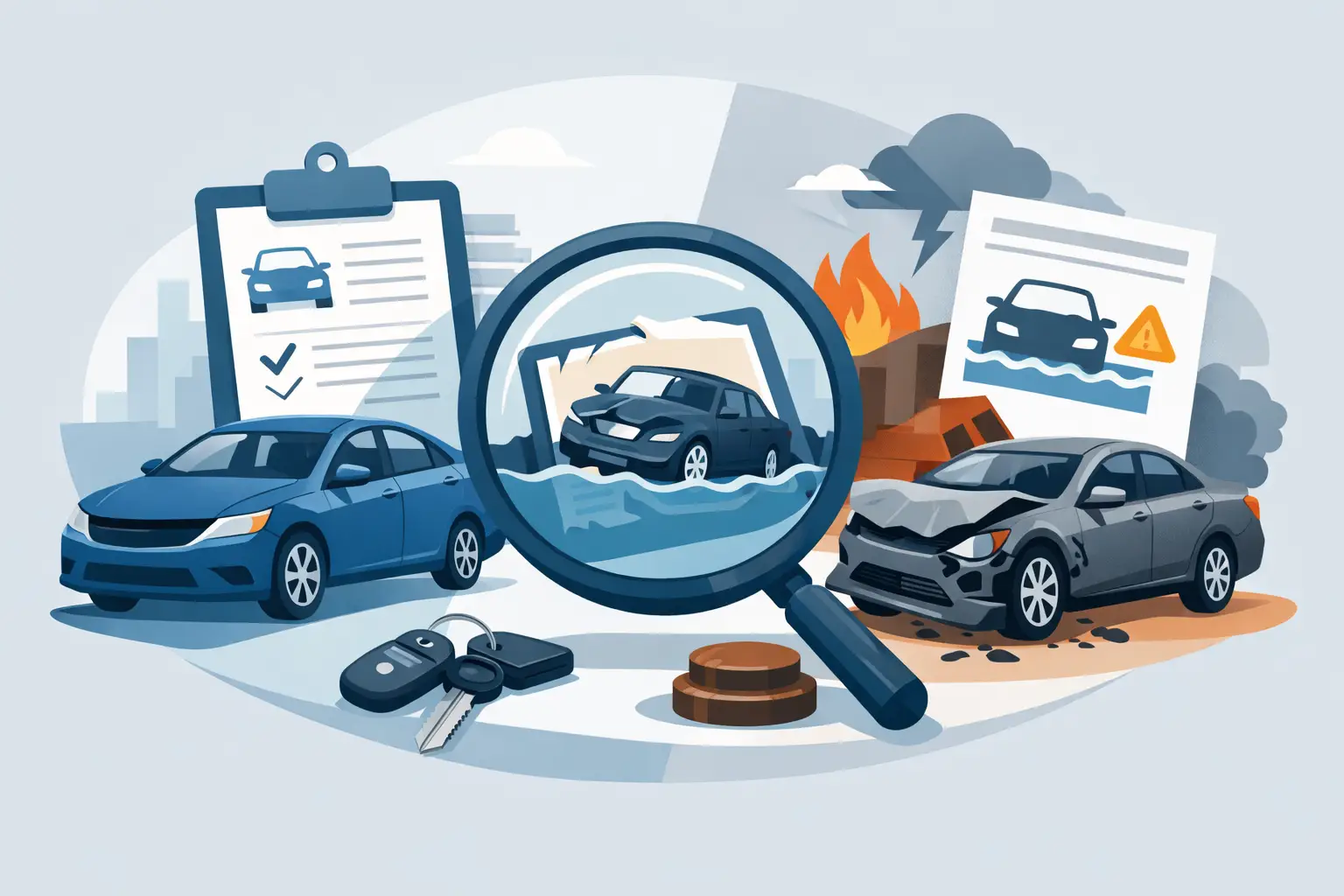
A car looks clean in the photos, the price is thousands below market, and the seller says it was “just a minor incident.” That is usually the moment buyers should slow down and ask: what does a salvage title mean?
A salvage title is a state-issued title brand used when a vehicle has been declared a total loss by an insurance company or, in some cases, by another reporting authority. That does not always mean the car is destroyed beyond use. It means the cost to repair it, plus its projected value after damage, crossed a threshold that made the insurer decide it was not financially worth restoring under a standard title.
What does a salvage title mean in practice?
In practical terms, a salvage title means the vehicle has suffered serious enough damage, loss, or recovery history that its legal and market status changed. The trigger is often collision damage, flood exposure, fire damage, hail damage, theft recovery, or another event that substantially affected the vehicle’s condition or value.
The exact standard varies by state and insurer. One state may brand a car salvage when repair costs reach a certain percentage of its pre-loss value, while another may apply different rules or terminology. That variation matters because title brands are legal designations, not informal opinions from a body shop or seller.
For buyers and dealers, the takeaway is simple: a salvage title is not just a note in the file. It changes resale value, insurability, financing options, and risk.
Why a vehicle gets a salvage title
Most salvage vehicles start with an insurance total loss decision. If a late-model sedan is worth $18,000 before a crash and repairs are estimated at $14,000, the insurer may total it instead of paying to fix it. The math can shift even faster if there is structural damage, airbag deployment, or hidden electronic issues.
Not every salvage vehicle was in a dramatic wreck. Some were flooded during storms. Some were stolen, stripped, and later recovered. Some have damage that appears cosmetic at first but creates expensive replacement costs once sensors, wiring, and calibration work are added.
That is why the salvage label matters more than visual appearance. A vehicle can look decent and still carry a major history event that affects its long-term reliability and value.
Salvage title vs. rebuilt title
This is where many buyers get tripped up. A salvage title and a rebuilt title are not the same thing.
A salvage title generally means the vehicle has been declared a total loss and is not yet cleared for standard road use in its current status, depending on state rules. A rebuilt title means that same vehicle was repaired, inspected, and reclassified under state procedures so it can return to the road.
That rebuilt status does not erase the salvage past. It only means the vehicle met whatever inspection and paperwork requirements the state uses for re-entry into service. Some rebuilt cars are repaired well. Some are repaired just well enough to pass inspection. That gap is exactly why records, repair documentation, and damage verification matter.
How a salvage title affects value
A salvage title almost always cuts market value, often by a wide margin. Even if the car now runs well, the title brand stays attached to its history and limits the buyer pool. Many shoppers will not consider it at any price. Lenders and insurers may feel the same way.
The discount can look attractive, especially for auction buyers, independent dealers, or experienced shoppers who understand repair economics. But lower purchase price does not automatically mean better value. If future repairs, weak resale demand, or insurance limitations show up later, the apparent bargain can disappear quickly.
For professionals managing inventory, salvage history also changes how a vehicle should be priced, disclosed, and compared against clean-title alternatives. The valuation conversation has to include title status, not just mileage and trim.
Insurance and financing problems are common
One of the biggest practical issues with salvage vehicles is that banks and insurance carriers often treat them differently from clean-title cars.
Many lenders will not finance a salvage-title vehicle at all. Others may only finance rebuilt vehicles, and even then with tighter terms. Insurance can be just as restrictive. Some carriers may offer liability coverage but decline comprehensive or collision. Others may insure a rebuilt vehicle only after additional inspections or appraisals.
That matters before purchase, not after. If a buyer cannot finance the car or properly insure it, the deal is already weaker than it looks on paper.
Safety depends on more than the current appearance
The hardest part of evaluating a salvage vehicle is that the biggest risks are often the least visible. Cosmetic repairs can hide deeper issues with the frame, crumple zones, airbags, suspension geometry, corrosion, and modern driver-assistance systems.
A repair invoice alone does not prove the car was restored to manufacturer standards. On newer vehicles, even a relatively common front-end crash can affect radar units, cameras, sensors, and calibration requirements. If those systems were skipped, improperly installed, or replaced with lower-quality parts, safety performance may be compromised.
This is why a salvage car is never a category you evaluate by photos and a quick test drive. You need title history, accident records, damage context, repair details, inspection results, and ideally an independent mechanical review.
When buying a salvage-title car can make sense
There are situations where a salvage or rebuilt vehicle is a rational buy. It can work for an experienced buyer who understands the damage type, has verified the repair quality, and plans to keep the vehicle long enough that resale stigma matters less.
It may also make sense for a lower-cost work vehicle, a project car, or a fleet use case where the purchase strategy is based on tightly controlled cost, maintenance planning, and clear documentation. Some recovered theft vehicles, for example, may have less structural damage than heavily crashed cars. But that still depends on the actual records.
The key point is that salvage is not automatically bad and not automatically a deal. It is a higher-risk category that demands more proof.
When it usually does not make sense
For first-time buyers, buyers on tight financing terms, or anyone who needs easy resale later, salvage vehicles are often the wrong fit. The hidden downside shows up in harder insurance approval, lower trade-in offers, and uncertainty around repair quality.
Flood-damaged vehicles deserve especially close scrutiny. Water can affect wiring, connectors, modules, seat systems, and corrosion points that may not fail immediately. A car can appear fine at sale and develop expensive electrical problems months later.
If the seller cannot provide clear records, if the damage story keeps changing, or if the price is not meaningfully below a comparable clean-title vehicle, the safer move is usually to walk away.
What to check before you buy
If you are considering a vehicle with a salvage or rebuilt history, documentation should lead the decision. Start with the title brand itself, then verify the cause of loss, accident severity, ownership timeline, odometer records, and whether the vehicle was later rebuilt or reinspected.
You should also compare the vehicle against clean-title alternatives. A discounted price only means something if you understand the gap between this car and the broader market. That includes current value, likely resale value, and the cost of any unresolved issues.
A VIN-based history report is the fastest way to pull these threads together. Platforms such as DriveEvidence help buyers and dealers review title brands, damage records, theft and recovery history, odometer data, recalls, and valuation signals in one place instead of guessing from a listing and a seller’s description.
The right question is not just what it means
By itself, the answer to what does a salvage title mean is straightforward: the vehicle was declared a total loss and carries a branded title because of serious damage or loss history. The harder question is what that means for this specific car, at this specific price, with this specific repair trail.
That is where smart buyers separate risk from opportunity. A title brand is a warning flag, not a verdict. But warning flags exist for a reason. If the records are thin, the damage is unclear, or the numbers do not work, trust the data and move on.
The best vehicle decisions are usually the ones you can defend with proof, not hope.