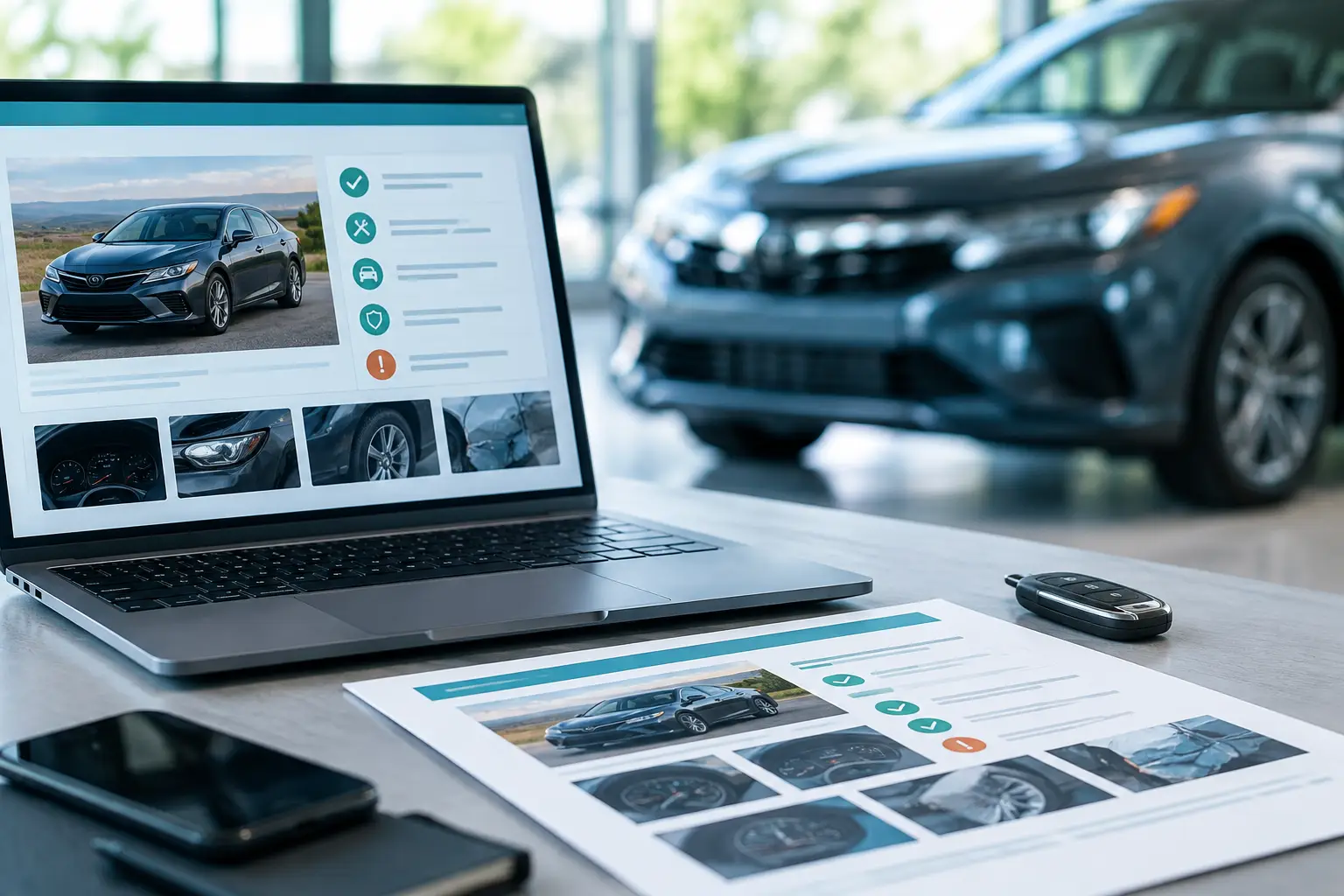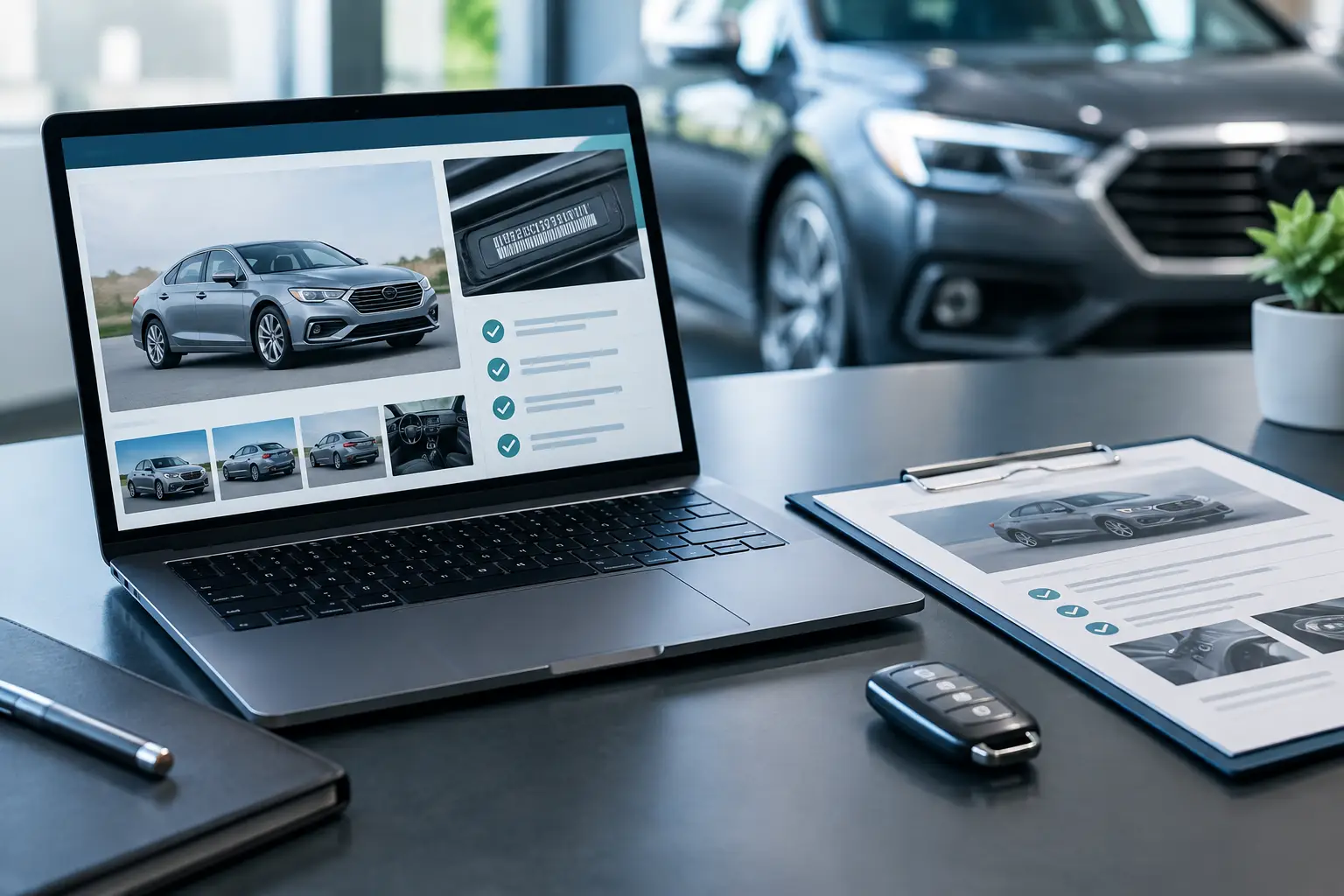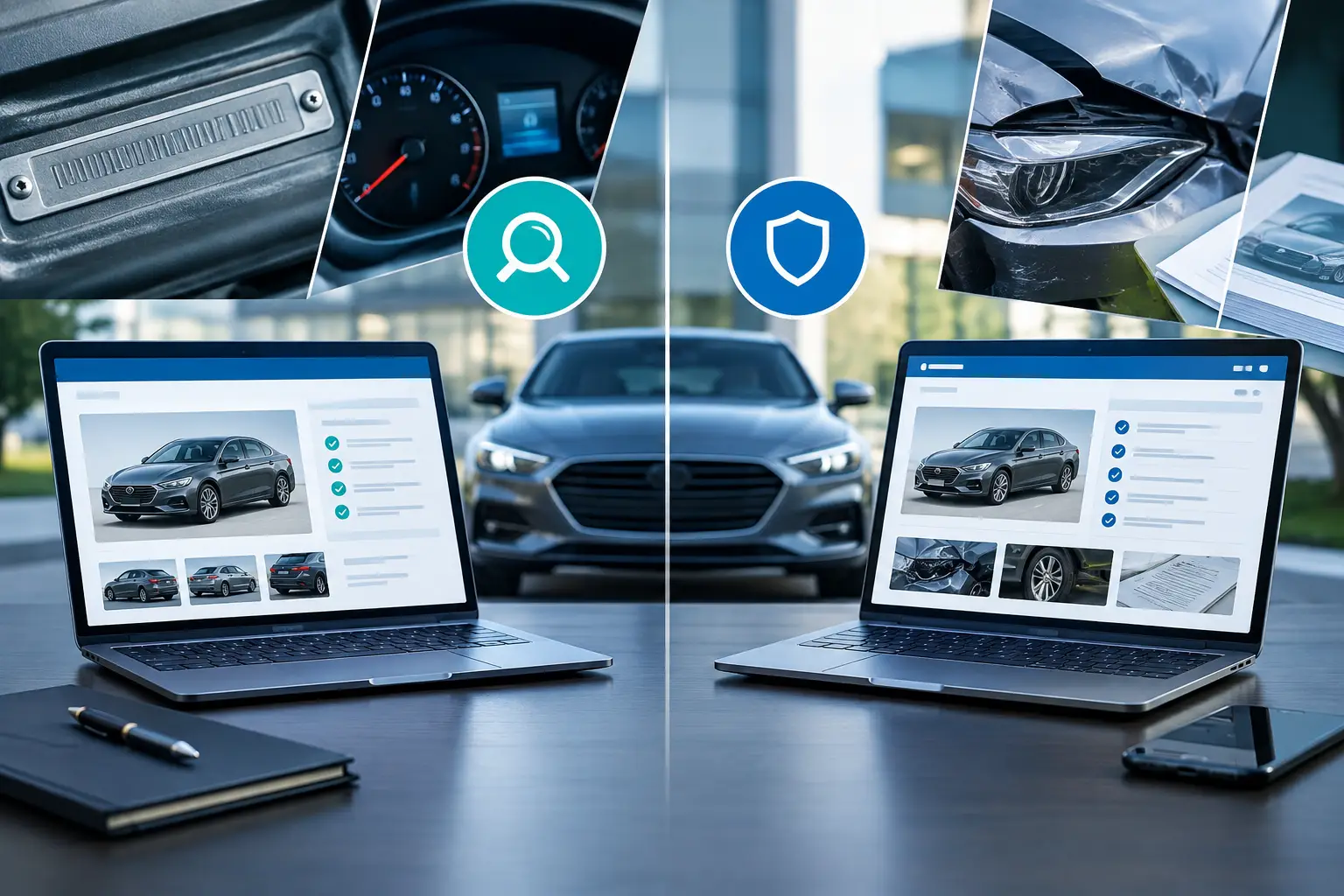
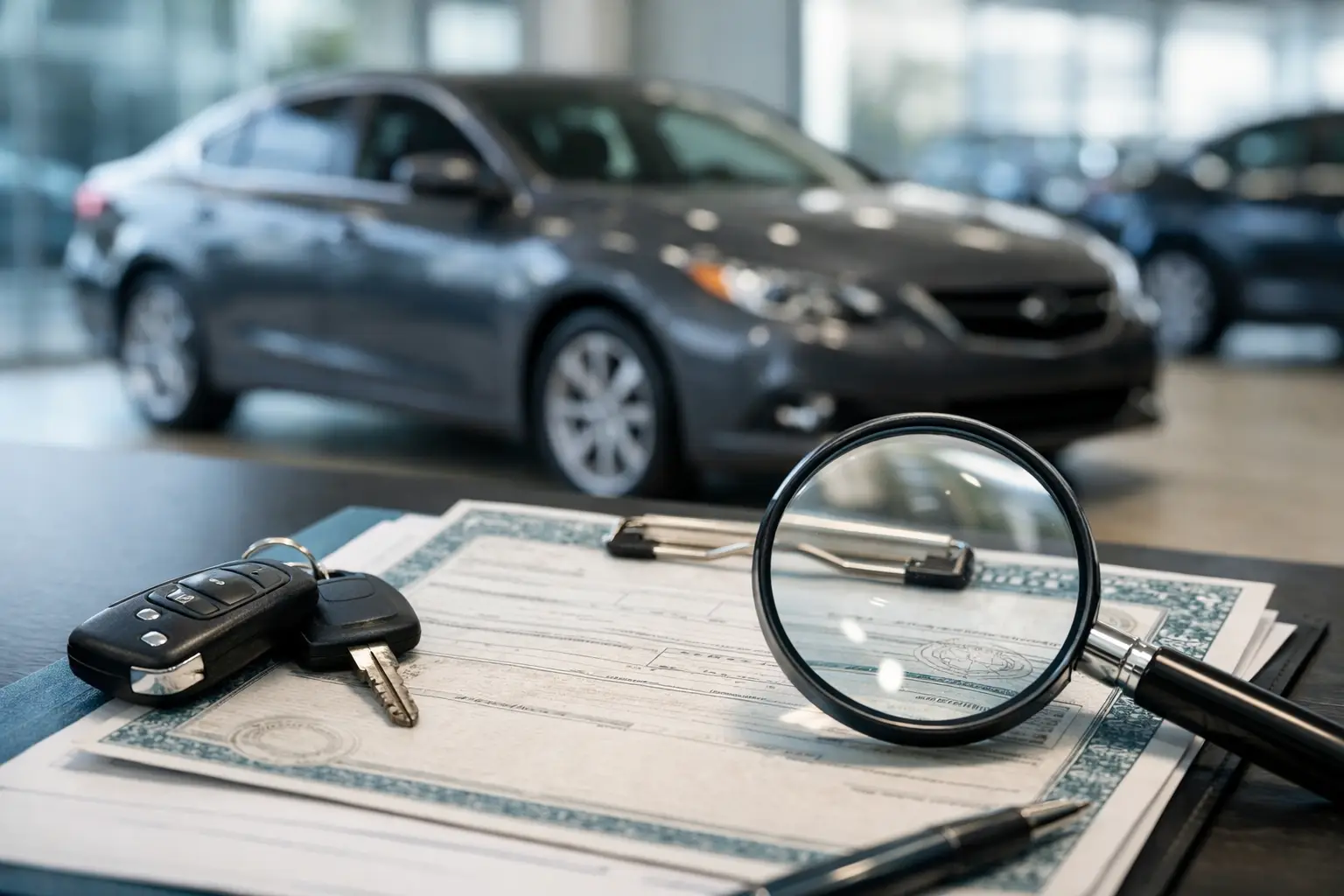
A clean-looking used car can still carry a title problem that changes what it is worth, whether you can insure it, and whether you can legally register it. Knowing how to verify title status before money changes hands is one of the fastest ways to avoid a vehicle with hidden damage, an unresolved lien, a salvage history, or paperwork that does not belong to the car.
The seller's title document matters, but it should never be your only source. A smart verification process compares the physical title, the VIN on the vehicle, official state records, and vehicle-history data. When those sources agree, you have evidence. When they do not, you have a reason to pause.
What title status tells you about a vehicle
A vehicle title is the legal record of ownership. Title status describes whether that record is clear and transferable, branded because of a significant event, subject to a lien, or affected by another restriction. It is not the same thing as a condition report. A car can have a clean title and still have accident repairs, mechanical problems, or a history that deserves a closer look.
Title brands are labels assigned by a state motor vehicle agency. Common brands include salvage, rebuilt, flood, junk, lemon, hail damage, and odometer discrepancy. The exact terms and rules vary by state. For example, a vehicle that qualifies as salvage in one state may be branded differently after it is transferred and repaired elsewhere.
That variation creates risk for buyers and inventory teams. A seller may describe a vehicle as “rebuilt” without explaining it was previously declared a total loss. Or they may say it has a “clean title” because the current paper title does not clearly display a prior out-of-state event. The right question is not just, “Does it have a title?” It is, “What does the title history show, and can the current title be transferred without a surprise?”
How to verify title status step by step
Start early, ideally before you inspect the vehicle or negotiate price. Title problems are easier to walk away from before you have committed to a deposit, transport, or financing application.
Get the full 17-character VIN
Request the complete VIN from the seller and compare it in several places: the windshield VIN plate, the driver's door-jamb label, the title document, registration, insurance card if available, and any listing paperwork. Every character must match.
Do not rely on a VIN copied into a marketplace listing. A single wrong character can return history for a different vehicle. Look for tampering around the dashboard VIN plate, mismatched rivets, altered labels, or signs that the door-jamb sticker has been removed and replaced. Any mismatch is a stop signal until the seller can provide a credible explanation and official documentation.
Examine the title document, not a photo alone
Ask to see the original title in person when possible. Check the owner name, VIN, make, model year, title number, issuing state, issue date, and any printed brands. Confirm that the seller is the person listed as owner or has valid authority to sell the vehicle.
Watch for open assignments, erased entries, overwritten names, missing signatures, or a title signed by someone who is not the person selling the car. These can indicate title jumping, where a vehicle is sold without the intermediary registering it. That practice can leave the buyer unable to obtain a valid title.
A duplicate title is not automatically a problem. Owners legitimately request replacements when a title is lost. Still, treat a recent duplicate title as a reason to verify the record directly with the issuing state, particularly when the price is unusually low or the seller pushes for a fast cash deal.
Check the issuing state's motor vehicle agency
The state that issued the title is the primary authority on whether it is valid, branded, and eligible for transfer. Many state motor vehicle agencies offer title-status tools, lien searches, or guidance on document verification. Availability varies, and some details may require the titled owner's consent or an in-person request.
Ask the agency what you need to confirm before purchase. In addition to title status, verify whether there are transfer restrictions, a rebuilt inspection requirement, an odometer disclosure issue, or a pending record that could delay registration. If the seller says the title is “in the mail,” do not assume the deal is ready to close. Wait until the document and record can be verified.
Run a VIN-based vehicle history report
A VIN report provides the broader context that the current title may not show. Review title events, brand history, theft and recovery records, odometer readings, prior registrations, damage records, and ownership changes. Pay close attention to the timeline.
For example, a vehicle might show a salvage event in one state, later appear with a rebuilt title, then move across state lines. That does not automatically make it a bad purchase. It does mean the value, inspection standard, insurance availability, financing options, and resale expectations should be evaluated as a branded-title vehicle.
DriveEvidence helps place title status beside accident, theft, odometer, recall, and valuation data, so buyers and dealers can assess the whole risk picture rather than treating one title label as the final answer. A report is a powerful screening tool, but it does not replace confirmation from the relevant state agency.
Search for liens before you pay
A lien means a lender or other secured party may have a legal claim on the vehicle. If a lien is unresolved, the seller may not be able to transfer clear ownership to you. The title may list the lienholder, but do not assume an absent lienholder name proves the vehicle is lien-free. Electronic-title systems and state processes differ.
If there is a lien, require a written payoff process. The safest approach is to complete payment through the lender or obtain a lien release that can be verified before you accept the vehicle. Do not hand over full payment based on a seller's promise that they will clear the loan afterward.
Verify theft status and identity red flags
A title can look legitimate while the vehicle itself is stolen or subject to a fraudulent VIN swap. A VIN history check can identify theft and recovery records, while a law enforcement or state agency can help with concerns about altered identifiers.
Be especially cautious if the seller refuses to meet at their home, will not permit a VIN inspection, insists on wire payment or gift cards, or claims the vehicle must be sold immediately for an implausible reason. Price pressure is not proof of fraud, but it is often used to prevent buyers from verifying records.
What to do when a title is branded
A branded title is not an automatic walk-away. It is a pricing and risk decision. Some rebuilt vehicles are repaired well, documented thoroughly, and priced appropriately. Others have incomplete repairs, hidden structural damage, poor parts quality, or insurance and financing limitations that erase any apparent bargain.
Ask for repair invoices, before-and-after photos, parts records, inspection documents, and a pre-purchase inspection from a qualified independent technician. For flood-branded vehicles, inspect for corrosion, moisture damage, electrical faults, musty odors, and water lines in hidden areas. For salvage or rebuilt vehicles, pay close attention to frame measurements, airbag replacement, seat belt systems, alignment, and advanced driver-assistance calibration.
Then compare the asking price with the vehicle's branded-title market value, not the price of a comparable clean-title vehicle. A discount that looks generous against retail pricing may be inadequate once financing, insurance, future resale, and repair uncertainty are factored in.
Common mistakes that create expensive title problems
The biggest mistake is assuming a clean current title means a clean history. States use different branding rules, records can be delayed, and the paper in front of you may not tell the full story. Another costly mistake is accepting a bill of sale as a substitute for a title when your state requires a title for transfer.
Buyers also get caught by checking the VIN only once. Compare every document and physical VIN location again at pickup. If the title has changed, the seller has changed, or the VIN does not match exactly, stop the transaction.
For dealers and auction buyers, the operational risk is speed. Processing inventory quickly matters, but a rushed title review can turn a low-cost acquisition into a vehicle that cannot be retailed, financed, or registered on schedule. Build title verification into acquisition workflow before reconditioning, transportation, and merchandising dollars are committed.
Keep a record of what you verified
Save a copy of the title, bill of sale, VIN report, lien release, seller identification details where legally appropriate, inspection notes, and all payment records. These documents can protect you if a registration issue appears later or if you need to explain the vehicle's history to a future buyer.
The best vehicle purchase is not the one that closes fastest. It is the one supported by matching VINs, verifiable ownership, clear transfer rights, and records that make sense from the first registration event to the vehicle in front of you. When the proof is incomplete, walk away. Another vehicle will come along.