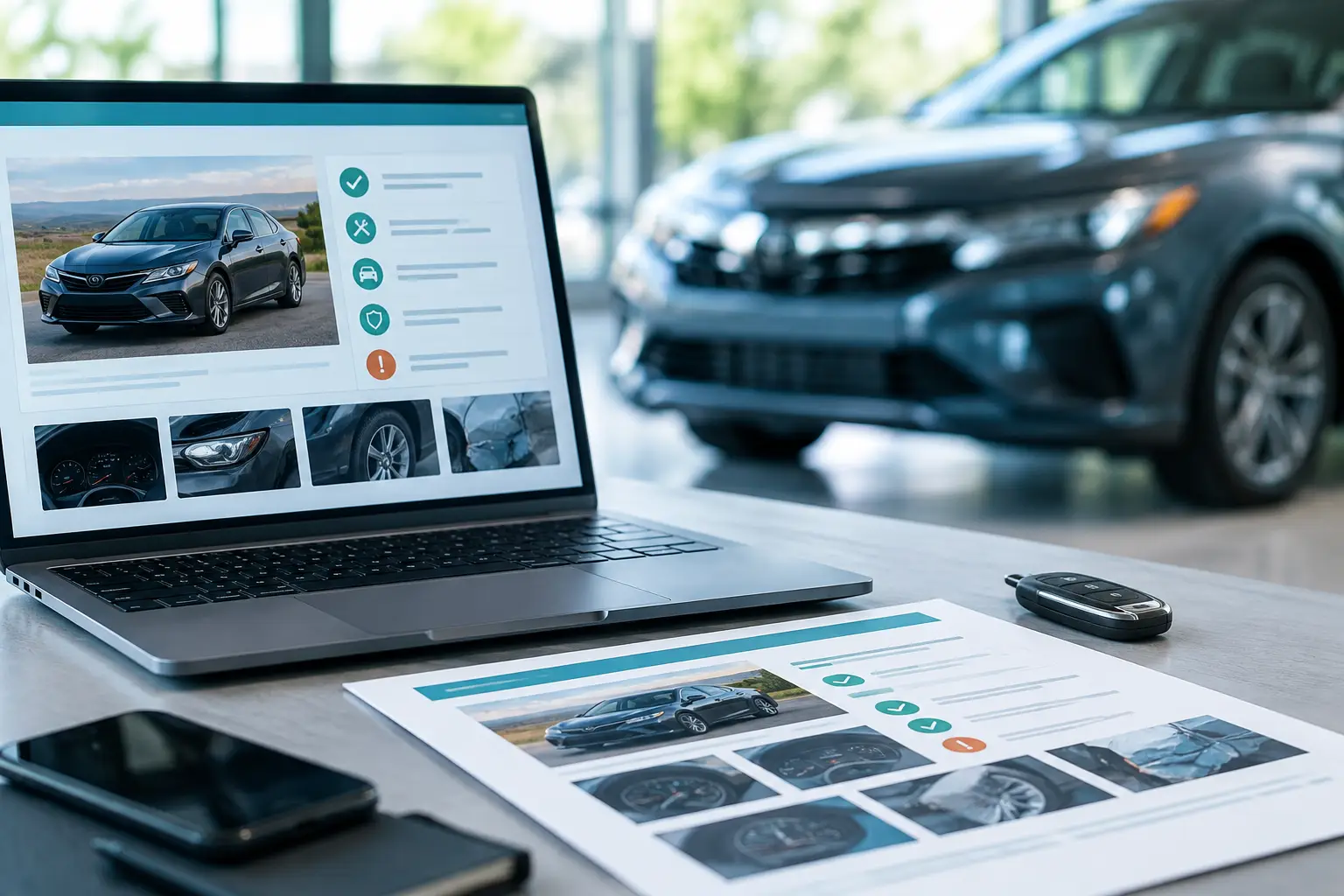

A seller says the car has a clean title, the photos look solid, and the price is just low enough to feel like a win. Then one record check later, you find out the vehicle was previously declared salvage in another state. That is exactly why knowing how to spot branded title issues matters before money changes hands.
A branded title is not just paperwork. It is a legal flag attached to a vehicle's history that signals a serious event, condition, or status change. Depending on the brand, that could mean major collision damage, flood exposure, odometer rollback concerns, theft recovery, or a vehicle that was written off by an insurer and later put back on the road. For buyers, dealers, and fleet operators, the risk is not only safety. It is also resale value, financing trouble, insurance limits, and harder future disclosures.
What branded titles actually tell you
A title brand is a state-applied label tied to a vehicle identification number. It exists to warn the next buyer that the vehicle's history includes something material enough to affect value or roadworthiness. The most common brands include salvage, rebuilt, reconstructed, flood, lemon, junk, and odometer-related designations.
The key issue is that title branding is not perfectly uniform across the US. States use different terminology, different disclosure standards, and different thresholds for assigning brands. One state may mark a vehicle as salvage after a total loss declaration, while another may use a different label for a similar event. That inconsistency is one reason branded title issues are often missed by buyers who rely only on a physical title document or a seller's description.
How to spot branded title issues before you buy
The fastest way to catch a branded title problem is to verify the VIN against reliable vehicle history records, then compare that data against the seller's claims and the vehicle itself. If any one of those three sources conflicts with the others, slow down.
Start with the current title status, but do not stop there. A title in hand only shows what is recorded now in that issuing state. It may not fully reflect prior branding in another jurisdiction, and it will not explain the underlying event with enough detail to judge risk. A full history check can reveal whether the vehicle was once branded, transferred across state lines, sold at auction after a major loss, or later re-registered with a different status.
That matters because title washing is real. This is the practice of moving a vehicle through states or paperwork channels to reduce or hide the visibility of a prior brand. It does not always erase the trail, but it can make a bad vehicle look cleaner than it is at first glance.
Records that expose branded title problems
If you want to know how to spot branded title issues with confidence, focus on records that create a timeline. A single status line is helpful. A sequence of title, insurance, auction, damage, and registration events is better.
Look for insurance total loss records, salvage auctions, rebuild inspections, flood declarations, and sudden title status changes. If a car was declared a total loss, sold through a salvage channel, and then later appears for sale with limited explanation, that is a serious signal even if the current ad avoids the word rebuilt.
Ownership history also helps. Short ownership periods after a major event can indicate a vehicle that keeps moving because buyers uncover problems. Service and odometer records can add context too. If mileage history is inconsistent around the same period as a title change, the issue may be broader than structural repairs alone.
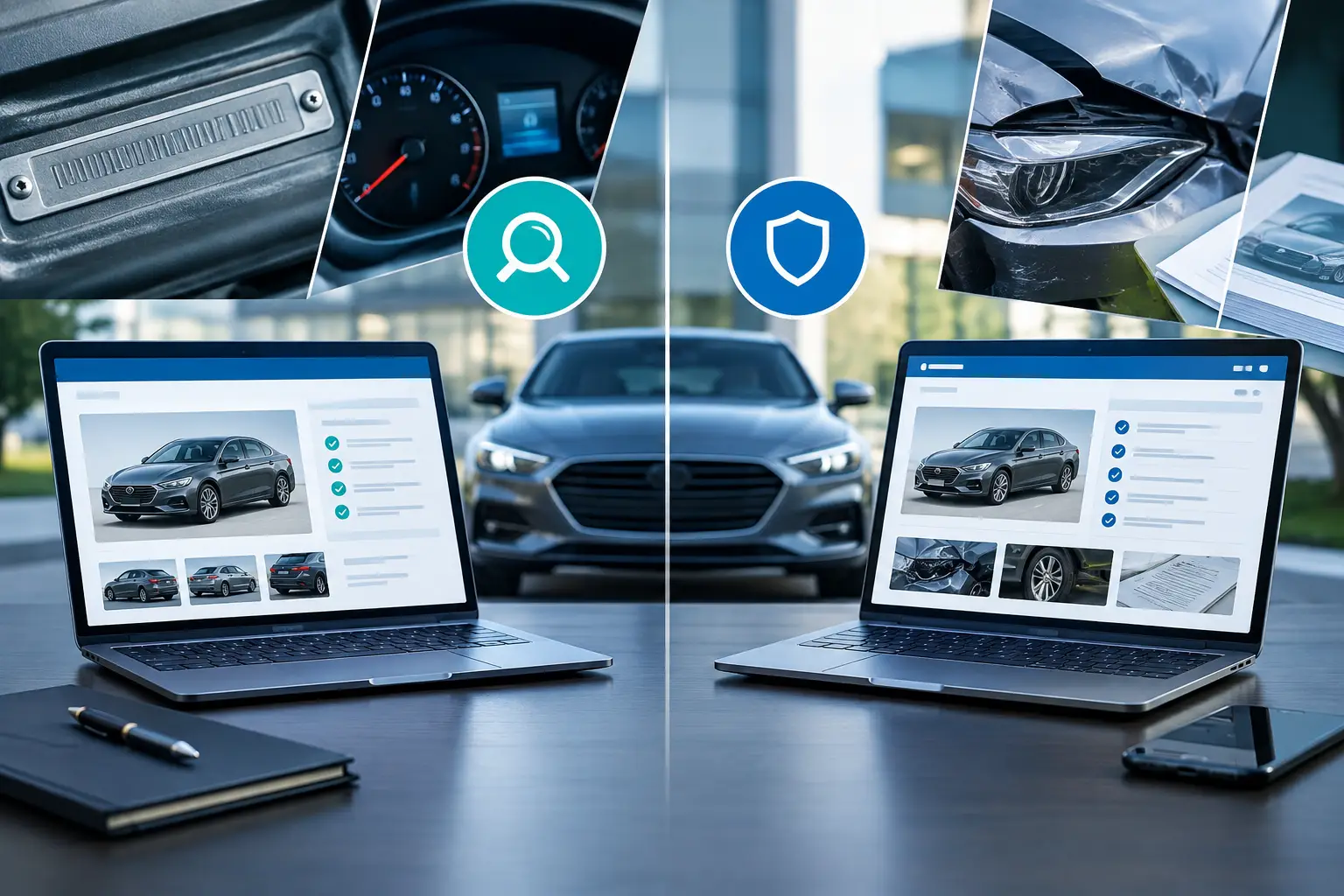
For professionals evaluating multiple units, this is where a side-by-side workflow matters. Looking at one report at a time makes it easier to miss patterns. Comparing title status, damage events, score signals, and value impact across several VINs creates a much clearer decision path.
Red flags in the vehicle listing and seller conversation
Some branded title issues show up before you ever pull a report. Sellers often reveal risk through what they omit.
If the price is well below market with no clear reason, ask why. If the listing says clean title but avoids discussing prior damage, ask for specifics. If the seller uses phrases like "minor cosmetic work" on a vehicle with replaced airbags, extensive repainting, or uneven panel gaps, that gap between language and evidence needs attention.
Watch for evasive answers about where the car was previously registered, whether an insurance company ever totaled it, and who performed reconstruction work. A legitimate seller with a rebuilt vehicle should be able to explain the history, provide repair documentation, and acknowledge the brand directly. When the story keeps shifting, the title may not be the only problem.
Photos matter too. Mismatched paint, missing trim labels, moisture in lighting, new interior sections inside an older cabin, or rust where it should not be can all support a flood or severe damage concern. None of these signs prove a branded title by themselves, but they tell you where to push harder.
The branded title issues buyers miss most often
The most commonly missed issue is assuming that rebuilt means repaired correctly. It does not. Rebuilt simply means a previously branded vehicle met the requirements to return to the road in that state. It is not a blanket statement about repair quality, long-term reliability, or whether all damage was fully addressed.
Flood history is another one buyers underestimate. Water damage can create electrical failures, corrosion, mold, sensor issues, and intermittent problems that show up long after the sale. A flood-branded vehicle may look acceptable on the surface and still become a repair drain months later.
Lemon and buyback brands are different but also important. These point to repeated manufacturer defects or forced repurchases. The risk here is not always collision damage. It may be chronic mechanical or electrical trouble that hurt the vehicle's usability from the start.
Odometer brands deserve more attention than they get. If mileage is listed as not actual, exempt in a suspicious context, or inconsistent across records, the vehicle's value and trustworthiness change immediately. A low-mileage car with mileage uncertainty is not really a low-mileage car.
What branded titles mean for value, financing, and resale
A branded title does not make every vehicle unusable. Some rebuilt vehicles are repaired competently and priced appropriately. Some buyers knowingly accept that trade-off. But the trade-off has to be real, and the discount has to reflect the risk.
Branded vehicles usually carry lower market value, narrower lender acceptance, higher insurance friction, and a smaller buyer pool when it is time to sell. Dealers know this. Many retail buyers learn it too late. What looked like a bargain at purchase can become expensive when financing falls through, coverage is limited, or trade-in offers come back far below expectations.
This is where a risk-based evaluation helps. A vehicle history should not just say there is a brand. It should help you judge how much that brand affects decision quality. A platform like DriveEvidence does that by pairing verified history data with a score that makes risk easier to compare across vehicles instead of forcing you to interpret every report from scratch.
When a branded title might still be worth considering
It depends on the vehicle, the documentation, the intended use, and the price. A rebuilt work truck for internal fleet use may be a reasonable option if repairs were documented, inspections were passed, and the cost advantage is meaningful. A flood-branded luxury SUV with spotty records is a very different calculation.
For a personal-use vehicle, branded title purchases make more sense when the buyer understands the exact brand, sees detailed repair records, confirms current roadworthiness, and plans around lower resale value. For dealers, the standard should be even tighter because disclosure, customer trust, and inventory turn all matter.
If documentation is thin, seller claims are vague, or the title history feels harder to decode than it should, move on. There are always more vehicles. The right deal does not require guesswork.
A better process for spotting branded title issues
The strongest approach is simple. Verify the VIN early, review the full history instead of a single title snapshot, compare market value against known risk, and inspect the vehicle in the context of what the records already show. Do not let a low price outrun the evidence.
Knowing how to spot branded title issues is really about refusing to make a blind purchase. The proof is usually there if you check the right records and take inconsistencies seriously. A vehicle can be repaired. A bad buying decision is harder to fix.
Before you commit, make sure the story, the paperwork, and the vehicle all match. If they do not, trust the mismatch.