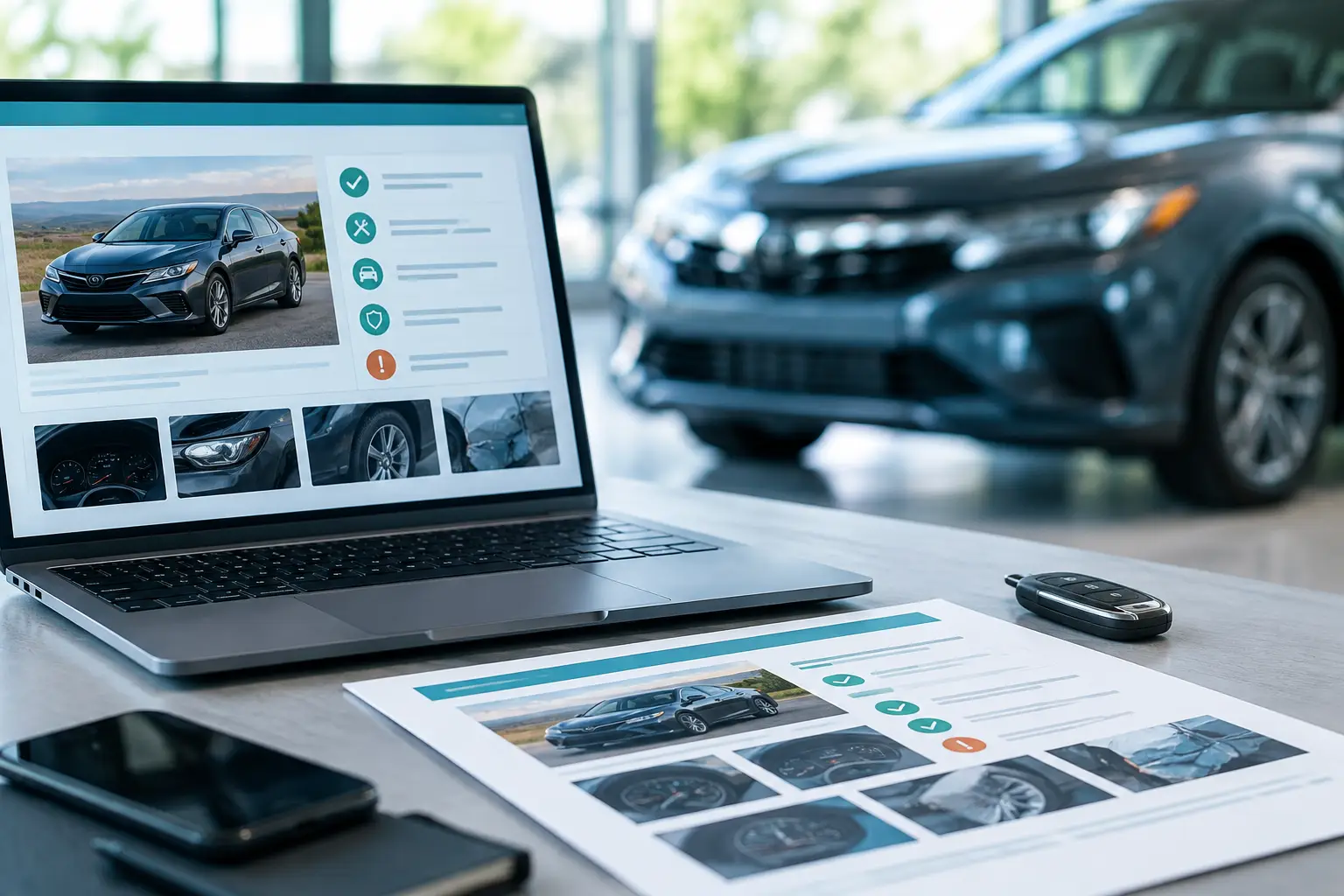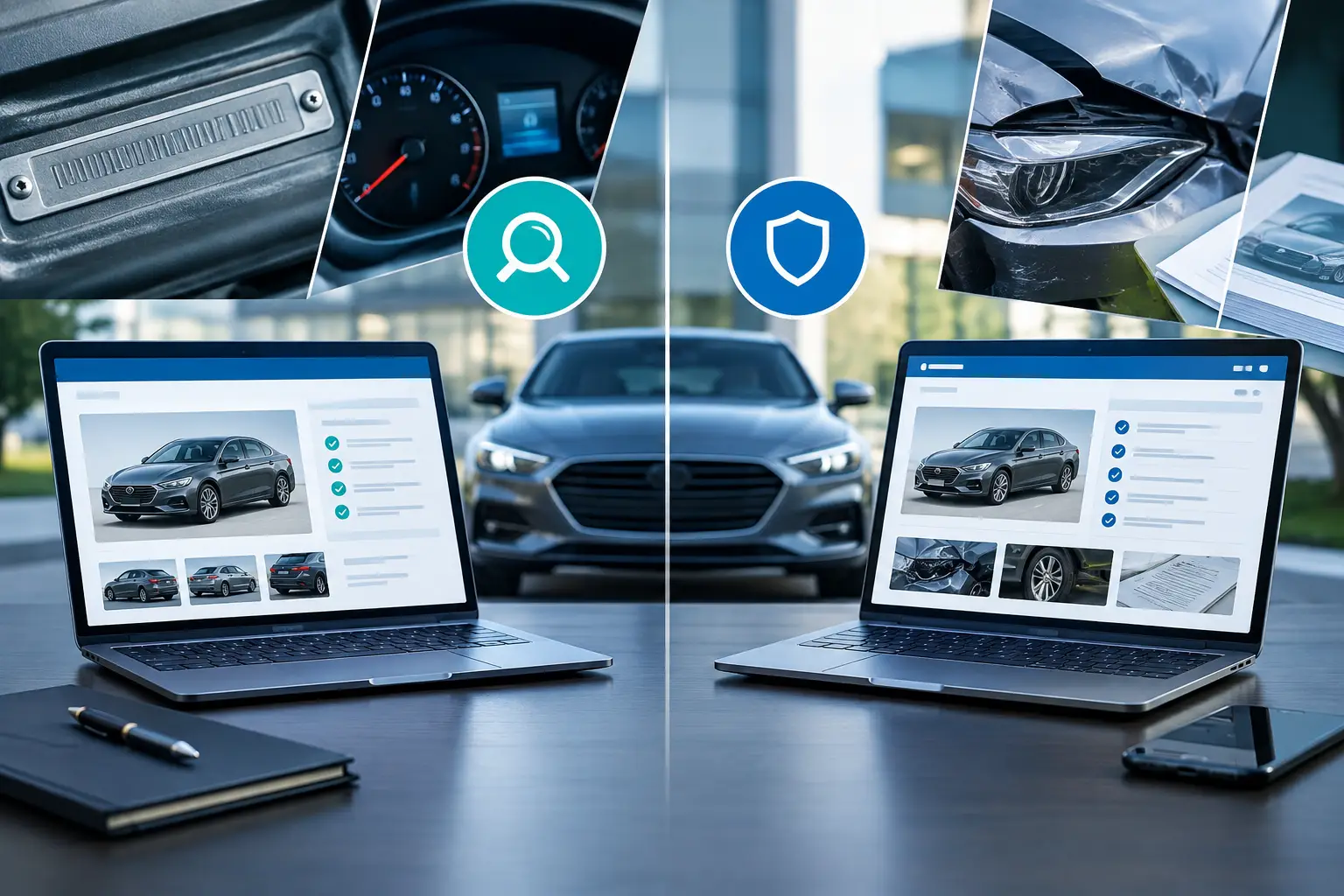
A clean-looking used car can hide a costly story. Fresh paint, low miles, and a fair asking price mean very little if the VIN points to flood damage, title problems, odometer rollback, or repeated auction flips. This used car history report guide is built for one job: helping you separate a decent deal from a disguised risk before money changes hands.
A vehicle history report is not just a background check. It is a decision tool. For buyers, it helps verify what a seller says. For dealers, auction buyers, and fleet teams, it helps screen inventory quickly and defend margin. The value is not in getting more data. It is in knowing which records change the decision.
What a used car history report should actually tell you
Not all reports carry the same weight, and not every line item matters equally. The records that deserve the most attention are the ones tied to financial risk, safety risk, and resale risk.
Start with title status and title brands. If a vehicle has a salvage, rebuilt, flood, lemon, or other branded title, that is not a small detail buried in paperwork. It affects insurability, financing, future resale, and in some cases whether the car should be on your shortlist at all. A seller may describe a car as repaired and road-ready, but the title tells you how the market and many institutions will treat it.
Accident and damage history comes next, but this is where nuance matters. A report that shows a minor rear-end accident years ago is not the same as a record of severe structural damage or airbag deployment. One incident does not automatically make a car a bad buy. What matters is severity, repair quality, and whether the current price reflects the risk.
Ownership history can also shift the picture fast. A one-owner vehicle with consistent registration and routine use usually presents fewer unknowns than a car that changed hands every few months. Frequent ownership transfers, especially across states or through multiple auctions, can indicate instability in the vehicle's past or a pattern of quick resales after unresolved issues.
Odometer verification is another high-value section. Mileage fraud still exists because even a modest rollback can inflate a vehicle's value. If the report shows mileage inconsistencies, unexplained drops, or records that do not line up over time, that is a major warning sign. You are no longer evaluating wear and tear accurately, and any valuation based on mileage becomes less reliable.
Theft and recovery records matter for obvious reasons, but they also raise follow-up questions. Was the vehicle recovered quickly with no major damage, or did the event lead to prolonged loss, parts stripping, or title complications? The report may not answer everything, but it tells you whether more verification is necessary.
How to read a used car history report without missing the real risks
The biggest mistake buyers make is treating the report like a pass-fail test. Clean report equals good car. Incident on report equals bad car. Real decisions are not that simple.
A history report should be read as a pattern. Look at the timeline first. You want to see whether the vehicle's story makes sense from registration to ownership to service to sale. Long gaps, sudden changes in state, repeated auction entries, or inconsistent mileage are often more revealing than a single accident notation.
Then check severity, not just presence. Accident reported is too broad to mean much on its own. If the report includes damage type, area affected, structural indicators, or airbag deployment, those details matter far more than the word accident by itself. Two cars can both show damage history and carry very different levels of risk.
Next, compare the report against the listing and the seller's claims. If the ad says clean title, no accidents, and second owner, the report should support that. If it does not, stop relying on the seller's confidence and start relying on proof. Any mismatch is not automatically fraud, but it does mean you need answers before moving forward.
Finally, pay attention to what the report does not confirm. A clean report does not guarantee a damage-free car. Some repairs are never reported to insurers, DMVs, or data partners. Private-party repairs, cosmetic work, and some local incidents may never appear. That is why the strongest buying process combines VIN-based history with a pre-purchase inspection.
Red flags that should slow the deal down
Some records deserve immediate caution because they can change the economics of the purchase fast.
Title brands sit near the top of that list. Salvage and rebuilt vehicles can sometimes be viable, but only when the price, repair documentation, inspection results, and intended use all line up. For most retail buyers looking for a daily driver with normal financing and resale flexibility, branded title vehicles are a tougher bet than they first appear.
Mileage inconsistencies are another hard stop until resolved. If the odometer history does not track logically, you cannot price the vehicle correctly. The same goes for repeated registration changes in short windows, especially if the vehicle seems to bounce between auctions and dealers with little time in service.
Watch for damage records tied to flood zones or severe weather periods. Flood damage can create long-tail electrical problems that show up months later. A vehicle can look completely normal during a quick walkaround and still carry major hidden risk.
Multiple accidents do not always kill a deal, but they should change how you evaluate it. The issue is cumulative exposure. Repeated impacts, even if each one appears moderate, can affect alignment, safety systems, body integrity, and long-term durability.
Why clean reports still require caution
This is the part many buyers skip. A history report is only as strong as the records available. No report can capture every event in a vehicle's life.
If a seller paid out of pocket for repairs and no insurer or reporting source recorded the work, the report may stay clean. If the car has aftermarket modifications, poor-quality repairs, or hidden corrosion, the VIN file may not reflect it. That is why the right mindset is trust the records, but verify the vehicle.
For individual buyers, that means pairing the report with a mechanical inspection and a careful test drive. For dealers and fleet teams, it means using the report as an early filter, then validating the unit through appraisal standards, condition reports, and internal recon processes.
A clean report is useful. It is just not immunity from bad inventory.
What buyers, dealers, and fleet teams should prioritize
Private buyers usually care most about hidden damage, clean title status, odometer confidence, and fair market value. The goal is simple: avoid getting trapped in a bad purchase that becomes expensive to own or hard to resell.
Independent dealers and dealership teams need speed as much as detail. Reviewing one disconnected report at a time slows acquisition and makes comparison harder. A smarter workflow is to evaluate multiple VINs side by side, sort by risk, and focus attention where the exposure is highest. That is where a scoring model can help. A platform like DriveEvidence combines verified vehicle data with a 0-100 risk-based score, giving buyers and dealers a faster way to identify which units deserve a closer look and which ones should move down the list.
Fleet managers tend to think in patterns rather than one-off purchases. They need consistency across multiple vehicles, predictable maintenance exposure, and confidence that title, recall, and mileage records support long-term operation. For them, the report is less about curiosity and more about controlling lifecycle cost.
How to use a report to negotiate, not just screen
A vehicle history report is not only for saying yes or no. It is also for pricing the risk correctly.
If the report shows prior damage, title complexity, ownership instability, or unresolved recalls, those findings should affect the deal structure. Sometimes that means negotiating a lower price. Sometimes it means asking for repair documentation, service records, or an inspection contingency. Sometimes it means walking away because the seller wants clean-car money for a car with a complicated history.
This is where discipline matters. Many bad purchases happen because the buyer sees one attractive feature - low price, rare trim, clean interior - and starts discounting the records. The report should do the opposite. It should keep emotion out and evidence in.
The strongest buyers do not ask, Is this car perfect? They ask, Does the verified history support the asking price, the intended use, and the risk I am willing to take?
That question will save you more money than any sales pitch ever will.