A low-mileage number can make an average used car look like a bargain. It can also hide one of the most expensive forms of vehicle fraud. Knowing how to verify odometer mileage means checking whether the number on the dashboard matches the vehicle’s documented life, not simply trusting what a seller says.
Odometer tampering is less obvious than it once was. Digital instrument clusters can be altered, replaced, or programmed incorrectly, and a clean-looking cabin does not prove a car has been lightly used. The good news is that mileage leaves a trail across inspections, titles, maintenance visits, warranty claims, and vehicle-history records. Your job is to compare that trail before money changes hands.
Why odometer verification matters
Mileage affects nearly every part of a used-vehicle decision. It influences market value, expected maintenance, warranty eligibility, lease penalties, and how long major components may last. A vehicle advertised with 72,000 miles but documented at 142,000 miles could be overpriced by thousands of dollars.
The risk is not limited to intentional rollback. A mileage discrepancy can result from a replacement instrument cluster, a data-entry mistake during service, an exempt title designation, or a vehicle that was not consistently reported to public agencies. Those explanations may be legitimate, but they still need documentation. If the seller cannot explain a gap clearly, treat it as a pricing and risk issue.
For dealers, auction buyers, and fleet managers, odometer verification also protects operational decisions. One inaccurate mileage figure can distort acquisition costs, reconditioning budgets, depreciation forecasts, and resale disclosures across an entire inventory workflow.
How to verify odometer mileage with records
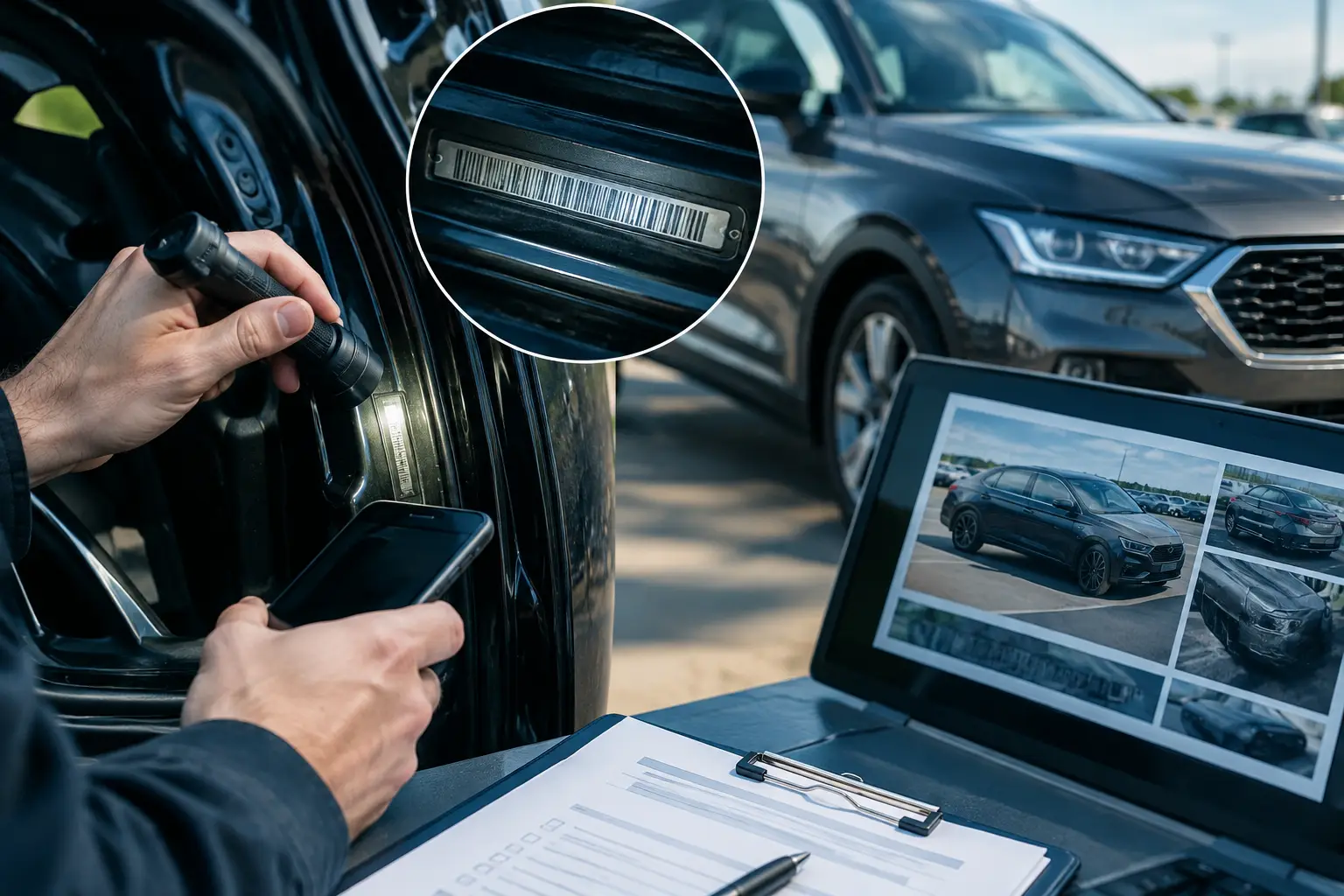
Start with the VIN, not the dashboard. The vehicle identification number connects the car to records that are much harder to manipulate than the number displayed in the instrument panel. Confirm that the VIN on the dashboard, driver-side door label, title, registration, and insurance documents all match exactly. A mismatch is a stop-and-investigate signal.
Review the title and odometer disclosure
Most vehicle titles include an odometer reading captured at the time of sale or title transfer. Look for the mileage itself and for language that qualifies it. Common flags include “Not Actual Mileage,” “Mileage Exempt,” or “Odometer Discrepancy.” These designations do not automatically mean the vehicle is unusable, but they can reduce value and make future resale harder.
Federal odometer disclosure rules generally apply to newer vehicles, while older vehicles may qualify for exemptions depending on the model year and state process. That means a title alone is not enough. Use it as one data point in a broader record review.
Also compare the title date with the reported mileage. If a title issued two years ago shows 118,000 miles and the vehicle now shows 91,000, you have a clear discrepancy. Do not accept “the cluster was changed” as a complete answer without repair invoices showing the replacement date, the old mileage, the new cluster mileage, and calibration details.
Pull a VIN-based vehicle history report
A comprehensive VIN report can consolidate reported mileage from title events, inspections, service facilities, auctions, insurance records, emissions testing, and other sources. Read the mileage timeline from oldest to newest. You are looking for a logical upward progression.
A normal history may show 34,210 miles at one service visit, 41,880 at the next, then 56,405 at a later title transfer. The exact intervals will vary based on how often the vehicle was serviced and reported. What matters is direction and plausibility.
Pay attention to these patterns:
- Mileage decreases between dated records.
- The vehicle gains very few miles over several years, then suddenly resumes normal use.
- A later record shows “exempt” or “not actual” after prior records listed specific mileage.
- The odometer reading is unusually low for the age, condition, and stated use of the vehicle.
- Auction or title records show a higher mileage than the current listing.
A single outlier may be a clerical error. Several conflicting entries are a different problem. Reliable evaluation means weighing the complete sequence, the sources behind it, and the seller’s supporting paperwork.
DriveEvidence can help bring those records into one decision view, alongside title status, accident history, recalls, market information, and a 0-100 risk-based score. That context matters because mileage concerns often appear with other red flags, such as title brands, repeated auction activity, or unexplained ownership changes.
Ask for service and inspection records
Maintenance invoices are often the best supporting evidence because they typically include the VIN, date, mileage, shop name, and work performed. Ask the seller for records from oil changes, tire replacements, brake jobs, inspections, and repairs. A stack of consistent invoices can support a mileage claim. A missing history does not prove fraud, but it gives you less proof to rely on.
State safety and emissions inspection records can be useful where available. These inspections commonly capture odometer readings, although reporting practices and public access vary by state. Vehicles that moved across state lines may have gaps in their record trail, so do not mistake incomplete data for confirmation.
For a newer vehicle, contact an authorized dealership service department and ask whether it can confirm recorded mileage from warranty or maintenance visits. Privacy policies may limit what a dealer can release, but the current owner can often request service records directly.
Check whether the vehicle’s condition supports the mileage
Physical wear cannot prove an odometer rollback, but it can reveal when the claimed reading deserves closer scrutiny. Compare the car’s condition to similar vehicles with comparable age and mileage, not to an ideal showroom example.
Look closely at the driver’s seat bolster, steering wheel, pedals, shifter, door handles, key fob, and carpeting. Heavy wear on these touchpoints can be inconsistent with an extremely low-mileage claim. On trucks and commercial vehicles, inspect the bed, hitch, load area, brake pedal, and suspension components for signs of sustained work use.
Tires can offer useful timing clues. Check the DOT date code on the tire sidewall and compare it with the seller’s story. Original tires on a claimed 15,000-mile vehicle may make sense if they are old but lightly worn. Brand-new tires on an alleged 20,000-mile vehicle are not evidence of fraud by themselves, but they are worth questioning if other wear appears substantial.
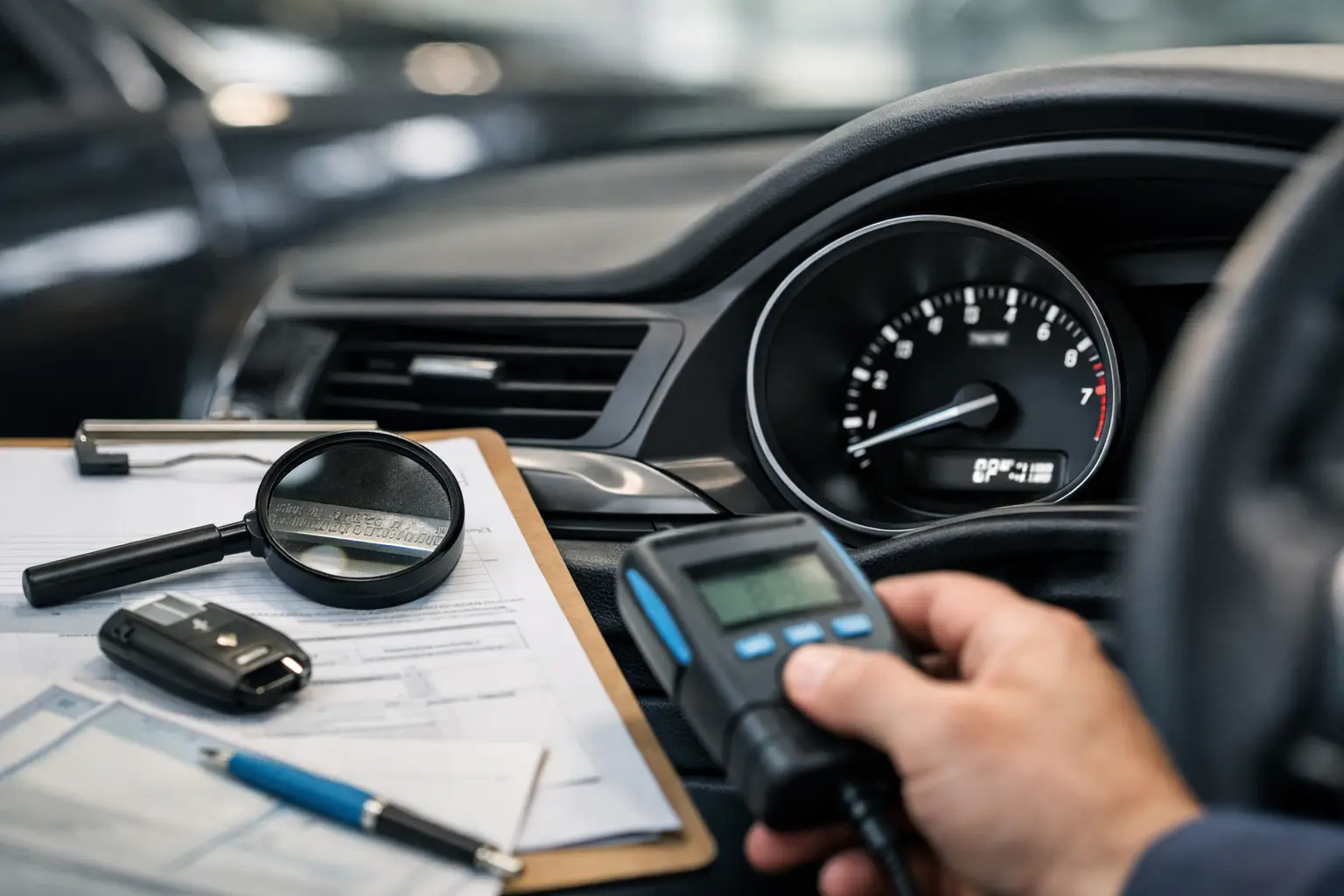
A pre-purchase inspection adds another layer of proof. A qualified mechanic can assess brake wear, suspension play, fluid condition, underbody corrosion, engine-hour data where available, and signs that an instrument cluster has been removed or replaced. Some vehicles store mileage in multiple electronic modules, but reading those modules requires the right equipment and expertise. Module readings may not always match exactly, especially after legitimate repairs, so ask the technician to explain what each reading represents.
Know the limits of an odometer check
No single record source sees every mile a vehicle has traveled. Private repairs, missed inspections, cash transactions, and delayed reporting can all create gaps. A history report is evidence, not a guarantee. Likewise, a clean mileage timeline does not replace an inspection or a title review.
This is where the details matter. A car with a replacement cluster and complete invoices may still be a sound purchase if the price reflects the uncertainty and the title is properly disclosed. A car with a lower current reading than multiple dated records, no documentation, and a seller who wants you to move quickly is a different situation. Walk away unless the discrepancy is resolved in writing before purchase.
If you are selling a vehicle with a legitimate mileage issue, disclose it clearly. Keep cluster replacement receipts, repair orders, and prior records together. Transparent documentation protects the buyer and reduces the chance of a dispute after the sale.
What to do when mileage does not add up
Pause the transaction and ask for an explanation backed by documents. Do not rely on verbal assurances, a handwritten note, or an online listing that can be edited later. Request copies of the title, service invoices, cluster replacement records, and any inspection documentation that supports the claimed mileage.
If the explanation is credible, have the discrepancy reflected in the purchase paperwork. If it is not credible, price alone should not make the risk disappear. Odometer fraud can affect financing, insurance claims, resale value, and legal liability long after the sale.
The best used-car purchase is not the one with the lowest number on the dash. It is the one with a mileage story that holds up when the records, condition, and VIN evidence are placed side by side.