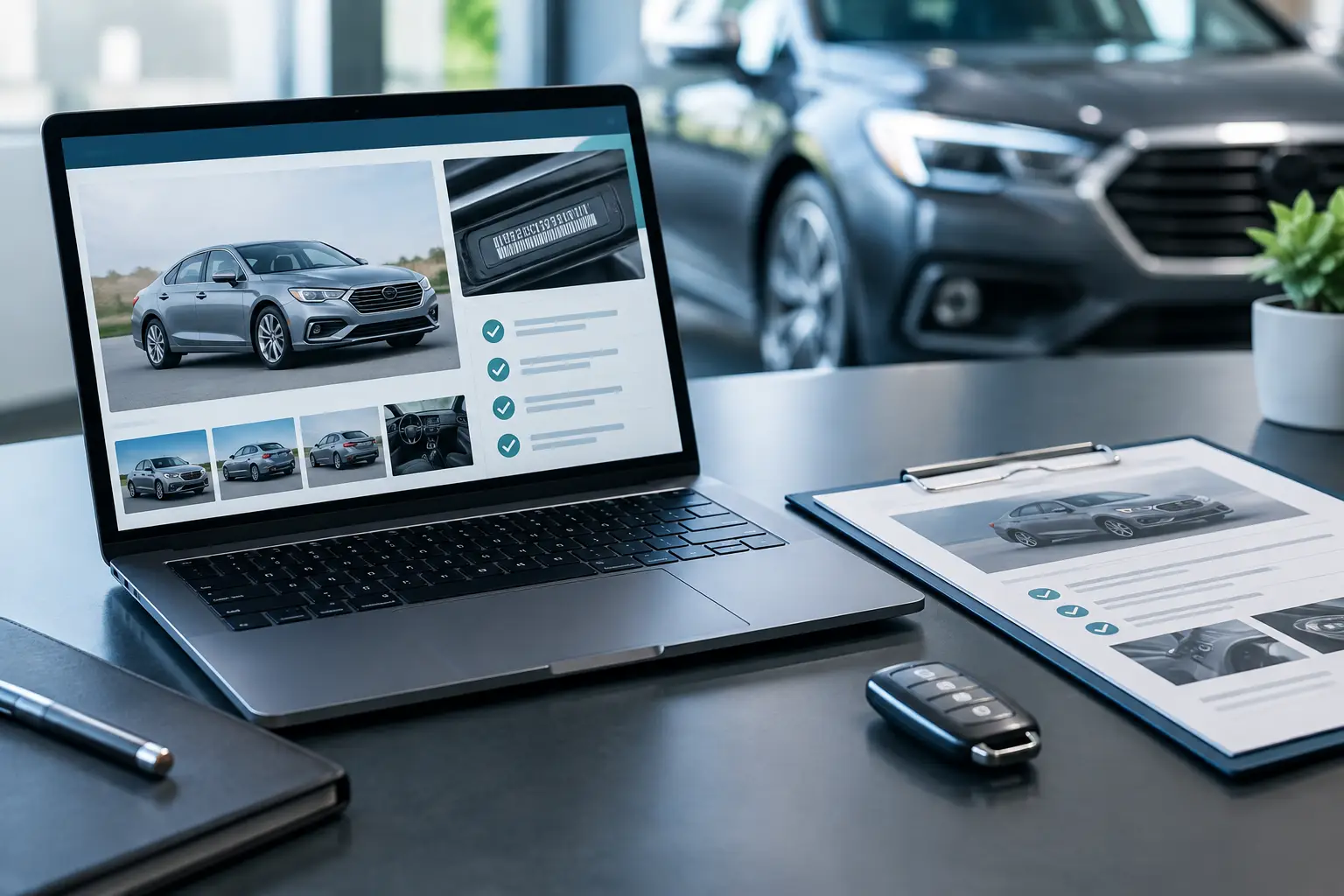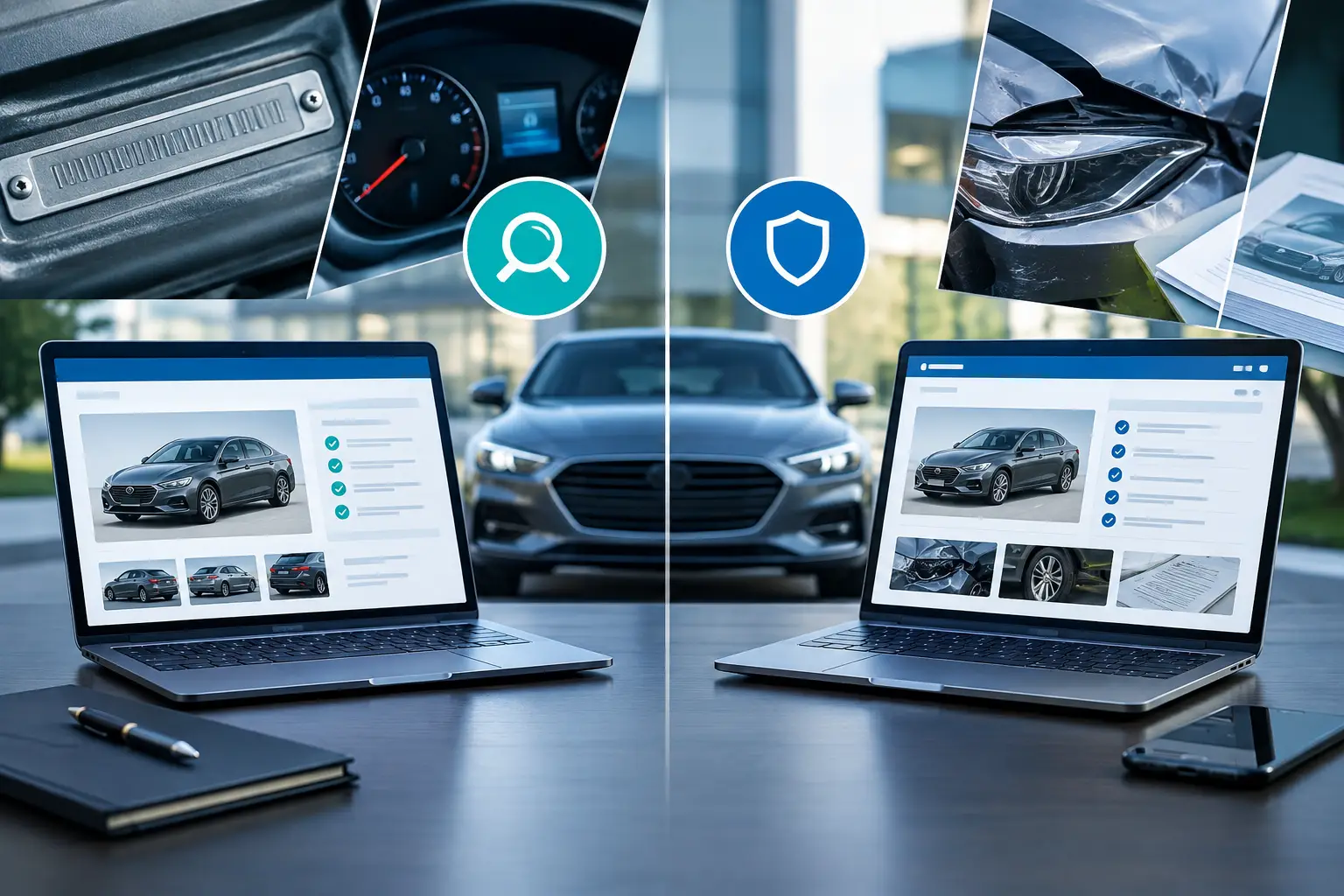
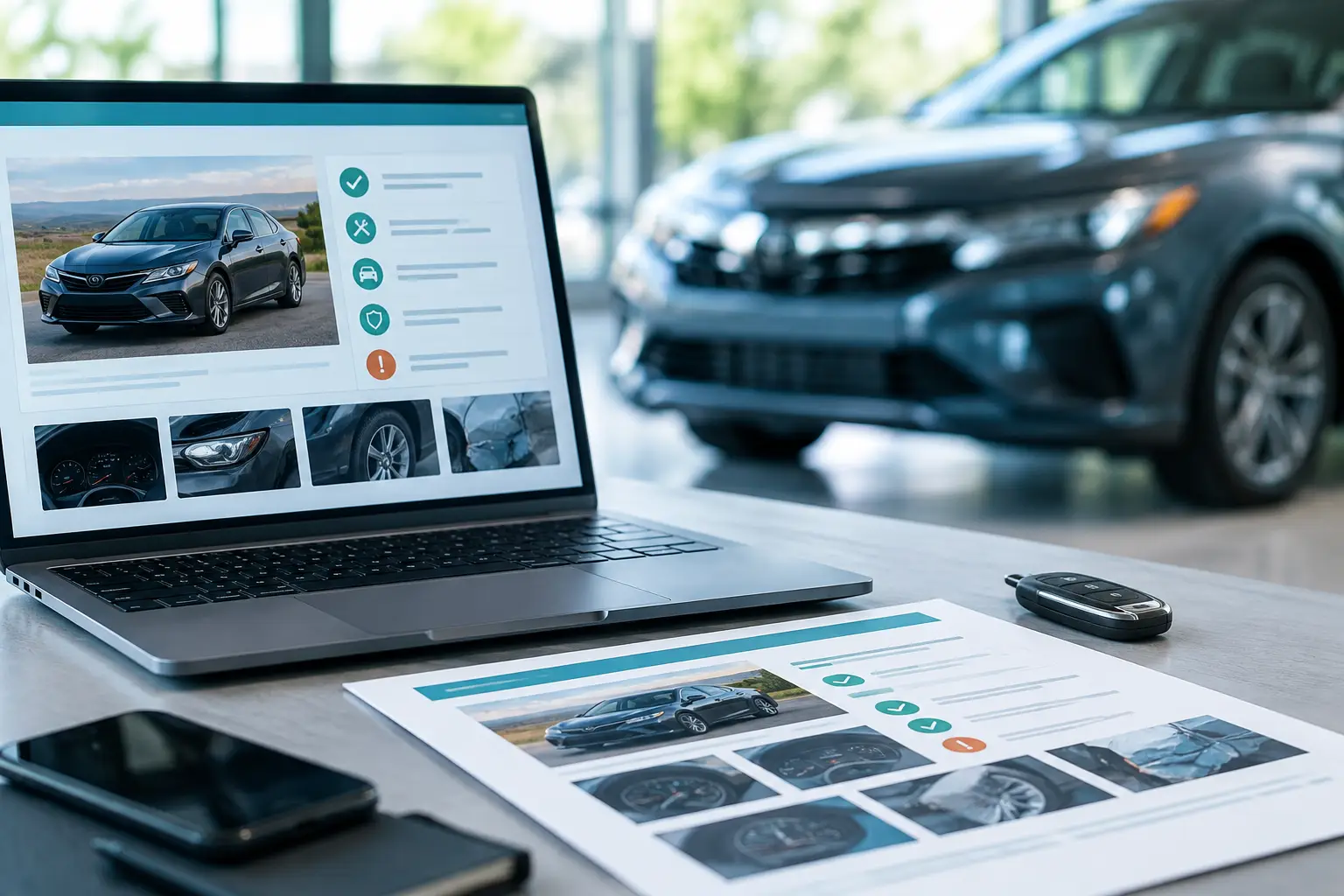
A clean exterior, low asking price, and a seller who says “nothing wrong with it” are not evidence. The VIN is. Knowing how to use VIN reports gives you a way to verify the vehicle behind the listing before money changes hands - whether you are buying one family car, evaluating auction inventory, or reviewing an entire fleet.
A VIN report is not a substitute for a pre-purchase inspection or a test drive. It is the record check that tells you where to focus them. Use it early, read it in the right order, and compare what it shows against the vehicle, seller, and price in front of you.
Start with the VIN, not the listing
The vehicle identification number is a 17-character identifier assigned to nearly every vehicle sold in the US since 1981. It connects a vehicle to records that may include its factory specifications, title events, registration history, reported damage, theft status, odometer readings, recalls, and more.
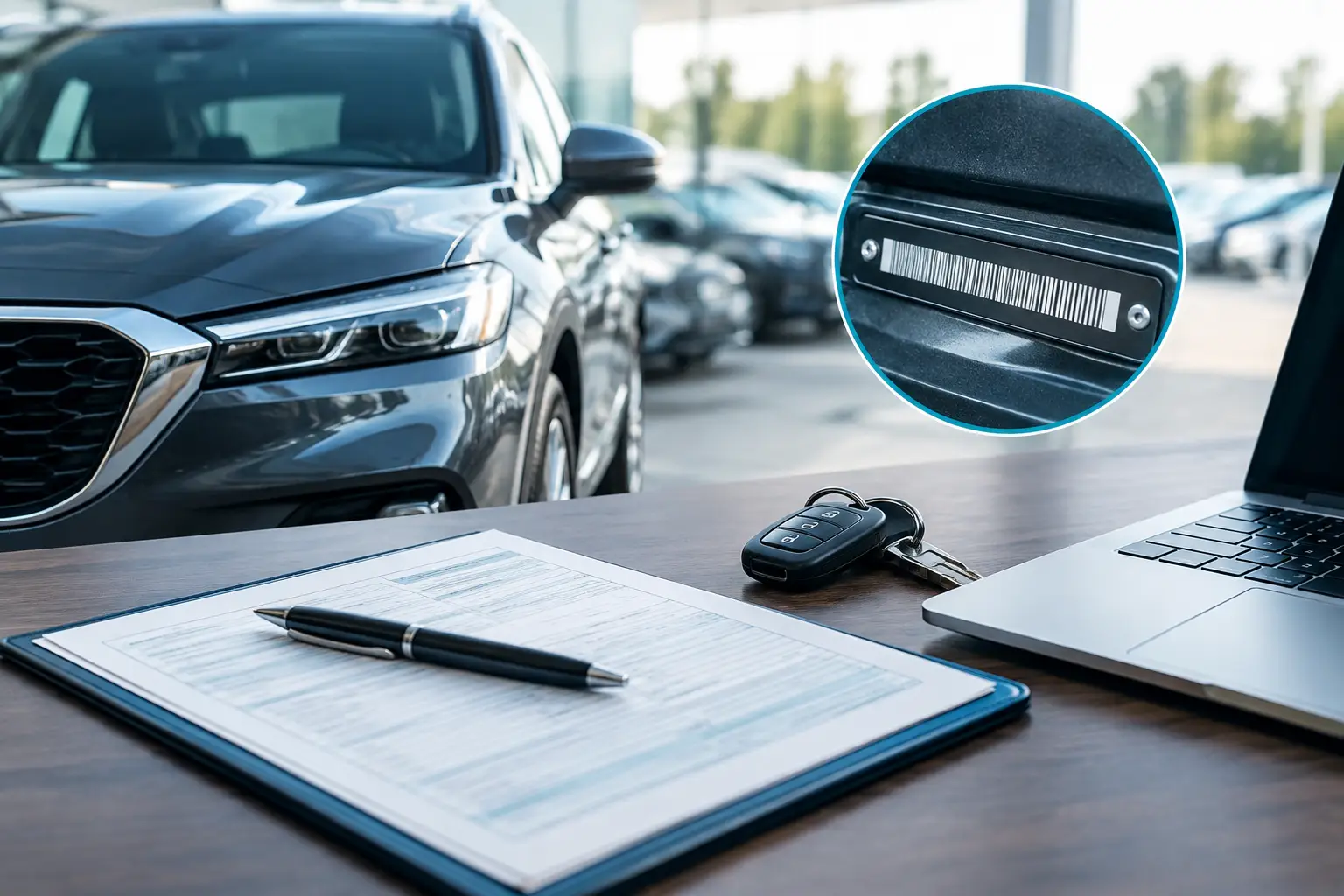
Get the VIN directly from the vehicle whenever possible. Check the plate at the base of the windshield on the driver’s side, then compare it with the driver-door label, title, registration, and any listing paperwork. A mismatch is not a small clerical detail. It can point to an incorrect listing, a swapped document, or a more serious identity problem.
Before ordering a premium report, use a free VIN lookup to confirm the basics: year, make, model, trim, engine, drivetrain, and open recalls. If those details do not match the advertised vehicle, stop and ask for an explanation before spending more time on the deal.
How to use VIN reports in the right order
A long report can make every event look equally urgent. They are not. Read the highest-risk signals first, then use the remaining history to judge condition, price, and ownership context.
1. Check title status and title brands first
Title information is often the fastest way to identify a vehicle that may carry lasting risk. Look for brands such as salvage, rebuilt, flood, junk, lemon, fire, hail damage, or not actual mileage. The meaning and disclosure rules can vary by state, but the practical question is consistent: what happened to this car, and does the current price reflect that risk?
A rebuilt title does not automatically make a vehicle a bad purchase. A properly repaired vehicle with complete repair documentation, an independent inspection, and an appropriately reduced price may work for some buyers. But financing, insurance, resale value, and long-term reliability can all be more complicated. A title brand should change the deal, not merely become a footnote.
Also watch for recent title transfers across states. Interstate movement is common and legitimate, but rapid changes in title status, gaps in the timeline, or a title issued shortly after severe damage deserve closer review.
2. Read accident and damage entries as a timeline
Reported accidents range from minor parking-lot incidents to structural damage and airbag deployment. Do not judge an entry by the word “accident” alone. Look at when it occurred, the reported severity, the areas affected, whether the vehicle was towed, and what happened next.
An older minor damage report followed by years of consistent service and registration may be less concerning than a recent damage event with no repair records. Ask the seller for itemized repair invoices, photos, insurer paperwork, and alignment or body-shop documentation when the report raises questions.
Then inspect the vehicle with that history in mind. If the report shows front-end damage, look for uneven panel gaps, overspray, mismatched paint texture, tire wear, warning lights, and signs of poorly completed repairs. A qualified mechanic or collision specialist can identify issues that a report alone cannot prove.
3. Verify the odometer trail
Mileage affects value, maintenance needs, and buyer trust. VIN reports may show odometer readings recorded during title transfers, inspections, service visits, auctions, or other reported events. Read the sequence from oldest to newest.
A steady climb is what you want to see. A lower reading after a higher one can indicate rollback, a recording error, an instrument-cluster replacement, or a title discrepancy. Any inconsistency requires documentation. Do not accept “the system must be wrong” as the full answer.
Compare the reported mileage with the dashboard, service stickers, maintenance invoices, tire wear, steering-wheel wear, pedal condition, and the vehicle’s overall condition. No single clue is decisive. Several clues pointing in the same direction are.
4. Review theft and recovery records carefully
A theft record does not always mean the vehicle is currently stolen. It may show that a vehicle was recovered after a theft. Still, it demands clarity. Confirm the record’s date and status, ask for the current title, and make sure the VIN on every document matches the vehicle.
If the report indicates an unresolved theft concern or the seller cannot provide clean, matching paperwork, walk away. A low price cannot compensate for the risk of losing both the vehicle and your money.
5. Check open recalls and safety information
Open recalls are not necessarily a reason to reject a vehicle. In many cases, an authorized dealer can complete the recall repair at no cost. But an unrepaired safety recall is a bargaining point and a scheduling issue, especially if it affects airbags, brakes, fuel systems, steering, or fire risk.
Use the report to identify the recall, then confirm whether the repair is open and whether parts are available. For a dealer or fleet manager, recalls should be part of intake workflow, not an afterthought after the vehicle is advertised or assigned to service.
Put the history beside the asking price
A VIN report tells you what may have happened. It does not tell you whether the seller’s number makes sense until you compare history against market value, condition, and local demand.
Start with the vehicle’s clean-history market range for its exact year, trim, mileage, and equipment. Then apply realistic deductions for title brands, prior structural damage, unresolved recalls, missing records, or mileage concerns. A seller may say damage was “minor,” but the market may still price that history differently when you resell or trade the vehicle.
For independent dealers and auction buyers, this is where disciplined comparison matters. Reviewing reports one at a time makes it easy to miss the better inventory decision. A dashboard that lets you save, sort, compare, and export multiple VINs turns scattered records into a repeatable buying process. DriveEvidence pairs verified vehicle history signals with a 0-100 DriveEvidence Score, helping users prioritize which units deserve deeper review before bidding, stocking, or presenting them to customers.
Know what a VIN report cannot prove
Vehicle history data is powerful, but it is not complete surveillance of a car’s life. Not every collision is reported. Not every repair reaches a connected data source. A clean report does not guarantee a clean vehicle, and a damage entry does not automatically prove poor repair quality.
That is why the strongest purchase process combines records with physical verification. Test drive the vehicle at city and highway speeds. Check cold-start behavior, transmission shifts, brakes, electronics, tires, and warning lights. Have an independent technician inspect the vehicle before the final purchase whenever the cost justifies it - which is usually the case for used vehicles with meaningful value.
For collectors and enthusiast vehicles, add provenance to the review. Matching numbers, restoration receipts, originality, storage history, and specialist inspection may matter more than a standard commuter-car checklist. The report establishes a baseline; the vehicle’s specific market determines how deep you need to investigate.
Questions to ask when the report shows a red flag
Do not lead with an accusation. Lead with the record and ask for proof. “The history shows a title event in 2022. Can you show me the title and repair documentation?” is more useful than a broad question about whether the car has “ever had problems.”
If the answer is clear, consistent, and supported by documents, you can decide whether the risk is acceptable at the stated price. If the seller becomes evasive, pressures you to skip inspection, refuses to share the VIN, or offers a story that conflicts with the report, treat the friction as information.
The same rule applies to dealers managing inventory. Flag exceptions early, document decisions, and do not let a fast acquisition process replace a defensible one. A vehicle can be sellable and still require the right disclosures, repairs, and pricing.
Make the report part of every decision
Run the VIN report before negotiating, not after you have emotionally committed to the vehicle. Save it with inspection notes, photos, seller messages, and repair estimates. If you are comparing several options, evaluate the same fields for each one: title status, damage history, mileage consistency, ownership pattern, recalls, condition, and market value.
The best vehicle is rarely the one with the shortest report. It is the one whose history is verifiable, whose condition matches that history, and whose price accounts for the risk you are accepting. Let the records narrow the field, let an inspection confirm the facts, and let the proof behind the vehicle make the decision easier.