
A clean-looking used car can still carry a serious problem: it may have been reported stolen, recovered after theft, or rebuilt using questionable parts and paperwork. Knowing how to check theft records before money changes hands is not a paperwork exercise. It is a direct way to protect yourself from losing the vehicle, your payment, or both.
Start with the vehicle identification number, not the seller's story. A VIN-based review gives you the strongest available foundation for checking theft status, title history, damage, and ownership-related red flags before you commit.
What a theft record can tell you
A theft record generally indicates that a vehicle was reported stolen to law enforcement, an insurer, or both. If it was later found, the record may also show that it was recovered. Recovery is not automatically a deal-breaker, but it changes the questions you need to ask.
A recovered vehicle may have no lasting damage beyond a broken window or ignition repair. It may also have been stripped, driven hard, exposed to weather, or involved in damage that was never fully documented. The condition of the car, its title status, repair records, and pricing all matter.
The most serious risk is an active theft report. If a vehicle is still listed as stolen, law enforcement can seize it even if you bought it in good faith. Your dispute is then with the seller, not the agency that recovered the vehicle.
How to check theft records with a VIN
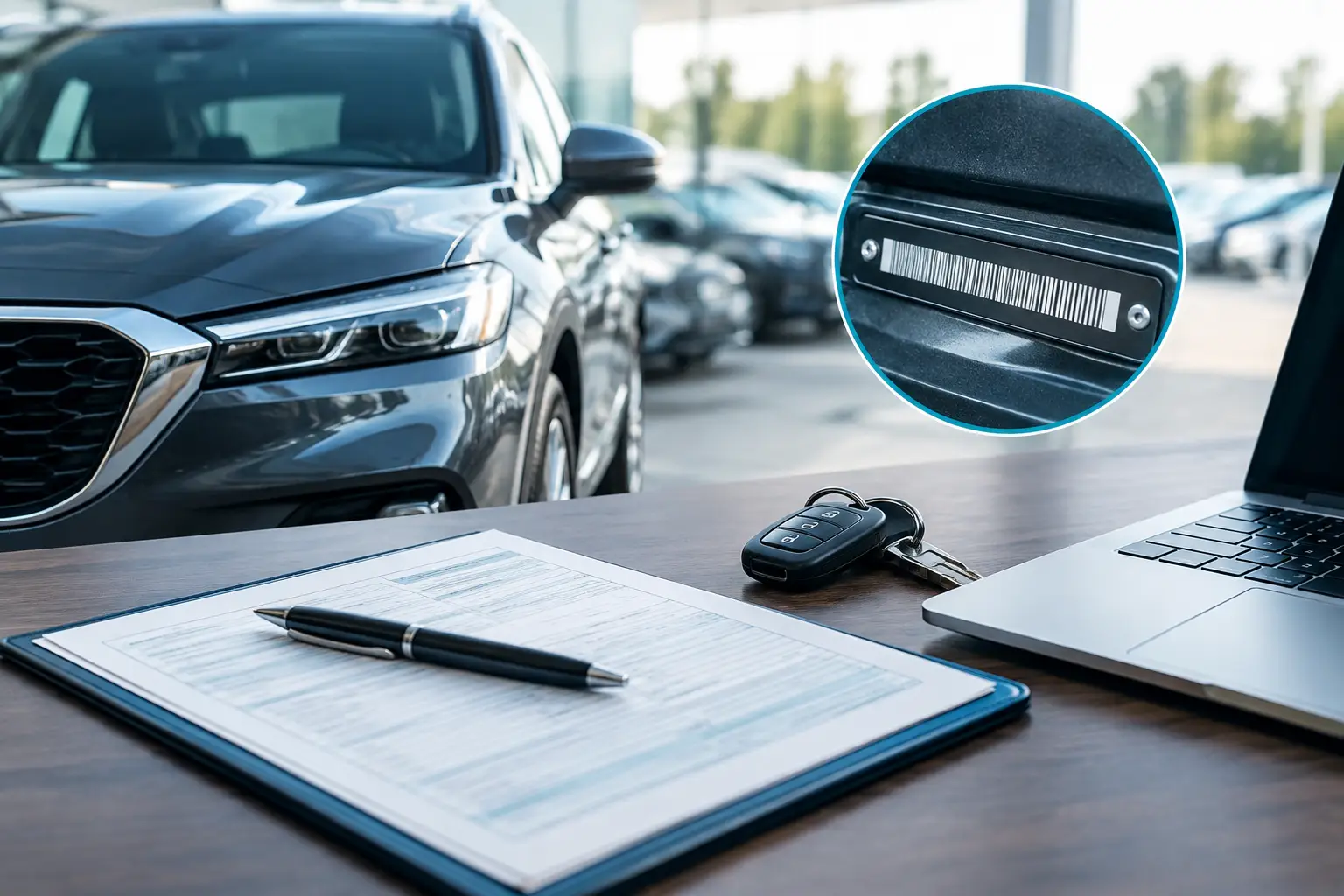
Use the full 17-character VIN from the vehicle itself. You can find it through the windshield on the driver's side, on the driver's door jamb, and on ownership documents. These locations should match exactly. One altered, missing, or mismatched character is enough reason to pause the transaction.
Run the VIN through a vehicle history report that includes theft and recovery data. A comprehensive report should place theft information alongside title brands, accident and damage records, odometer readings, registration events, and recall information. Theft status is more useful when viewed in context. For example, a recovered-theft event followed by a salvage title, a long gap in mileage records, and a below-market asking price deserves far more scrutiny than a recovered report with consistent title, repair, and mileage documentation.
You can also use the National Insurance Crime Bureau's VINCheck tool as a free initial screen for certain insurance theft and salvage records. It is useful, but it is not a complete vehicle history report and should not be treated as final clearance. Its coverage is limited to participating insurance data and may not reflect every police report, recovery update, title event, or timing change.
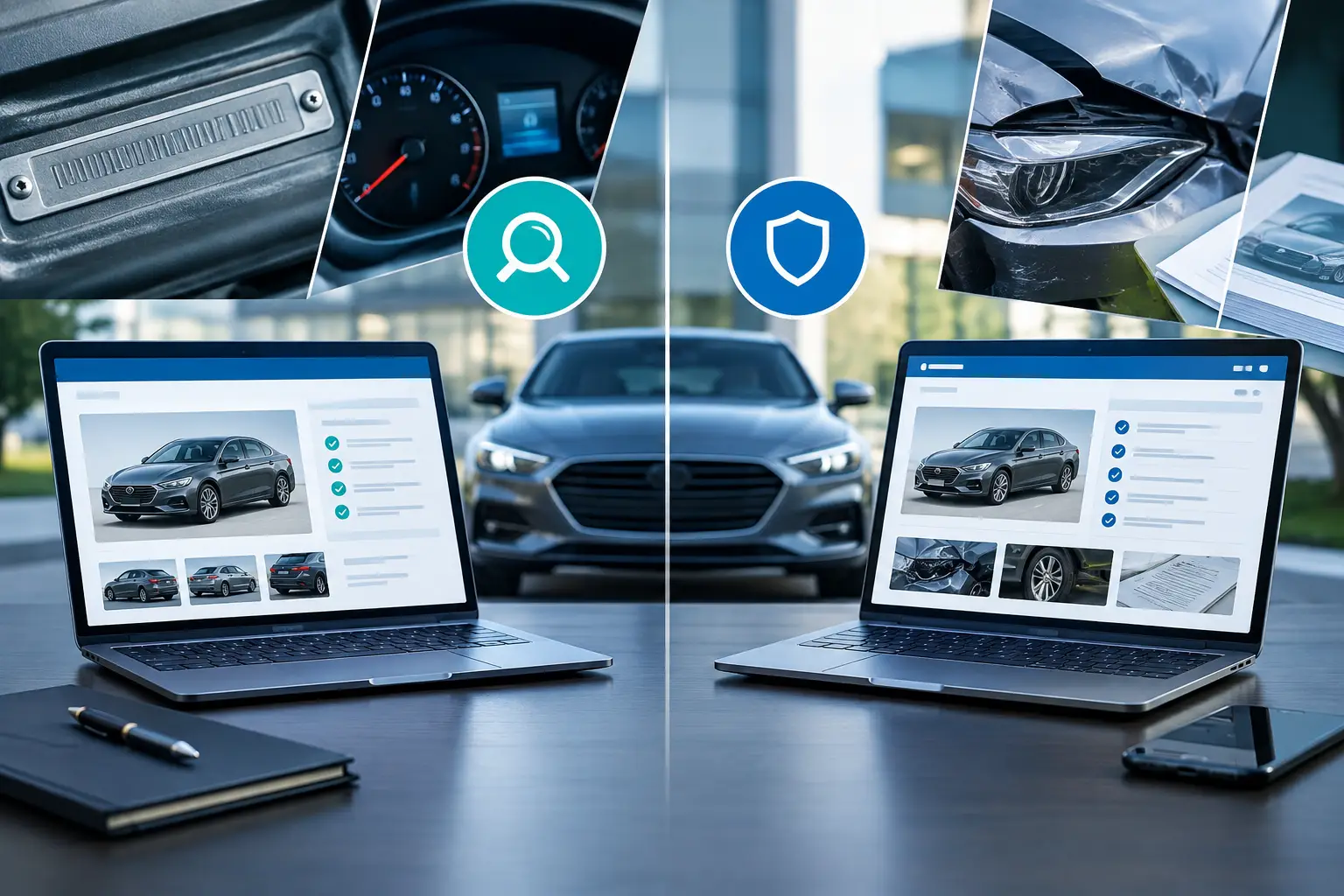
A DriveEvidence report can help consolidate theft and recovery records with the other history signals that affect risk. Its DriveEvidence Score is designed to turn a stack of records into a clearer decision signal, while the comparison dashboard helps buyers and dealers evaluate multiple VINs without losing track of the details.
Verify the physical VIN before trusting any report
A history report is only as reliable as the VIN entered. Criminals sometimes use VIN cloning, where a stolen vehicle is given the identity of a similar legitimate vehicle. In that scenario, a report for the cloned VIN can appear clean because it belongs to another car.
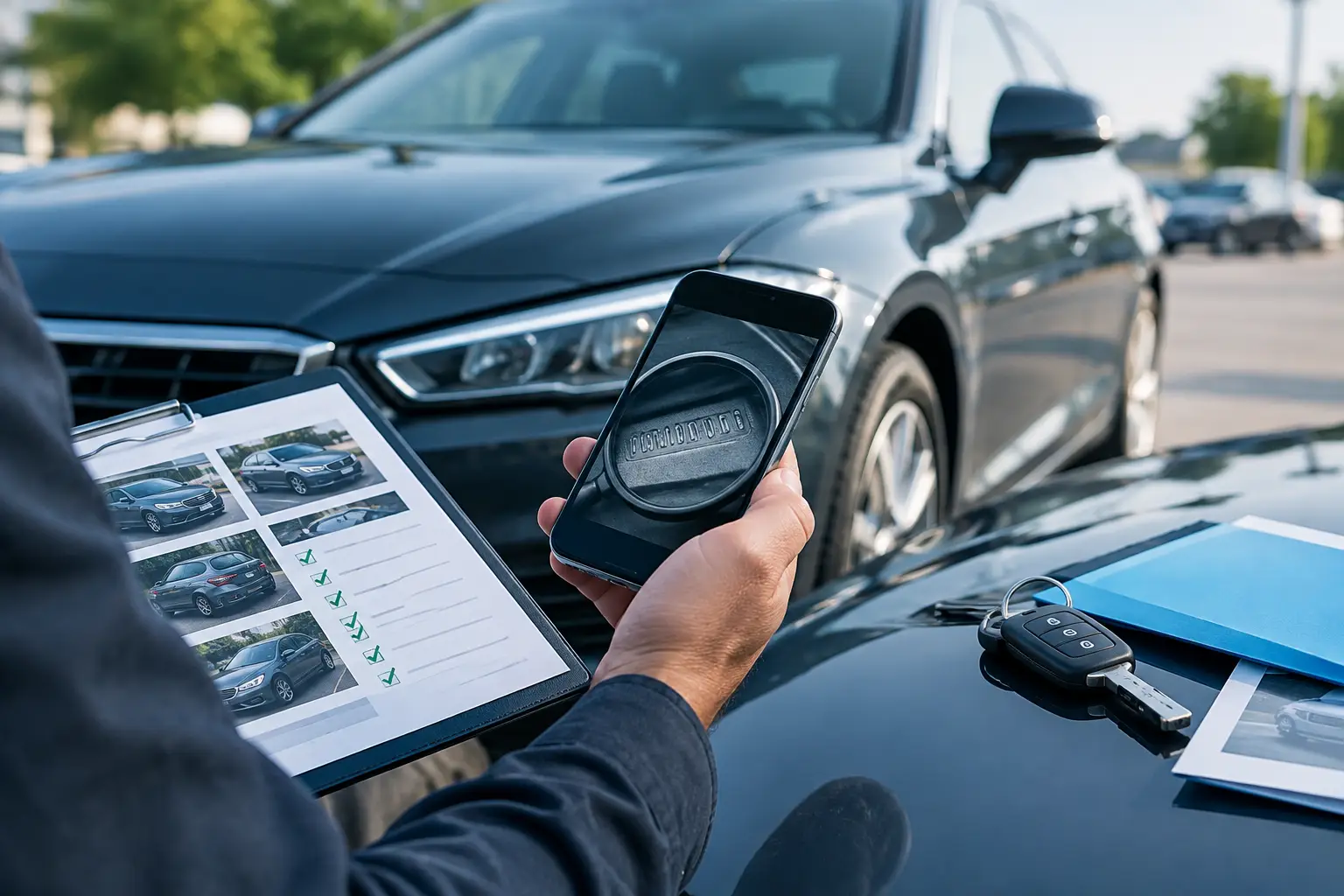
Check that the VIN plate near the windshield is secure, readable, and free of scratches, ripples, mismatched rivets, adhesive residue, or signs of tampering. Compare it with the door-jamb label, title, registration, service paperwork, and any visible manufacturer labels. The VIN should also match the vehicle's make, model, model year, engine configuration, and trim where applicable.
Be especially cautious when the seller will not allow an inspection, insists on meeting far from their address, pressures you to pay immediately, or says the title will arrive later. A legitimate seller should be able to show identification, provide the title, and allow enough time for VIN verification.
Read the title and recovery status together
Theft records and title records answer different questions. Theft data asks whether the vehicle was reported stolen or recovered. Title data shows how a state has branded or categorized the vehicle after an insurance claim, major damage event, flood event, or other issue.
A recovered theft vehicle may retain a clean title in some cases. In others, the insurer may declare it a total loss and it may receive a salvage, rebuilt, reconstructed, or similar brand depending on state rules. Do not assume that a clean title proves there was no theft-related damage, and do not assume that every branded title means the car is unsafe. The deciding factor is documentation and condition.
Ask for repair invoices, photographs from before repairs, insurance settlement information if available, and a pre-purchase inspection from a qualified independent technician. For late-model vehicles, confirm that advanced driver-assistance systems, keys, modules, cameras, and airbags work correctly. Theft recovery repairs can be cosmetic, mechanical, or electronic.
Know what a “no record found” result means
No theft record found is a positive result, but it is not a guarantee that a vehicle has never been stolen or involved in fraud. Reporting systems have delays. Data sources vary. A theft may have occurred before a database began collecting records, outside its coverage area, or without a matching insurance claim.
Treat a clean theft result as one part of due diligence, not a substitute for inspecting the title and vehicle. The strongest decision combines a VIN history report, physical VIN verification, title review, seller verification, market-price comparison, and a professional inspection.
This matters most when the price looks unusually attractive. A bargain can be real, especially when a seller needs a quick sale. But a price well below comparable vehicles should make you slow down, not speed up. Fraud depends on urgency and incomplete verification.
What to do if you find a theft or recovery record
First, do not send a deposit or sign paperwork until you understand the record. Ask the seller for a clear explanation and documents that support it. A legitimate recovery history should be reflected consistently in the title, repair records, insurance paperwork, and vehicle condition.
Next, compare the event dates. Look for the theft date, recovery date, title issuance date, salvage or rebuilt branding, odometer entries, and major repairs. The timeline should make sense. If the vehicle was recovered in one state but immediately received a clean title elsewhere with no explanation, investigate further.
If the report suggests the vehicle may still be stolen, stop the deal. Contact local law enforcement or the appropriate agency before attempting to move the vehicle. Do not confront the seller or try to resolve an active theft concern through informal assurances.
For a recovered vehicle that has clear documentation, the decision comes down to condition, insurability, financing, and price. Some lenders and insurers limit coverage for branded vehicles. Resale value is usually lower, so the purchase price should reflect that reality. A recovered vehicle can be a reasonable choice, but only when the documentation is complete and the discount is meaningful.
A faster theft-record workflow for dealers and fleets
For professionals evaluating auction, trade-in, or wholesale inventory, checking one VIN at a time is often too slow. Build theft review into the intake process before appraisal, transport, reconditioning, or retail listing.
Start with a batch VIN review, then isolate units with theft, recovery, salvage, rebuilt-title, odometer, or registration inconsistencies. High-risk units should receive a physical VIN inspection and title review before additional money is spent. Keep the report and supporting paperwork in the deal file so the reasoning behind an acquisition decision is easy to verify later.
For fleet managers, the same discipline helps confirm the identity and history of acquired replacement vehicles. It can also support internal controls when assets are transferred, retired, or resold. The goal is not simply to find a stolen-vehicle record. It is to ensure every VIN, title, and asset record points to the same vehicle.
The questions worth asking before you buy
If a theft or recovery event appears, ask the seller when the vehicle was stolen, when it was recovered, who performed repairs, whether an insurer declared a total loss, and whether the title was ever branded. Then ask for proof. Honest answers are helpful; matching documentation is better.
A seller's willingness to provide the VIN early is also a useful signal. There is little reason to hide it from a serious buyer who wants to verify history. If a seller refuses to share the VIN, offers only a partial number, or gives a report that does not match the car in front of you, walk away.
The safest used-car purchase is not the one with the fewest questions. It is the one where the answers can be verified. Check the theft record, match the VIN, inspect the title, and give yourself permission to leave when the evidence does not add up.