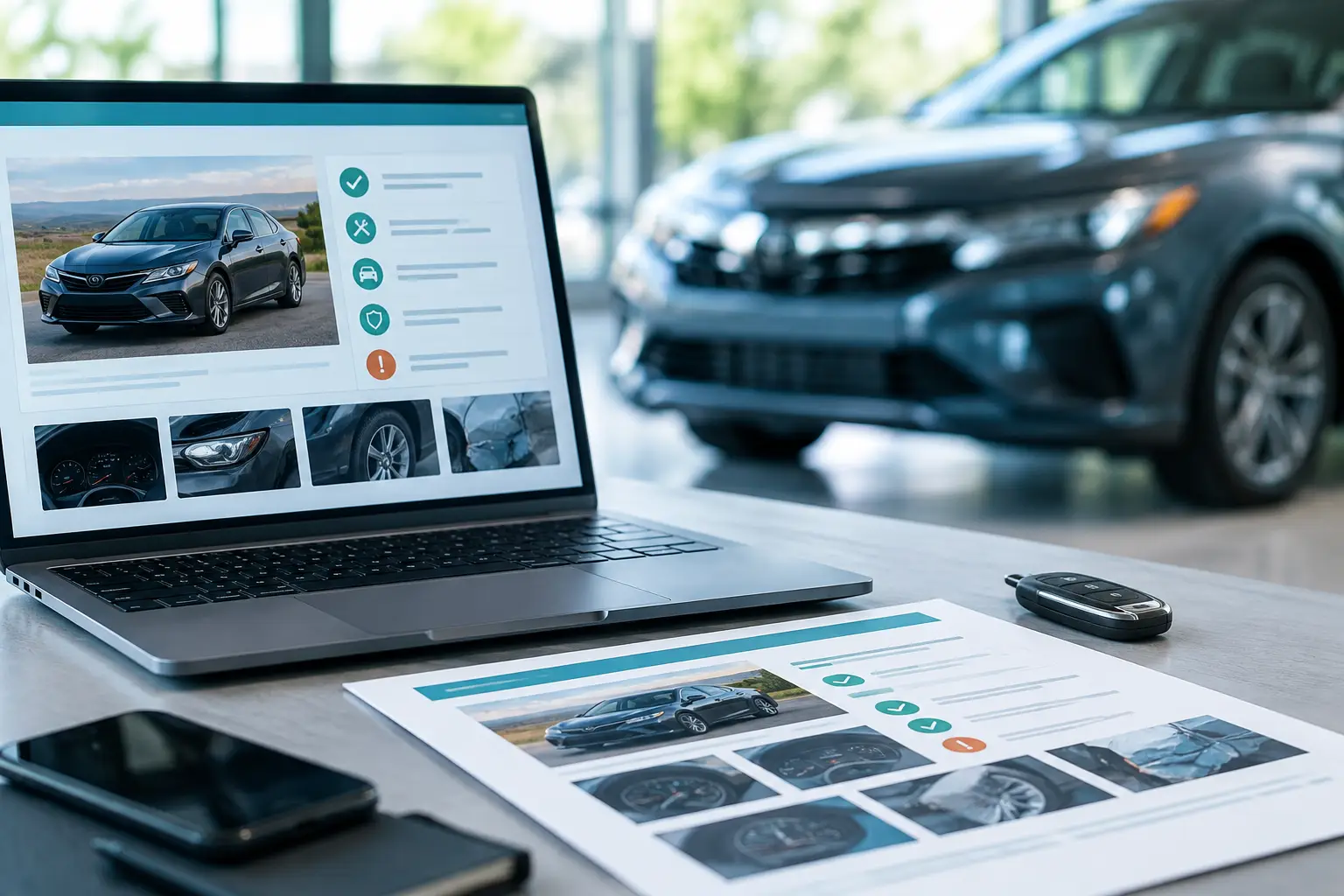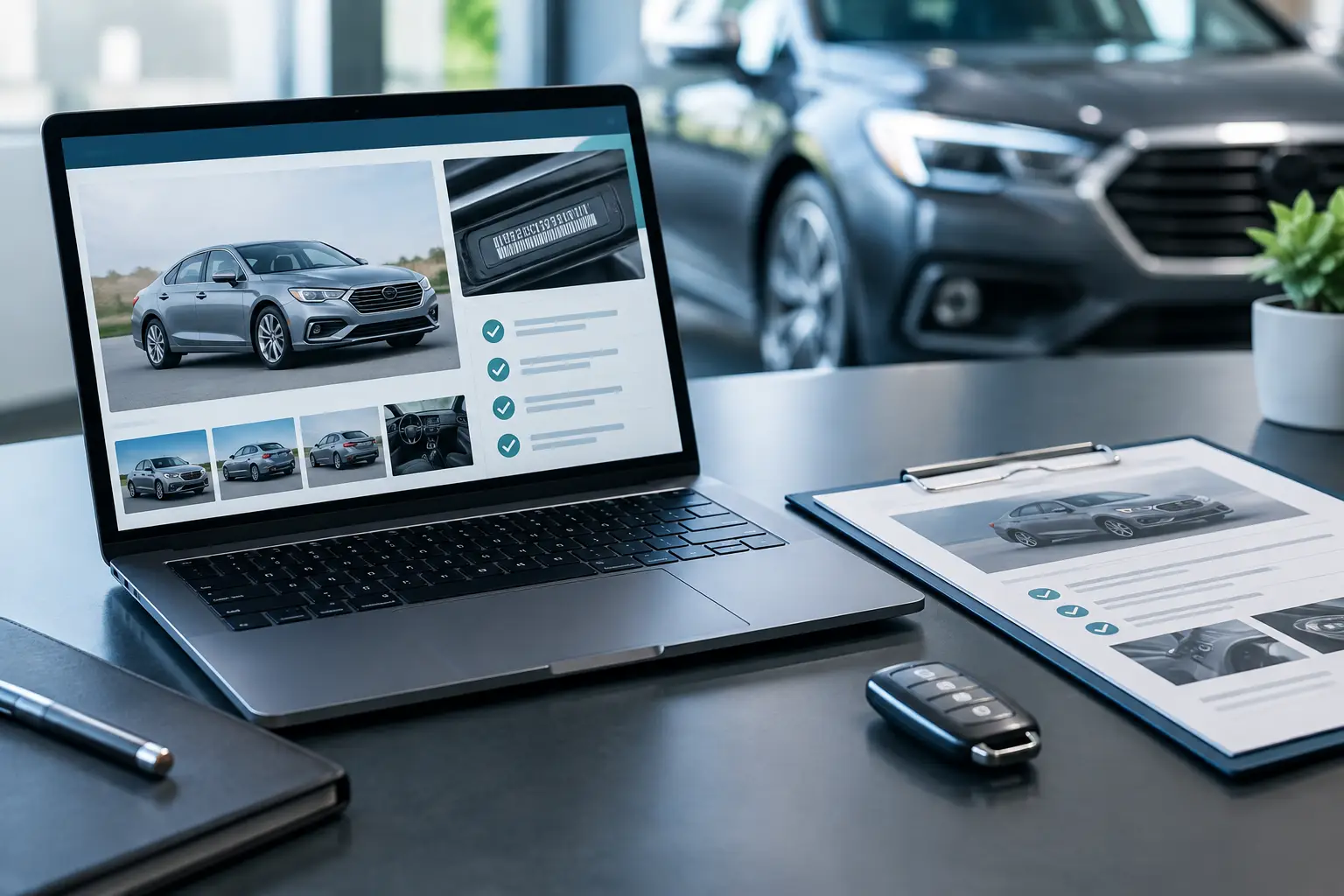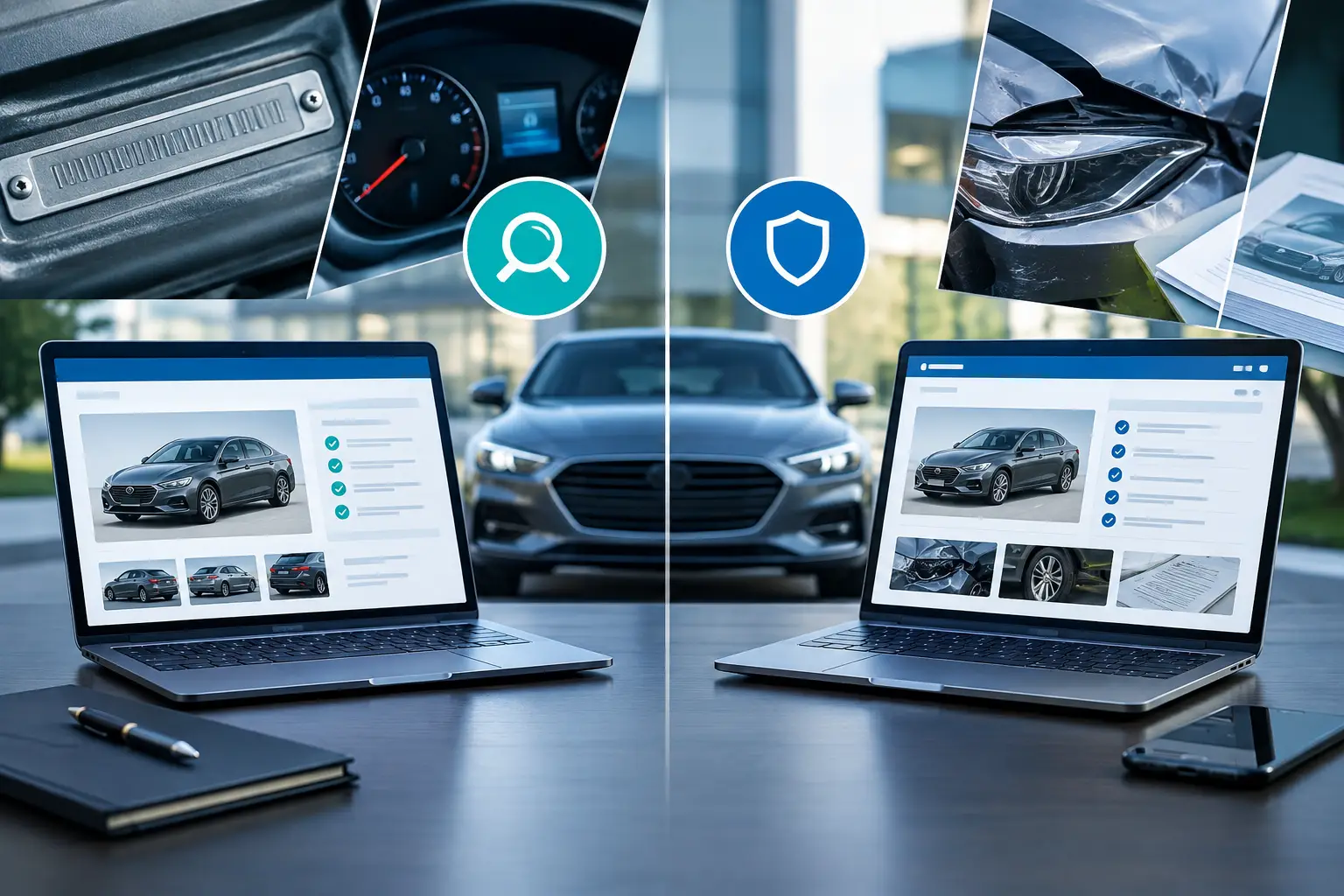
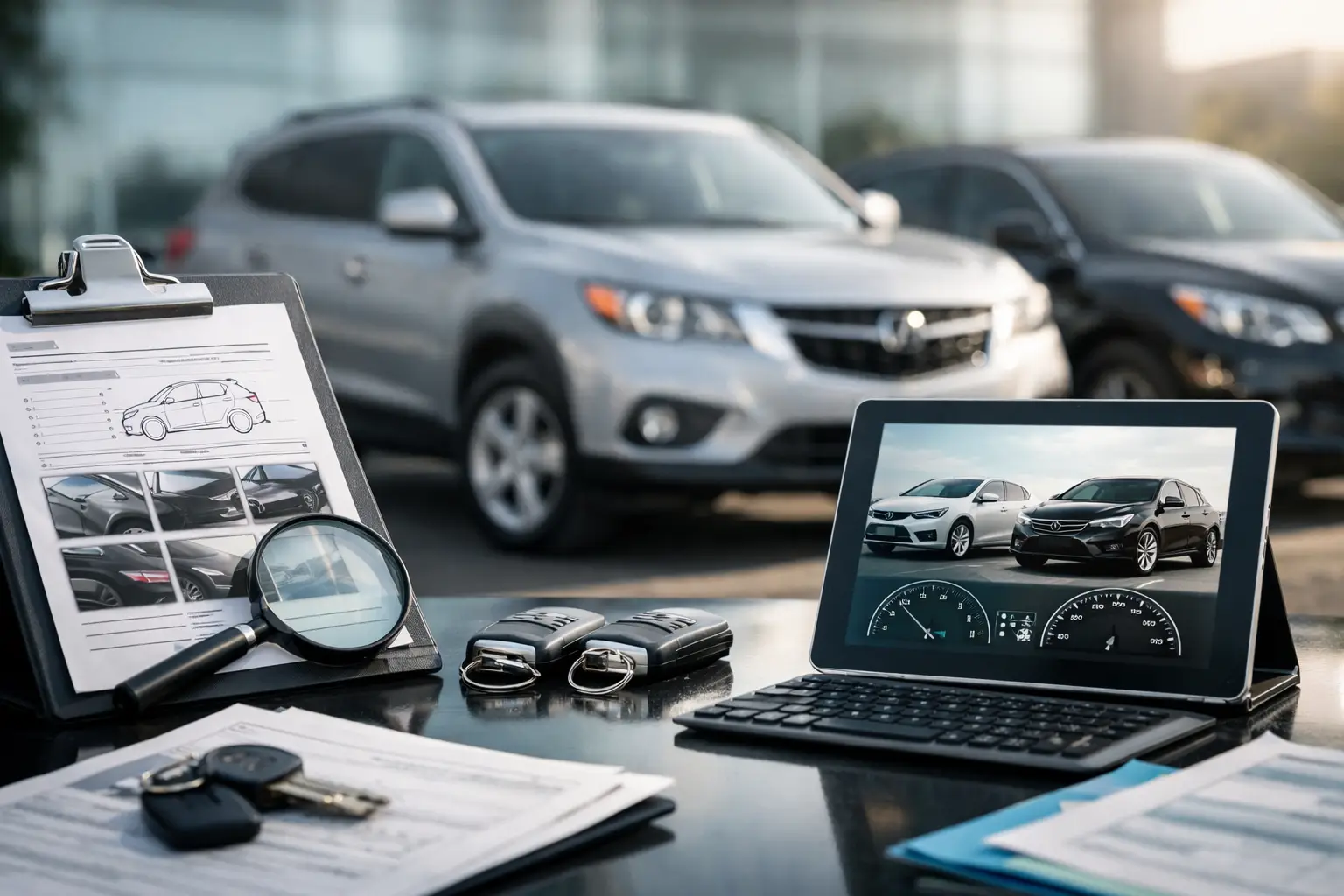
Two used SUVs can have the same year, trim, mileage, and asking price - yet one can be a sound purchase while the other carries accident damage, a branded title, or a history that makes resale difficult. Knowing how to compare used vehicles means looking past the listing headline and putting every candidate through the same evidence-based review.
The goal is not to find the vehicle with the lowest price. It is to identify the vehicle with the best combination of condition, verified history, ownership cost, and market value for your needs. A disciplined comparison protects buyers from expensive surprises and helps dealers and fleet teams make faster, more defensible acquisition decisions.
Start With a Fair Vehicle Comparison
Do not compare listings until you have defined what counts as an equivalent vehicle. A $24,000 pickup with four-wheel drive, a higher tow rating, and documented maintenance is not directly comparable to a $24,000 two-wheel-drive model with fewer options and an unknown service past.
Create a short set of non-negotiables before shopping. For a daily driver, that might include maximum payment, seating, fuel type, model year range, safety features, and a mileage ceiling. For an auction buyer or dealer, it may include acquisition cost, title eligibility, recon tolerance, retail demand, and turn-time targets.
Then narrow the list to vehicles with similar model years, trims, drivetrains, mileage bands, and locations. This gives you a clean baseline. Once the vehicles are comparable on paper, the details that matter begin to stand out.
Compare Used Vehicles in This Order
A listing can make a vehicle look like a bargain before it gives you enough information to judge it. Review the same categories in the same order for every VIN. That prevents one sharp-looking vehicle, a persuasive seller, or a low advertised payment from getting more credit than the evidence supports.
1. Verify the VIN, configuration, and equipment
Start with the VIN. Confirm that it matches the dashboard, door-jamb label, title, registration, and seller documentation. A mismatch is a stop sign until it is explained and verified.
Use the VIN to confirm the vehicle is actually the trim and configuration being advertised. Engine, drivetrain, cab or body style, factory options, towing equipment, and advanced safety features can materially affect value. A seller may describe a vehicle by its highest trim family, while the VIN data reveals a lower specification.
For buyers, this step prevents paying premium-trim money for a mid-level vehicle. For dealers, it prevents pricing errors that can erase margin before the vehicle reaches the lot.
2. Evaluate history before judging cosmetic condition
A clean interior does not erase a collision, title brand, theft record, or odometer issue. Vehicle history should be reviewed early because it changes the meaning of everything else, including price.
Look for accident and damage events, title status and brands, theft and recovery records, ownership changes, odometer readings, open recalls, and inspection or registration patterns. No single record automatically disqualifies a vehicle. The context matters.
For example, a minor damage record followed by years of consistent ownership and clean inspections may be manageable if the price reflects it. A salvage or rebuilt title, repeated damage events, an unexplained mileage gap, or a recent theft recovery requires much more scrutiny. These factors can affect financing, insurance, resale value, and your ability to trust the vehicle long term.
The key question is not simply, “Does it have history?” Every used vehicle has a history. Ask whether the records form a consistent, explainable story.
3. Compare mileage by use, not just by the odometer
Mileage matters, but mileage alone is a weak shortcut. A 90,000-mile vehicle with regular service, highway use, and one careful owner can be a better purchase than a 55,000-mile vehicle that sat unused, changed hands frequently, or shows uneven wear.
Compare the odometer against the vehicle’s age and recorded timeline. Look for steady increases that make sense between events. Sudden drops, long gaps, or readings that conflict with a listing deserve investigation. Also look at physical wear: pedal pads, driver-seat bolsters, steering wheel texture, tires, and brake components should generally align with the reported miles.
Mileage should influence price and expected maintenance. It should not replace a full condition and history review.
4. Put asking price next to actual market value
The asking price is a negotiation position, not proof of value. Compare each vehicle against current market valuations for the same year, make, model, trim, mileage, and region. Then adjust for condition, history, equipment, and title status.
A lower-priced vehicle may still be overpriced if it has an accident history, worn tires, open recalls, or an upcoming major service. A higher-priced vehicle may be justified if it has documented maintenance, better equipment, clean records, and fewer immediate costs.
Calculate the real acquisition cost, not just the advertised number. Add sales tax, registration, delivery, dealer fees where applicable, inspection costs, repair estimates, tires, brakes, windshield work, and any overdue maintenance. For a dealer or fleet manager, add transportation, reconditioning, holding costs, and projected resale or operating value.
The best purchase is often not the cheapest vehicle. It is the one with the lowest risk-adjusted cost after you account for what it will require next.
5. Check safety and recall exposure
Safety ratings and open recalls deserve a separate review, especially when comparing vehicles from different generations or segments. A newer model may offer substantially better crash protection, braking assistance, blind-spot monitoring, or rear-seat safety than an older alternative with a similar price.
Open recalls do not always mean you should walk away. Many can be repaired at no cost by a franchised dealer. But they should be disclosed, verified, and factored into timing. If a recall involves critical equipment and the repair is not immediately available, that changes the decision.
For families, safety may outweigh a small price difference. For commercial users, recall status can affect deployment timing and downtime. Assign it the weight that fits the vehicle’s job.
Use a Scorecard, Not a Stack of Tabs
Comparing vehicles one report at a time makes it easy to miss patterns. Put each candidate into a side-by-side scorecard with the categories that drive your decision: verified price, mileage, title status, accidents or damage, ownership count, odometer consistency, recall status, estimated repairs, and key equipment.
Weight the categories according to your use case. A first-time buyer may give heavier weight to reliability, safety, and predictable monthly costs. A collector may prioritize originality, ownership provenance, and matching specifications. A dealer may focus on title eligibility, recon cost, local demand, and days-to-sale risk.
DriveEvidence can simplify this process by bringing VIN-based records, specifications, recalls, valuations, and a 0-100 DriveEvidence Score into one comparison dashboard. The score is not a substitute for inspection or judgment. It is a fast decision signal that helps you see which vehicles deserve deeper attention and which ones carry risk that the listing did not make obvious.
Inspect the Vehicle After the Data Review
History data tells you where to look. It does not replace a physical inspection, test drive, or independent pre-purchase inspection.
During the walk-around, inspect panel gaps, paint texture, overspray, mismatched body panels, tire age and wear, fluid leaks, underbody corrosion, and glass markings. Inside, test every major function: climate control, windows, locks, infotainment, cameras, driver-assistance features, lights, and charging ports. On the road, listen for suspension noise, feel for brake vibration, and watch for warning lights or transmission hesitation.
If the history shows an accident, ask for repair documentation and focus the inspection on the affected area. If the report shows multiple owners or a rapid resale, ask why. A reasonable seller should be able to answer direct questions with records, not vague assurances.
An independent mechanic is especially valuable when the vehicle has complex electronics, high mileage, performance modifications, prior damage, or a price that seems unusually attractive. The inspection fee is small compared with an engine, transmission, structural, or electrical repair.
Know When to Walk Away
Some issues can be negotiated. Others are signals to stop spending time. Walk away when the VIN does not match, the seller cannot produce a clear title, the odometer story does not make sense, a major title brand was not disclosed, or inspection findings conflict with the seller’s claims.
Also be cautious when a seller rushes the transaction, discourages an inspection, insists on unusual payment methods, or refuses to provide the VIN before meeting. A legitimate vehicle can withstand verification. Pressure is not proof.
A strong used-vehicle decision is built from records, condition, and economics that agree with each other. When one candidate requires too many excuses, let it go. There will be another listing. The right vehicle will make sense before you hand over the keys or the money.