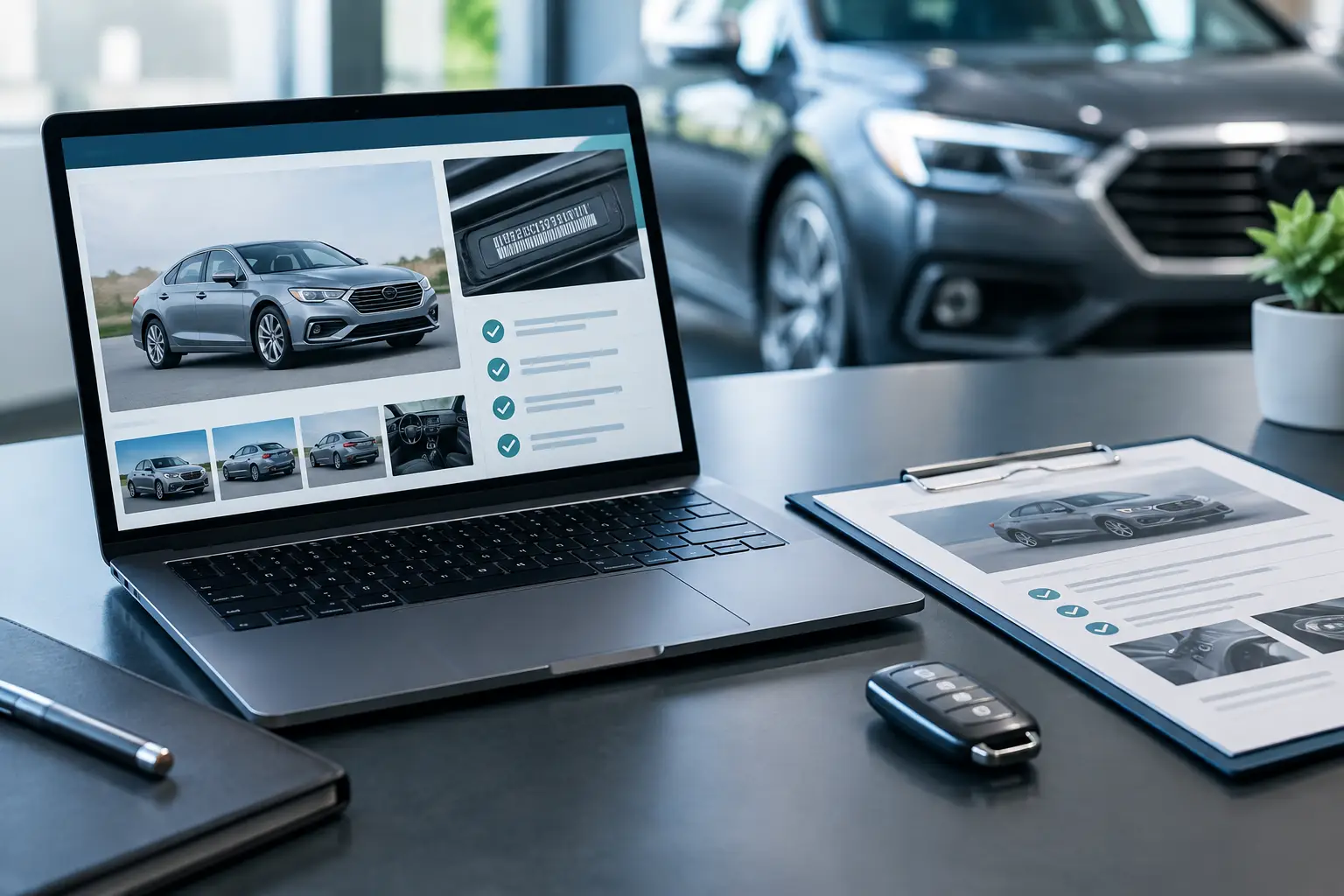
A used car can look excellent in a driveway, under dealership lights, or in a polished online listing - and still carry accident damage, a branded title, an odometer discrepancy, or overdue safety work. The difference between a smart purchase and an expensive surprise is having a repeatable process. If you are learning how to evaluate used cars, start with evidence, not appearance.
A clean interior, fresh tires, and a low asking price are all worth noticing. None of them proves the vehicle is a good buy. Evaluate the car in layers: confirm its identity and history, inspect its condition, test how it performs, and compare its price against its real risk profile.
Start With the VIN and Vehicle History
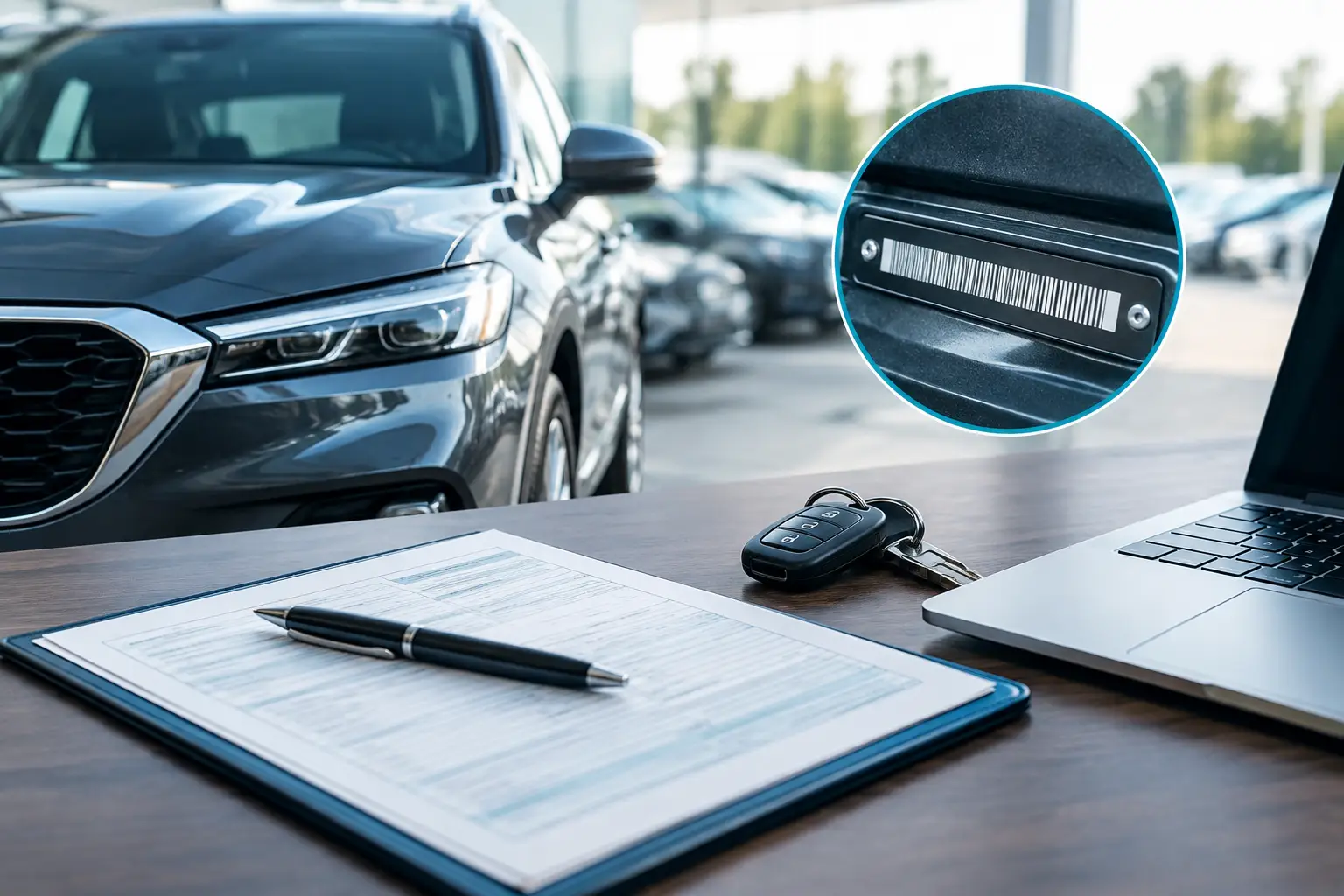
The vehicle identification number is the foundation of the evaluation. Ask for the full 17-character VIN before you visit, place a deposit, or discuss financing. If a private seller or dealer will not provide it, treat that as a stop sign.
A VIN-based history report can reveal information that a walk-around cannot: title brands, reported accidents and damage, theft or recovery records, ownership events, odometer readings, open recalls, and vehicle specifications. A report is not a substitute for an inspection, because not every event is reported. But it gives you the right questions to ask and helps you avoid spending time on vehicles with deal-breaking issues.
Pay close attention to title status. Salvage, rebuilt, flood, lemon, and junk titles can sharply affect resale value, insurance options, financing, and long-term reliability. A rebuilt title is not automatically a bad purchase, but it should be priced far below a comparable clean-title vehicle and inspected by an independent professional. For most buyers, especially first-time buyers, a clean title is the lower-risk choice.
Also compare mileage in the listing, on the odometer, and in the history record. Large gaps, unusual reversals, or long periods with no recorded mileage deserve investigation. Odometer manipulation is less common than it once was, but it remains a costly form of fraud.
Match the Listing to the Actual Car
Before evaluating mechanical condition, make sure the car is what the seller says it is. Confirm the VIN on the dashboard matches the VIN on the door-jamb label and the title or registration. Check the model year, trim, engine, drivetrain, and major options against the listing.
This matters because trim-level differences affect value. A vehicle advertised as a premium package, all-wheel drive model, or higher-output engine may command thousands more than a base version. Features can be added or removed, but the VIN and factory specifications establish what the vehicle was built as.
Read the listing carefully for claims such as “one owner,” “no accidents,” “garage kept,” or “fully serviced.” Then compare those claims with documented records. A seller may be repeating what they were told rather than deliberately misleading you, but your decision should be based on verification.
Inspect the Exterior for Repair Clues
Do the first walk-around in daylight with the car clean and dry if possible. Rain, shade, and heavy detailing can hide paint flaws and panel inconsistencies.
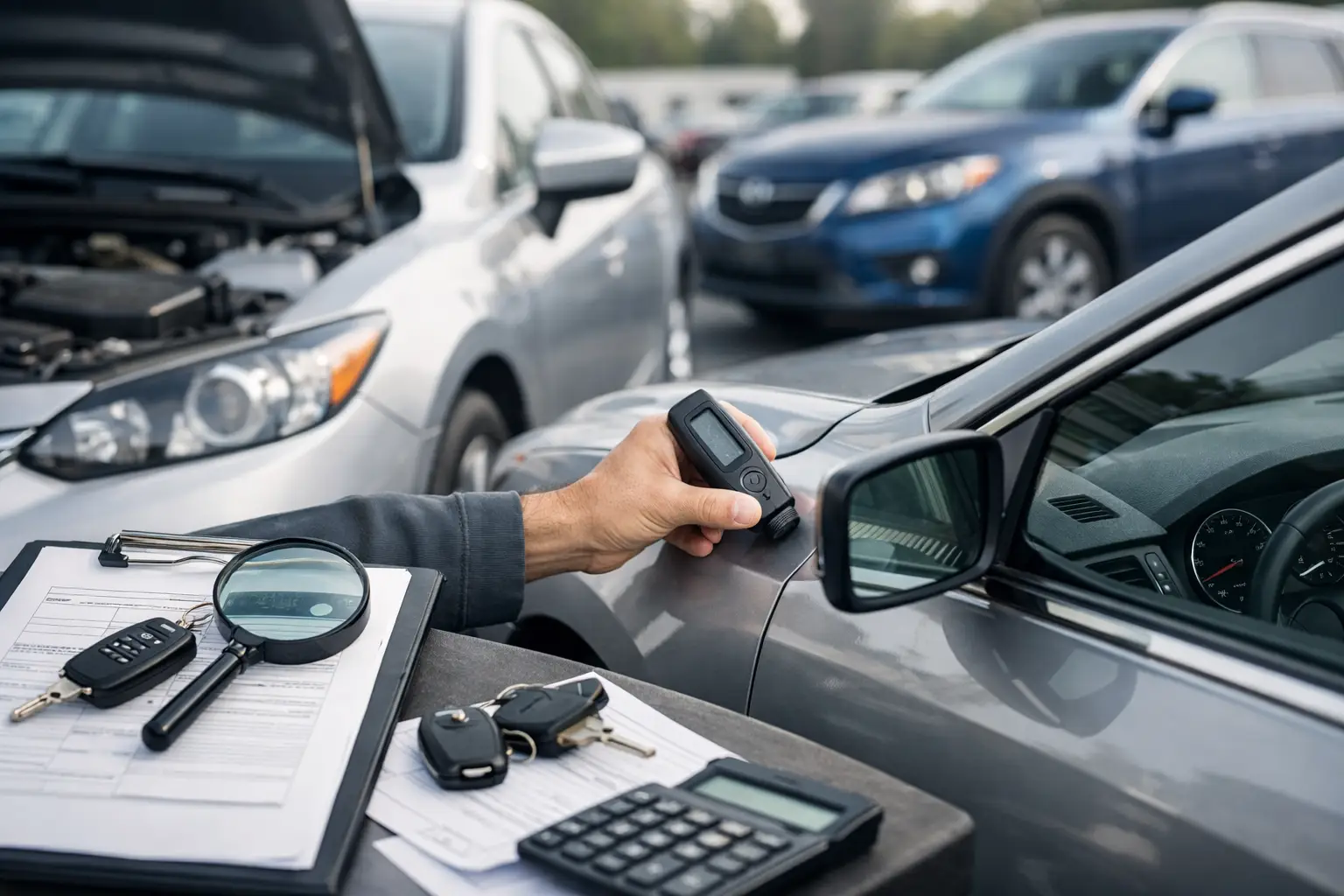
Look along the sides of the vehicle from several angles. You are checking for differences in paint color, texture, gloss, and panel alignment. Uneven gaps around the hood, trunk, doors, headlights, or fenders can indicate prior repair. Small variations do happen at the factory, especially on older vehicles, so do not make a judgment from one detail alone. Look for a pattern.
Check for overspray on rubber trim, wheel-well liners, door seals, and plastic components. Inspect headlights and taillights for moisture, cracks, or mismatched manufacturing dates. Newer lights on one corner of an otherwise older vehicle can be a reasonable repair, but they may also support a history of impact damage.
Tires tell their own story. Check tread depth and look for uneven wear across each tire. Wear concentrated on one edge may point to alignment, suspension, or steering issues. Verify that all four tires are the same size and, ideally, the same model. A mismatched set is not always dangerous, but it can signal deferred maintenance and create handling problems, particularly on all-wheel-drive vehicles.
Check the Interior and Under-Hood Condition
Inside, test every major function. Turn on the climate control, infotainment system, cameras, power windows, locks, mirrors, seat adjustments, lights, and driver-assistance features. Warning lights should illuminate briefly when the ignition is switched on, then turn off after the engine starts. A light that stays on needs a diagnostic explanation, not a verbal promise.
Watch for water-related clues: a musty odor, damp carpet, rust on seat rails, silt under floor mats, or corrosion inside the trunk and spare-tire well. Flood damage can cause electrical problems long after the car appears dry and presentable.
Under the hood, look for obvious leaks, cracked hoses, corroded battery terminals, or signs of improvised repairs. Check fluid levels if accessible, but do not rely on clean fluids as proof of good maintenance. Fresh oil can hide neglect just as fresh paint can hide bodywork. Service invoices and maintenance records carry more weight.
Take a Deliberate Test Drive
A five-minute loop around the block is not enough. Drive the vehicle long enough to reach normal operating temperature, ideally on local streets and a highway. Start with the radio off and pay attention to what the car communicates.
At startup, listen for extended cranking, ticking, rattling, or smoke from the exhaust. During the drive, check whether the engine accelerates smoothly, the transmission shifts without hesitation or harsh engagement, and the steering tracks straight. Brake firmly in a safe area. The car should stop in a straight line without vibration, pulling, grinding, or a soft pedal.
Test the vehicle at multiple speeds. A wheel vibration at highway speed could be a simple balance issue, but it could also involve tires, wheels, suspension, or prior collision damage. Listen for clunks over bumps and humming that rises with speed. Those sounds can point to worn suspension components or wheel bearings.
If possible, drive from cold. Some problems disappear once the engine warms up, while others only appear after a longer drive. Either way, a seller should not rush your evaluation.
Get an Independent Pre-Purchase Inspection
A pre-purchase inspection is one of the highest-value steps in the used-car process. Arrange it with a qualified independent mechanic or a brand specialist, not a shop chosen solely by the seller. The inspection can identify leaks, frame damage, worn brakes, hidden fault codes, suspension wear, battery health concerns, and maintenance needs that are not obvious on a test drive.
The cost of an inspection is small compared with a transmission repair, a hidden cooling-system failure, or the loss in value from undisclosed structural damage. If the seller refuses a reasonable independent inspection, walk away. There are other cars.
For higher-value vehicles, performance models, older collector cars, or vehicles with rebuilt titles, consider a more specialized evaluation. The right inspection depends on the car and the risk. A standard checklist may not be enough for a diesel truck, luxury hybrid, EV, or modified vehicle.
Compare Price Against Condition, Not Just Listings
A fair price is not simply the lowest number you find online. Compare similar vehicles with the same year, trim, mileage range, drivetrain, condition, and title status. Then adjust for real differences: documented maintenance, tire condition, accident history, needed repairs, open recalls, location, and ownership history.
Be skeptical of a price that sits well below the market. It may be an urgent sale, but it may also reflect a problem the listing does not explain. A vehicle with a clean history, strong maintenance records, and a clean inspection can be the better value even if its sticker price is higher.
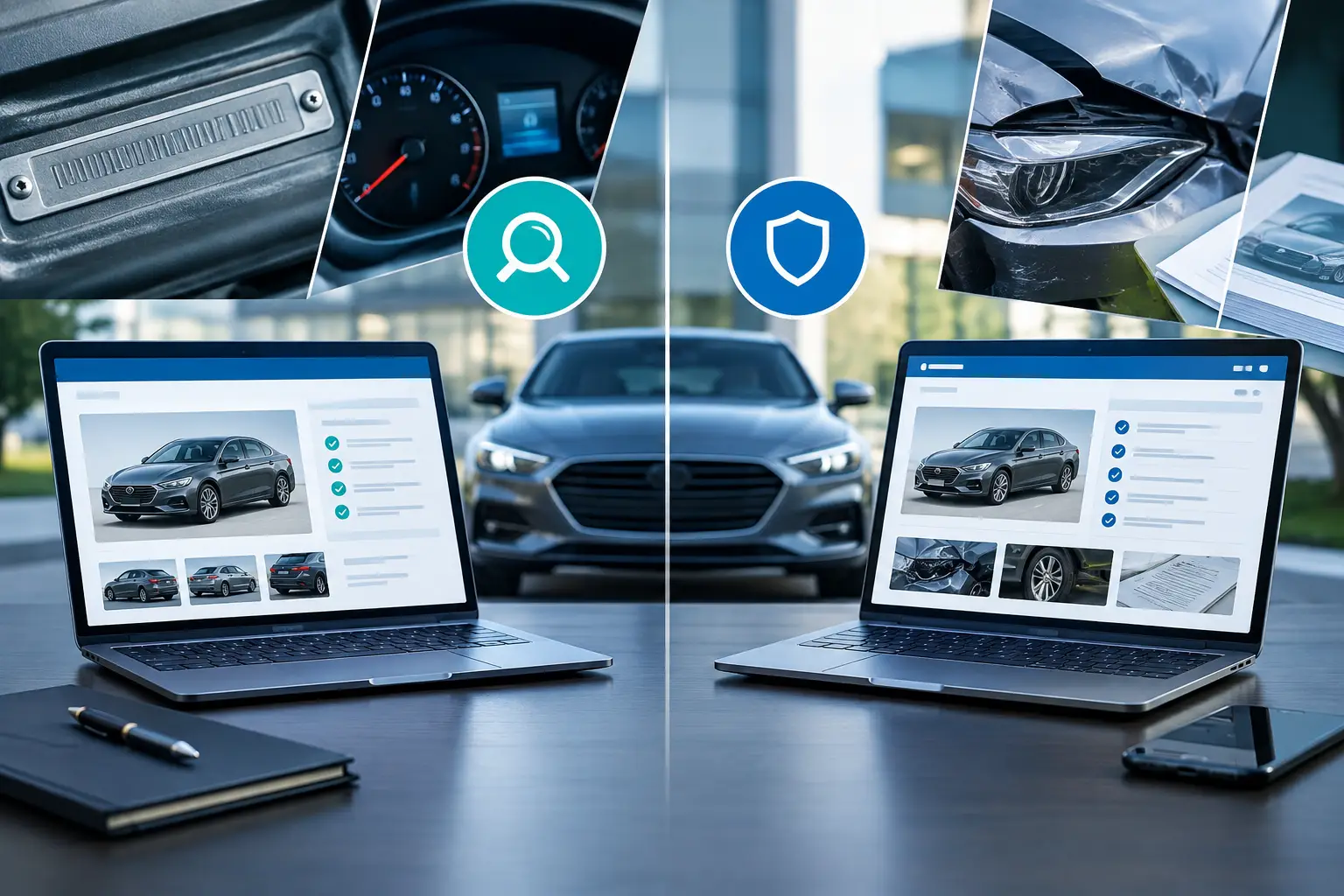
For buyers evaluating several options, a side-by-side workflow prevents details from getting lost. DriveEvidence helps organize VIN-based records, compare vehicles, and use a 0-100 risk-based score to turn complex history into a clearer buying signal. The goal is not to let a score make the decision for you. It is to make sure the facts stay visible while you compare condition, risk, and price.
Know When to Walk Away
Some concerns can be negotiated. Worn tires, an overdue fluid service, or a minor cosmetic repair may be manageable if the price reflects them. Other findings are reasons to stop: a VIN mismatch, title irregularities the seller cannot explain, major unreported damage, odometer inconsistencies, flood evidence, or refusal to allow an inspection.
Do not let scarcity pressure you into ignoring evidence. A used car purchase is not won by being first to say yes. It is won by knowing what you are buying, what it is worth, and what risks you are willing to accept before money changes hands.