A used car can look clean, drive well, and still tell a false mileage story. That is why spotting odometer fraud signs matters before money changes hands. A rolled-back odometer can make a vehicle seem newer, more valuable, and lower-risk than it really is, which means buyers can overpay and inherit repairs much sooner than expected.
This is not a rare paperwork glitch. Odometer fraud is a financial deception that can affect pricing, maintenance planning, warranty assumptions, and resale value. For retail buyers, it can turn a promising deal into a bad one. For dealers and fleet operators, it can distort acquisition decisions across multiple units.
Why odometer fraud signs matter so much
Mileage affects almost every part of a vehicle decision. It influences market value, expected wear, service intervals, financing assumptions, and even buyer confidence at resale. If the odometer reading is false, the rest of the evaluation starts from a bad baseline.
The hardest part is that fraud is not always obvious from the dashboard alone. Modern manipulation can involve digital systems, title timing, and inconsistent records rather than a visibly tampered gauge cluster. That is why smart evaluation depends on both physical inspection and verified history.
11 odometer fraud signs to watch for
1. Mileage on the title or report moves backward
This is the clearest red flag. If historical records show a vehicle at 112,000 miles two years ago and it now appears for sale at 86,000 miles, you are not looking at normal variation. You are looking at a major inconsistency that demands proof.
Sometimes sellers explain this away as a clerical error. That can happen, but it should never be accepted casually. A single typo may be possible. A pattern of lower readings across later entries is much harder to dismiss.
2. The interior wear does not match the displayed mileage
A vehicle showing 48,000 miles should not usually have a heavily polished steering wheel, collapsed seat bolsters, smooth pedal rubber, or worn-through switch labels. These details build slowly with real-world use.
There is some nuance here. Highway miles can produce less interior wear than stop-and-go city driving, and some owners simply take poor care of their cars. Still, when low mileage and heavy wear show up together, the mismatch deserves attention.
3. Service records tell a different story
Oil change stickers, maintenance invoices, emission inspections, and repair orders often capture mileage at specific dates. If those records exceed the current odometer reading, or if they show suspicious jumps and drops, the vehicle history may not be trustworthy.
This is one of the most useful checks because service documentation often predates the current seller. It can expose inconsistencies even when the vehicle has changed hands multiple times.
4. The instrument cluster looks disturbed or replaced
Loose trim, scratched screws, broken clips, fingerprints inside the cluster lens, or panel misalignment can suggest the cluster was removed. That does not prove fraud by itself. Clusters can be replaced for legitimate reasons.
The issue is whether the replacement was documented and whether the mileage transfer was handled properly. If there is no clear explanation, treat it as a serious risk factor.
5. Vehicle history gaps feel too convenient
A clean-looking car with almost no mileage-related history over several years should raise questions. Many vehicles generate data through inspections, registrations, service visits, auctions, or dealer activity. Long silent stretches are not automatic proof of tampering, but they reduce your ability to verify the odometer story.
This matters even more on vehicles that have moved across states, gone through multiple owners quickly, or appeared in wholesale channels.
6. Wear on tires, brakes, and suspension seems advanced
If a car claims very low mileage but is already on its third set of tires or shows suspension wear more common at much higher use, the numbers may not add up. Mechanical condition should broadly align with the displayed miles.
There are exceptions. Harsh roads, aggressive driving, towing, and climate can accelerate wear. But if several high-mileage clues appear together, it is smart to stop treating the odometer as fact.
7. The seller avoids simple mileage questions
Ask direct questions. When did you buy it? What was the mileage then? Do you have service receipts? Has the cluster ever been replaced? An honest seller may not know every detail, but they should not become evasive when mileage comes up.
Deflection is not proof, but it is information. A seller who keeps pushing the conversation back to monthly payment, paint condition, or a quick sale may be trying to move you away from verification.
8. The price is low for the stated mileage, but not low enough to look fake
This is how many buyers get trapped. The car is priced just under market for a low-mileage example, which creates urgency without making the offer look absurd. Fraud works best when it feels believable.
If the value seems unusually favorable, compare it against vehicles with similar age, trim, condition, and verified mileage. A price that looks like a small win can still hide a large risk.
9. Electronic modules may tell a different mileage story
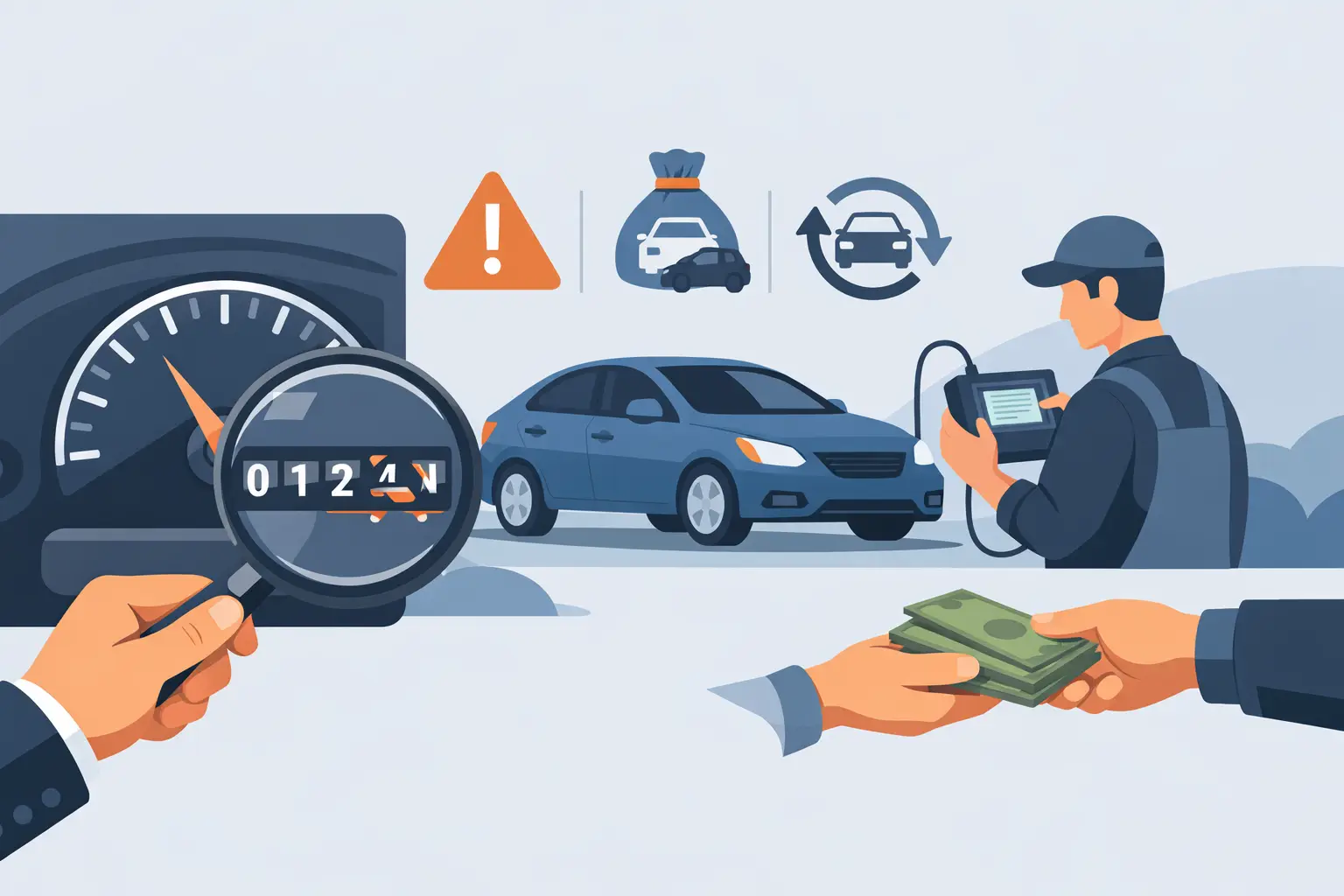
On some vehicles, mileage data can appear in more than one module, not just the gauge cluster. A qualified technician may be able to compare stored values or identify inconsistencies using diagnostic tools.
This is not a universal shortcut. Different makes and model years store data differently, and some systems are easier to manipulate than others. But for higher-risk purchases or dealer acquisitions, module-level checks can be worth the effort.
10. Ownership patterns do not fit the mileage claim
A 10-year-old vehicle with several owners, auction movement, and broad geographic travel can still have low mileage, but the claim deserves stronger proof. The more transfer activity a vehicle has had, the more chances there were for reporting errors, title issues, or manipulation.
Ownership history does not prove rollback on its own. It helps you decide how much confidence to place in the odometer reading and how much independent verification you need.
11. The maintenance condition is too far behind for the displayed miles
A supposedly low-mileage vehicle that needs major catch-up work can be telling on itself. If fluids are neglected, timing-belt intervals are overdue, or wear items look far older than expected, the stated mileage may be understating the vehicle's real use.
Again, neglect and fraud are not the same thing. But when poor maintenance lines up with other mileage inconsistencies, the pattern matters.
How to verify odometer fraud signs before you buy
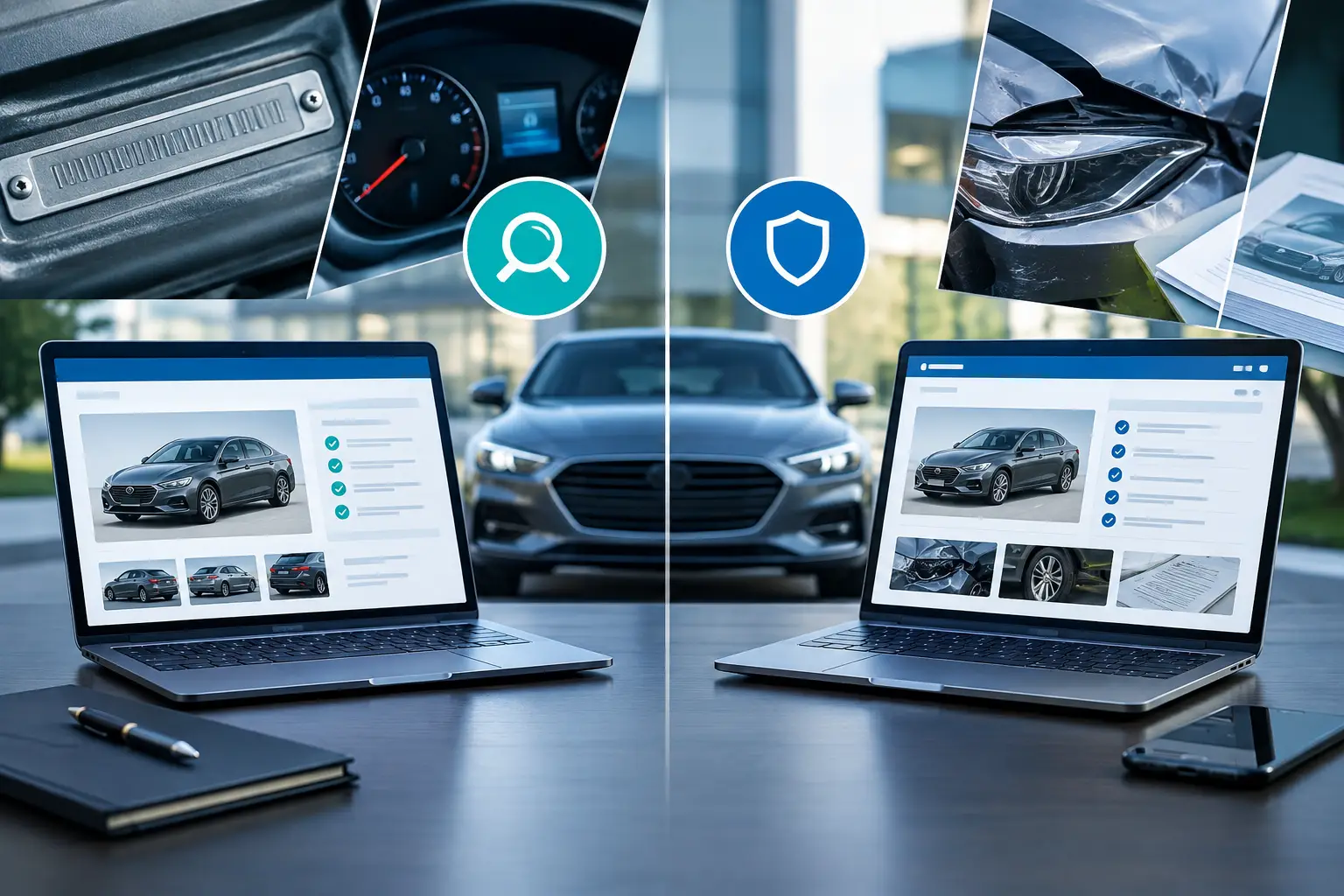
Start with the records, not the test drive. The odometer itself is only one data point. Title records, auction history, inspection entries, service records, and prior listings can reveal whether mileage has been reported consistently over time.
Then inspect the vehicle with the mileage claim in mind. Do not just ask whether the car looks clean. Ask whether the condition matches 42,000 miles, or 68,000 miles, or whatever number is being shown. Frame every detail against that claim.
If anything feels off, get a pre-purchase inspection from a technician who understands used vehicle evaluation. This is especially valuable on late-model vehicles with digital clusters, salvage history, reconstructed titles, or signs of prior interior disassembly.
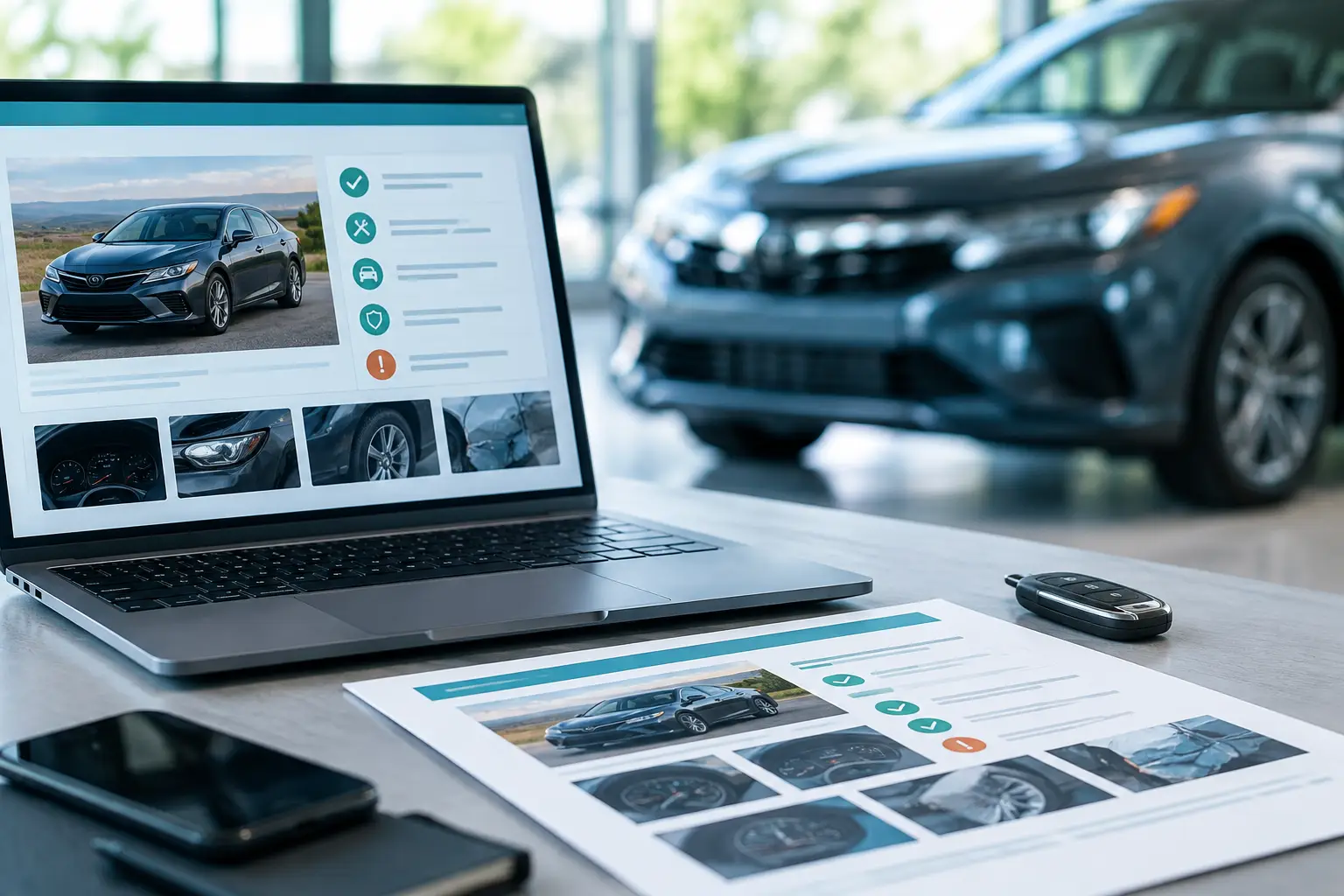
A vehicle history platform can speed this process by bringing title data, odometer records, ownership events, and other risk indicators into one view. For buyers and inventory teams reviewing multiple VINs, that matters. You need to compare facts quickly, not chase clues across disconnected sources. DriveEvidence is built for exactly that workflow, with verified data and a simple scoring model that helps surface risk faster.
What to do if you see odometer fraud signs
Do not negotiate first. Verify first. If the mileage history is inconsistent, ask for documentary proof and an explanation you can test against records. If the seller cannot provide that, the safest move is often to walk away.
For dealers and fleet buyers, a questionable odometer reading should trigger a stricter review process, not a pricing adjustment alone. A vehicle with mileage uncertainty can create downstream disclosure issues, customer disputes, and resale complications.
And if you already bought the vehicle and later discover likely fraud, preserve the listing, bill of sale, title documents, messages, and any reports showing the discrepancy. The strength of your case depends on the paper trail.
Odometer fraud signs are rarely isolated
The biggest mistake buyers make is treating each clue as harmless on its own. One worn pedal might mean nothing. One reporting error might be fixable. One title gap might have a routine explanation. But when those details stack together, the risk changes.
That is the right way to think about vehicle fraud in general. You are not looking for a single dramatic reveal. You are looking for a pattern strong enough to change the decision.
A good used car should not require blind trust. If the mileage is real, the evidence usually supports it. If the story keeps shifting, let the records make the call before you do.