A clean exterior, a fair asking price, and a confident seller can all make a vehicle look like the right buy. None of those signals tells you whether the vehicle has a branded title, inconsistent mileage, unresolved recall, or damage that affects its resale value. This guide to vehicle risk scores explains how to use a score as a fast decision tool without mistaking it for the full evidence.
A vehicle risk score converts a complex history into a simple rating. That matters when you are choosing among several used cars, evaluating auction inventory, or reviewing a fleet replacement list. The score helps you identify which VINs deserve immediate attention and which ones may warrant a closer inspection before money changes hands.
What a vehicle risk score actually measures
A vehicle risk score estimates the level of concern associated with a specific vehicle based on its available records. Most scoring systems weigh history signals that can affect safety, ownership confidence, insurability, financing, resale value, or future repair exposure.
The exact formula varies by provider. A score should not be treated as a universal condition grade or a prediction that a vehicle will fail. It is a risk signal based on documented information. A high score generally points to fewer or less severe recorded concerns. A low score indicates that the vehicle history contains factors worth verifying before you proceed.
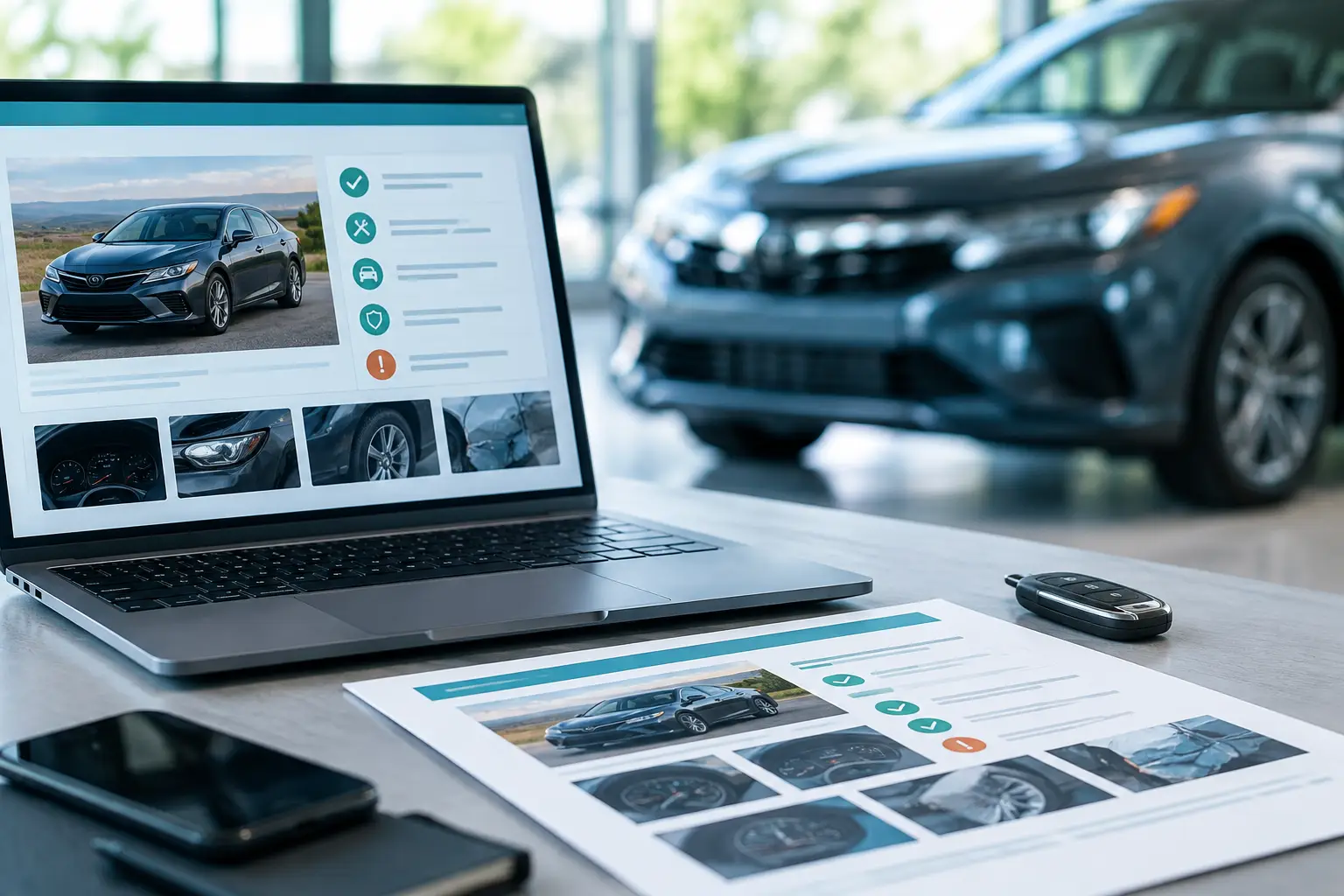
DriveEvidence uses a 0 to 100 risk-based score to make that first read faster. The number is useful because it puts title records, damage events, theft data, ownership history, mileage checks, recalls, and other signals into a decision-ready view. The report behind the score remains essential.
The records that can move a vehicle risk score
Not every record carries the same weight. A minor cosmetic claim is different from a salvage title, and an open recall is different from evidence of odometer manipulation. The practical question is not simply whether a vehicle has a record. It is whether that record changes the vehicle's value, safety, legal status, or suitability for your use.
Title status and title brands
Title history is often one of the most consequential inputs. Salvage, rebuilt, flood, junk, lemon, or other branded titles can affect financing, insurance availability, warranty eligibility, and resale demand. A rebuilt vehicle may be a valid purchase in the right circumstances, but its price should reflect the history, and a pre-purchase inspection becomes nonnegotiable.
Be cautious with a vehicle presented as having a clean title after moving between states. A report can help reveal title events that may not be obvious from the current paperwork alone.
Accident and damage history
Damage records deserve context. A report may show an accident, a damage claim, airbag deployment, structural damage, or total-loss history. Those are not interchangeable.
A vehicle with one documented minor incident and complete repair records can still be a sensible purchase. Structural damage, repeated collision events, or a total loss calls for a more conservative valuation and a professional inspection. If a seller cannot explain the repairs or provide documentation, treat that gap as part of the risk.
Odometer consistency
Mileage is central to price, maintenance planning, and trust. A record that conflicts with the current odometer reading may signal a data-entry issue, an instrument replacement, or possible rollback. Do not assume the most favorable explanation.
Compare mileage entries across inspections, service visits, registrations, auctions, and prior listings when available. If the timeline does not make sense, pause the transaction until you have a documented explanation.
Theft, recovery, and ownership history
Theft and recovery records can affect a vehicle's condition and title path. Ownership history can also reveal frequent transfers, rental or commercial use, and long gaps in documented activity. None of these automatically disqualifies a vehicle, but each can change how you inspect it and what you are willing to pay.
For a dealer or fleet buyer, these signals are especially useful at scale. A vehicle that appears attractive at auction may carry a history that limits its retail channel, raises reconditioning costs, or creates customer objections later.
Open recalls and safety information
An open recall does not always mean a vehicle is unsafe to drive immediately. It does mean there is an unresolved manufacturer safety campaign that should be addressed. Check whether the repair is available, whether parts are delayed, and whether the issue affects your intended use.
A score may reflect open recalls as a risk factor, but the VIN-level recall details tell you what action is needed. Verify that the repair has been completed rather than relying on a seller's verbal assurance.
How to read vehicle risk scores without oversimplifying them
Use the score to prioritize, not to outsource judgment. A high score is not permission to skip an inspection, and a low score is not always a reason to walk away. The right decision depends on the specific issue, the vehicle's price, your risk tolerance, and your intended ownership period.
For example, a low score caused by a salvage or flood title may be a hard stop for a first-time buyer seeking dependable daily transportation. For an experienced collector restoring a rare model, that same history could be acceptable if the price, repair quality, and parts availability make sense. The score gets you to the right question faster.
When comparing two similar vehicles, look beyond which score is higher. Ask why. A vehicle with a slightly lower score because of one disclosed minor accident could be a better value than a vehicle with a higher score but thin maintenance documentation, an unrealistic price, or unanswered ownership gaps.
A practical workflow for buyers, dealers, and fleet teams
Start with the VIN before you negotiate seriously. Confirm that the VIN on the dashboard, door label, title, registration, and listing all match. A mismatch is not a small administrative detail. It is a stop-and-verify issue.
Next, review the score and immediately open the records driving it. Focus first on title brands, major damage, total-loss events, mileage inconsistencies, theft records, and recall status. Then compare the history against the seller's description. If a listing says "no accidents" but the record shows reported damage, ask for a specific explanation and repair invoices.
After that, adjust the price for the evidence. A vehicle with documented risk should not be priced like an equivalent clean-history example. Use market valuation data as a reference point, but account for title status, repairs, mileage, condition, and local demand. A low price is not automatically a deal. It may be the market correctly pricing a problem.
Finally, match the report to a physical inspection. Have a qualified technician inspect the frame, body panels, paintwork, suspension, airbags, electronics, tires, fluid condition, and diagnostic trouble codes. History reports capture reported records. They cannot replace a lift inspection or confirm the quality of prior repairs.
For professionals reviewing multiple units, keep the process consistent. Save VINs in one workspace, sort by score or risk category, compare key history fields side by side, and document the reason for every buy, pass, or conditional bid. A repeatable workflow reduces the chance that a rushed decision turns into an aged unit or an avoidable fleet expense.
When a low score should change your decision
A low vehicle risk score should change your decision when the underlying records introduce a risk you cannot verify, price accurately, insure, or accept. That includes unresolved title concerns, flood indicators, serious structural damage, questionable mileage, and incomplete explanations for major history events.
It should also change your process when you still want the vehicle. Request repair documentation, get an independent inspection, confirm insurance and financing terms before purchase, and negotiate from the documented history rather than the seller's story. If those steps are not possible, walking away is often the efficient decision.
A score is most valuable when it keeps you from spending hours on the wrong vehicle and helps you spend more time verifying the right one. Let the number point to the proof, then buy only when the proof supports the price and the purpose of the vehicle.