
A vehicle can look retail-ready on the lot and still be a costly inventory mistake. A low advertised price, fresh detail work, and a clean-looking cabin do not answer the questions that protect margin: Was it damaged? Is the title clear? Is the odometer credible? Is demand strong enough to move it before holding costs rise?
To assess dealer inventory risk, evaluate every VIN as both a vehicle and a financial position. The goal is not simply to avoid bad cars. It is to identify units with hidden costs, limited resale potential, paperwork exposure, or a high chance of aging out of the market.
What Dealer Inventory Risk Really Includes
Inventory risk is the chance that a vehicle costs more to own, recondition, finance, market, or unwind than your acquisition plan allows. It is not limited to major accidents or salvage titles. A clean-title vehicle with weak local demand, inflated book value, overdue service, or a missing second key can still become an unprofitable unit.
For dealers, auction buyers, and fleet operators, risk usually lands in five areas: vehicle condition, title and compliance, valuation, marketability, and time. These risks compound. A vehicle with prior damage may require more recon. If it is also priced above comparable retail listings, it may sit longer. If the title is delayed, the unit may be impossible to retail when demand is strongest.
The right decision is rarely a simple yes or no. It is a question of whether the expected margin justifies the verified risk.
Start With the VIN, Not the Windshield Sticker
A dealer sticker tells you what a seller wants for a vehicle. The VIN tells you what you need to verify before assigning a value.
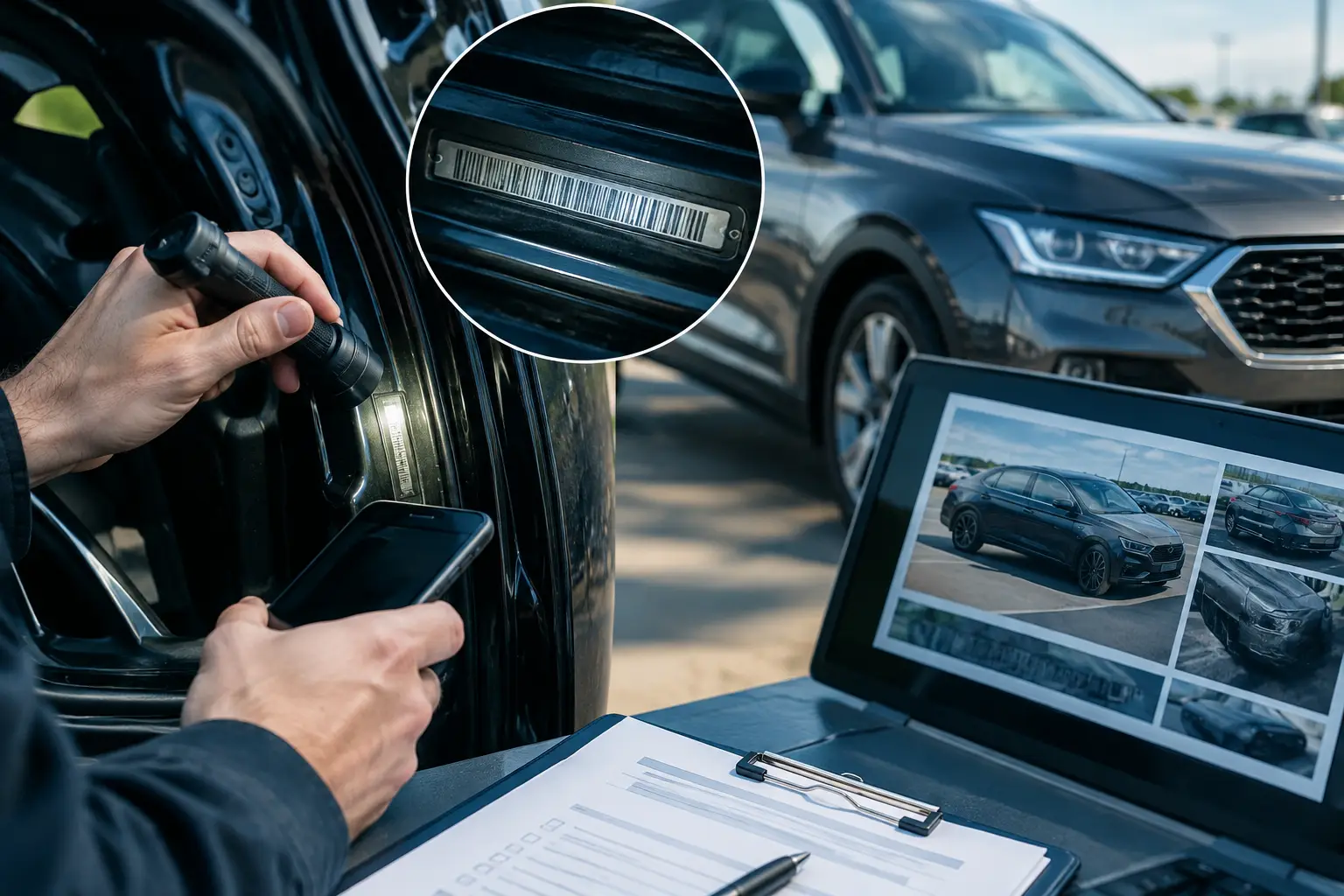
Run the VIN before purchase approval, not after the unit arrives. Confirm the year, trim, engine, drivetrain, body style, and factory equipment first. Small configuration errors can distort valuation by thousands of dollars, particularly with trucks, performance vehicles, hybrids, luxury trims, and specialty models.
Then review the record for accident and damage events, title brands, theft records, odometer readings, recalls, ownership history, and registration patterns. A single event does not automatically kill a deal. A properly repaired moderate-damage vehicle can be a sound buy at the right price. But the price must account for buyer hesitation, inspection findings, financing limitations, and future trade-in value.
Treat title history as a margin issue
Title problems are not administrative details. They can block a sale, reduce financing options, delay delivery, or force a wholesale exit.
Pay close attention to salvage, rebuilt, flood, lemon, junk, odometer discrepancy, and not-actual-mileage brands. Also verify whether a title is available, whether it matches the VIN, and whether lien release documentation is complete. A clean title is meaningful, but it does not erase prior damage or guarantee that all records are accurate.
If a title issue is disclosed, build the cost of reduced demand into your exit plan before you buy. Do not rely on a future salesperson to explain away a problem that was visible at acquisition.
Compare Market Value With Your All-In Cost
The acquisition price is only the first number. Your true exposure is the all-in cost: purchase price, buyer fees, transportation, inspection, parts, labor, detail, title work, photography, floorplan interest, and expected discounting.
A unit that appears $1,500 below market can lose money quickly after fees and recon. The opposite can also be true. A higher-priced unit with documented service, clean history, strong equipment, and ready-to-sell condition may produce a safer return than a cheaper vehicle with unknown needs.
Use current comparable vehicles, not just a guidebook figure. Compare model year, mileage, trim, powertrain, condition, history, and local availability. Then separate asking prices from likely transaction prices. A market full of optimistic listings is not proof that a vehicle will sell at those numbers.
Watch for value gaps that need an explanation
A major mismatch between a vehicle's price and similar inventory deserves investigation. It may signal a real opportunity, such as a seller needing fast liquidity. It may also signal undisclosed damage, a title complication, severe wear, incorrect trim data, or a market that has shifted faster than book values.
The safest discounts are explainable. If you cannot explain why a unit is cheap, do not assume the market missed something.
Inspect Condition Against the History Report
Vehicle history data and a physical inspection answer different questions. Use both.
The history report can reveal a damage event or mileage pattern. The inspection can show whether repairs were completed correctly and whether current mechanical condition supports your retail plan. Look for uneven panel gaps, overspray, inconsistent paint texture, corrosion, warning lights, tire date codes, fluid leaks, suspension noise, and poorly documented repairs.
On late-model vehicles, scan for diagnostic trouble codes and confirm that safety systems function as expected. Advanced driver-assistance components, cameras, radar sensors, and airbags can make a seemingly minor collision expensive to correct. An open recall also needs a clear remedy plan. Some recalls are straightforward; others affect customer confidence or vehicle availability.
For high-mileage inventory, service history matters as much as cosmetic condition. A clean interior does not offset a neglected transmission, cooling system, timing component, or hybrid battery. Estimate repair needs conservatively, then add a contingency for what the inspection cannot yet prove.
Measure Time Risk Before the Unit Ages
Every day in inventory has a cost. Floorplan expense, insurance, lot space, price reductions, and management attention all increase when a unit stalls.
To assess dealer inventory risk accurately, estimate how quickly the vehicle can sell in your market and through your sales channel. A popular compact SUV may move quickly at a fair price. A niche luxury vehicle, modified truck, manual-transmission sports car, or unusual color combination may need more time and a narrower buyer pool.
Age is not the only warning sign. Review days-to-market by segment, seasonality, mileage band, and price point. Convertibles may slow in colder months. Four-wheel-drive trucks may carry stronger demand before winter. EV values can react quickly to incentives, charging concerns, battery coverage, and new-model price changes.
Set an aging plan before the purchase is approved. Decide the first pricing review date, the maximum holding period, and the wholesale exit point. This creates discipline when a unit begins consuming capital instead of generating it.
Look at the Portfolio, Not Just One Vehicle
A good unit can become risky in the wrong mix. If several vehicles rely on the same customer segment, the same lender approval profile, or the same seasonal demand pattern, a market change can affect all of them at once.
Track concentration by brand, fuel type, price range, age, mileage, and title status. For example, carrying too many high-mileage luxury vehicles may expose the store to expensive recon and limited financeability. Stocking multiple branded-title units may create disclosure, customer-trust, and appraisal challenges even when each one was purchased at a discount.
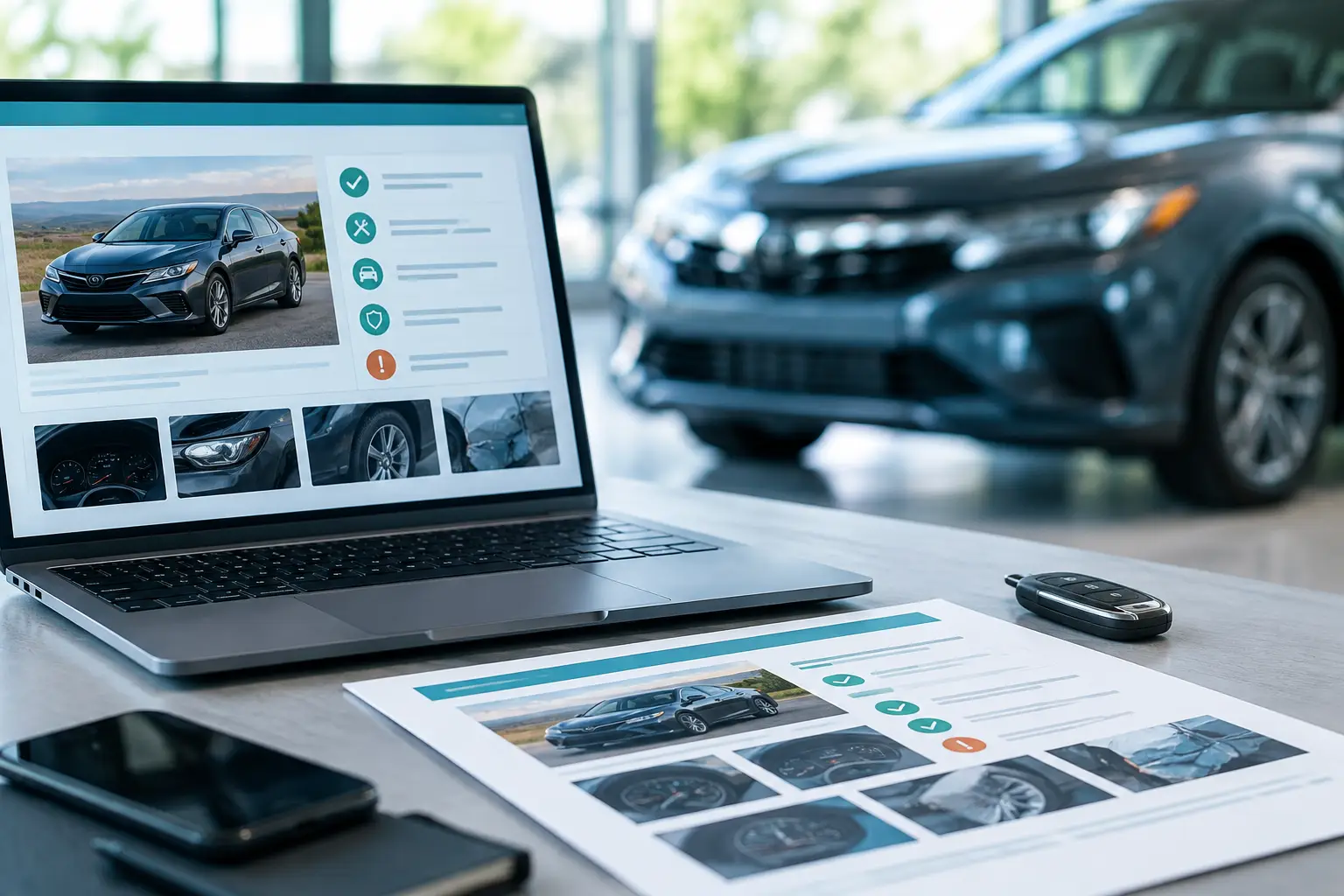
This is where a side-by-side workflow matters. A centralized VIN dashboard makes it easier to compare history flags, valuations, recalls, mileage, and risk signals across multiple potential purchases. DriveEvidence uses verified vehicle data and a 0-100 DriveEvidence Score to help teams prioritize which units deserve a closer review and which deserve a pass.
Use a Consistent Approval Standard
The strongest inventory process is repeatable. Every buyer, manager, or acquisition partner should document the same core evidence before money changes hands: VIN history findings, title status, inspection results, all-in cost, market comparables, projected days to sale, and exit plan.
Do not confuse a scorecard with automatic approval. A vehicle with a lower risk profile may still be a poor buy if the acquisition price leaves no margin. A higher-risk vehicle may make sense when the discount is deep, repairs are documented, and the target buyer is clear. The standard should force the explanation into the file before the risk becomes your problem.
The best inventory decisions are made while you can still walk away. When the VIN, condition, price, and market story agree, you can buy with a plan. When they do not, the cheapest move is often leaving the vehicle where it is.