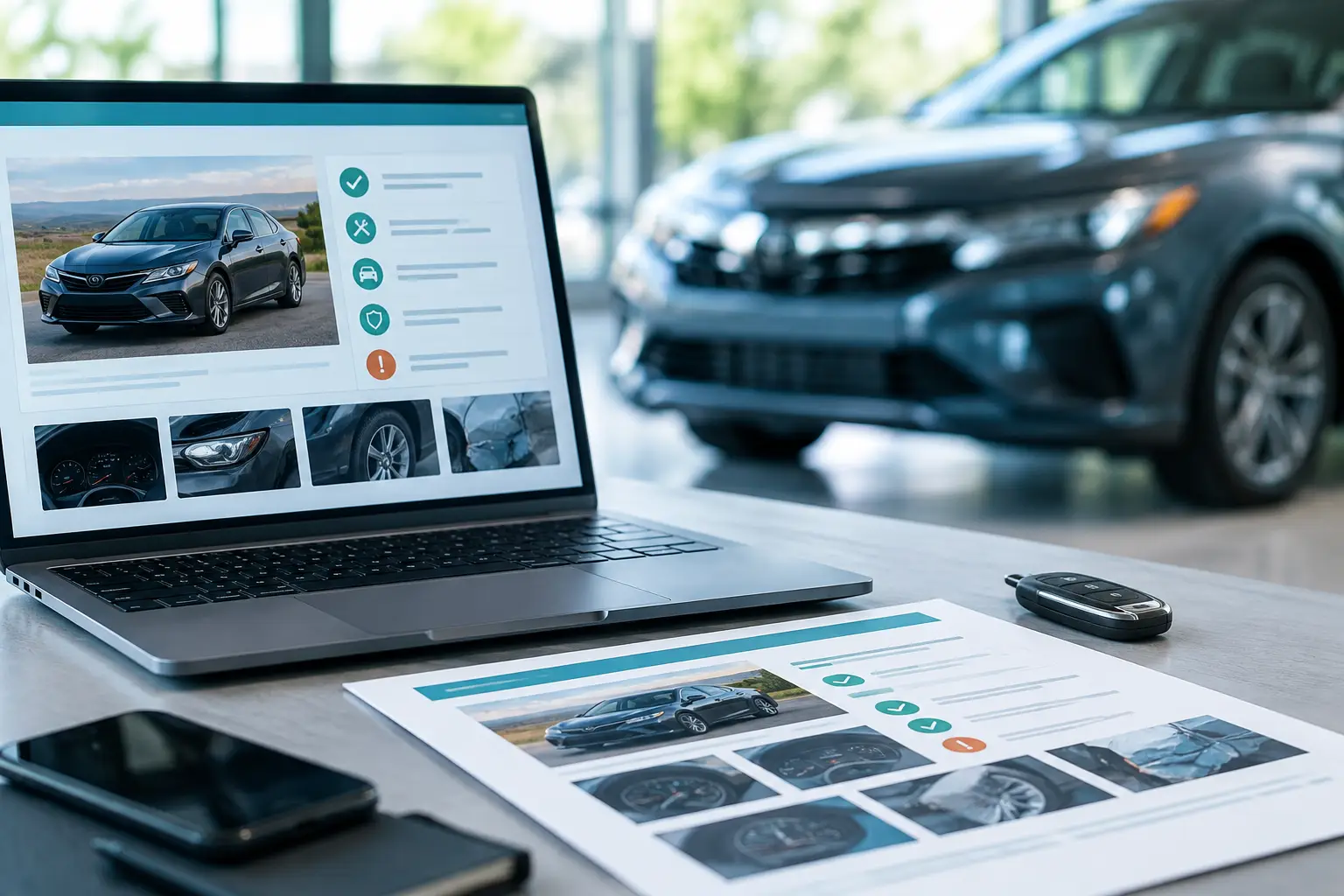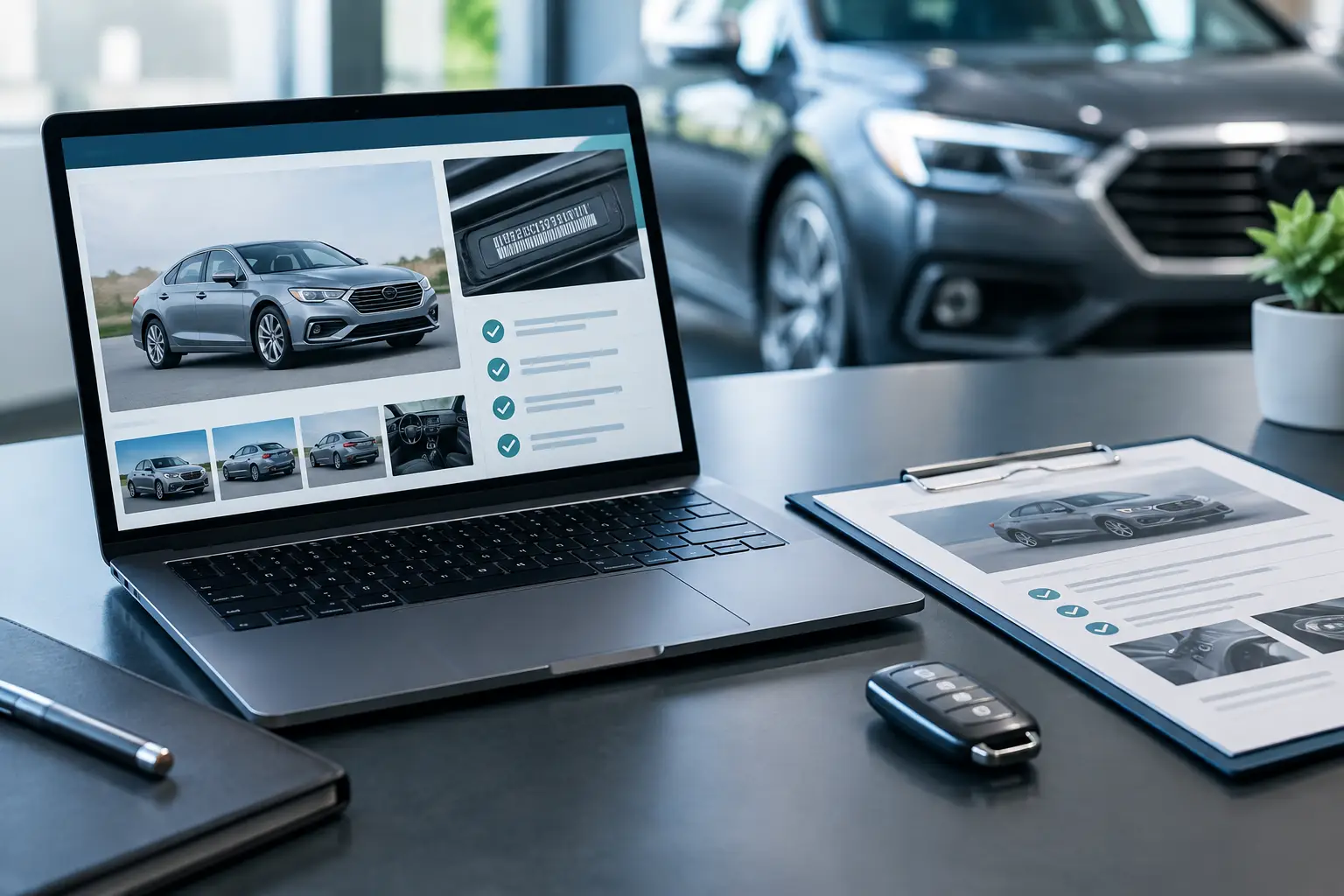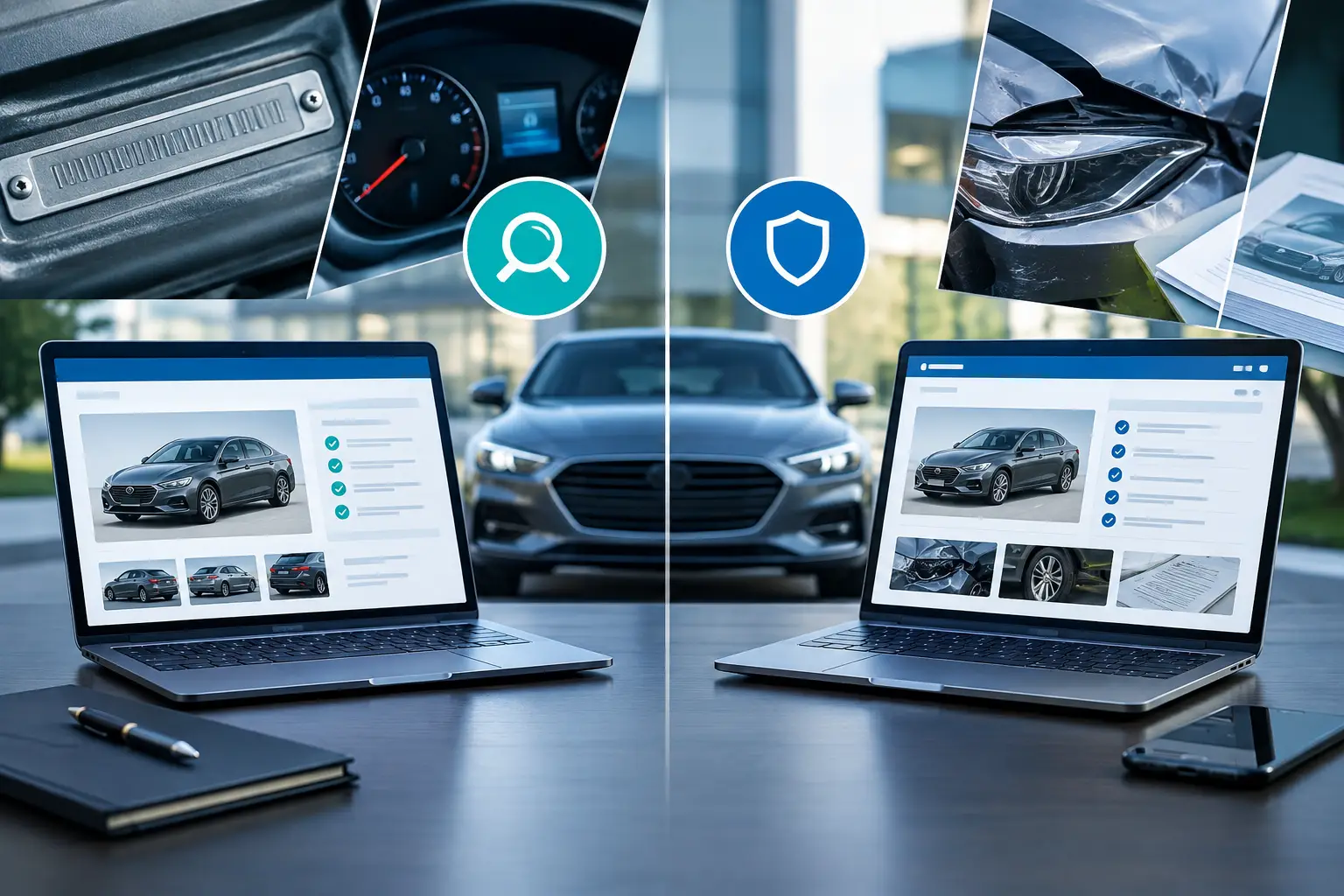
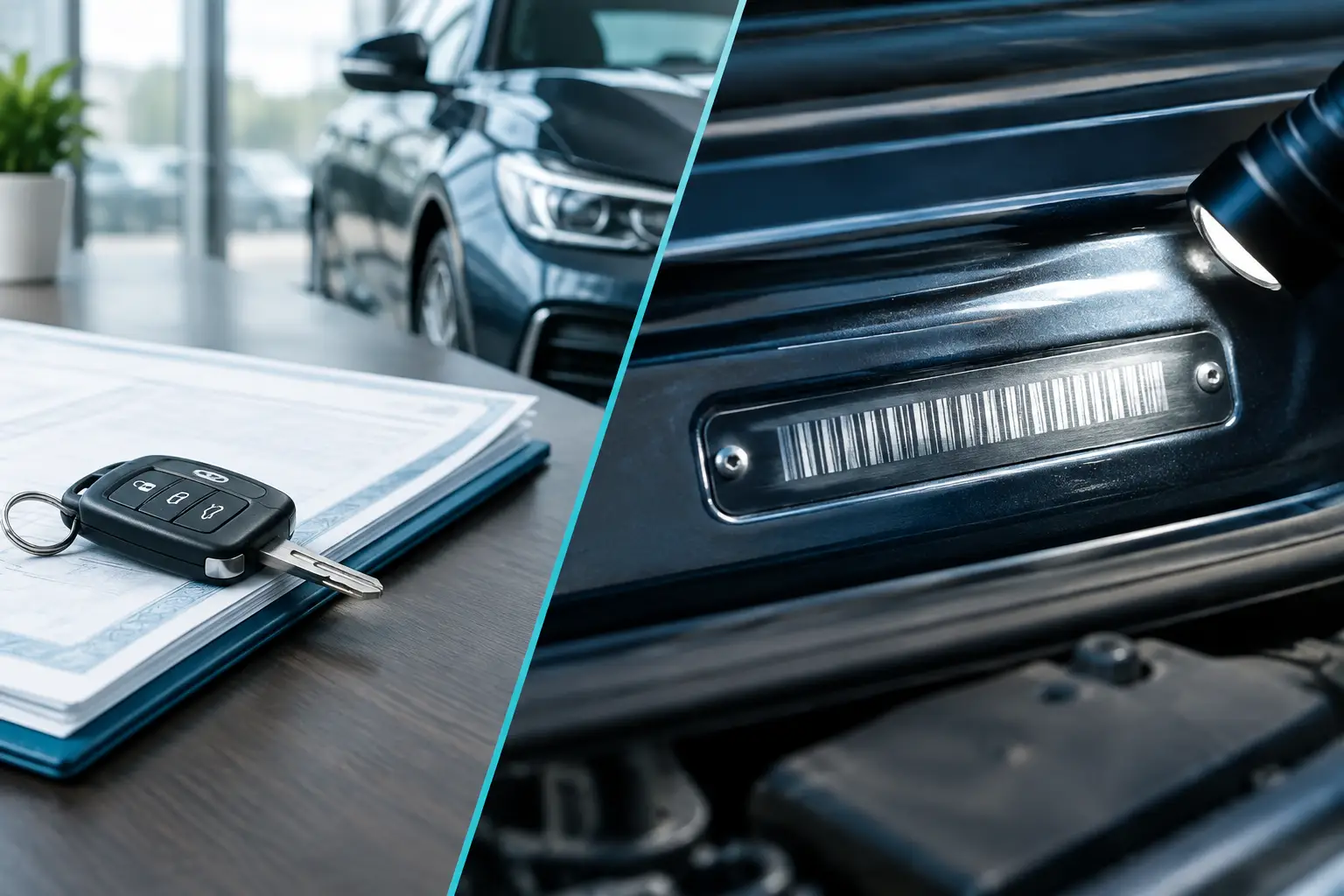
A clean title can make a used car look safe. It does not prove the car has never been wrecked, rolled back, stolen, or repaired poorly. On the other hand, a VIN history report can expose serious events while leaving a buyer with unanswered questions about legal ownership. That is the real issue in a title check versus VIN check: they answer different questions, and a smart purchase decision usually requires both.
For a private-party buyer, the risk may be handing over cash for a vehicle with a branded title or an ownership problem. For a dealer, auction buyer, or fleet manager, the risk multiplies across every unit. The fastest way to reduce it is to understand what each record can verify, what it cannot, and when a discrepancy should stop the deal.
Title Check Versus VIN Check: The Core Difference
A title check focuses on the vehicle's legal identity and title status. It may show whether a title is clean, salvage, rebuilt, flood-branded, junked, or otherwise marked by a state motor vehicle agency. Depending on the source and state records, it can also help identify title transfers, title issues, or signals that the document presented by a seller does not match the vehicle.
A VIN check uses the 17-character vehicle identification number to pull together a much broader vehicle history. A quality VIN report can include specifications, accident or damage records, odometer readings, theft and recovery information, ownership history, title brands, recalls, safety information, and market context.
Put simply, a title check asks, “What does the ownership paperwork say about this vehicle?” A VIN check asks, “What evidence exists about this vehicle’s past?”
Neither is a substitute for the other. A title check is essential when you need to confirm that the vehicle can be legally transferred. A VIN check is essential when you need to assess risk, condition history, and whether the asking price makes sense.
What a Title Check Can Reveal
The title is the legal document that establishes ownership. Before buying, compare the physical title, the seller’s identification, and the VIN on the vehicle itself. A title check adds another layer by helping you verify that the document and status are credible.
The most valuable finding is a title brand. A salvage title generally means an insurer declared the vehicle a total loss. A rebuilt or reconstructed title means it was later repaired and returned to the road. A flood brand can indicate water exposure that may create corrosion, electrical, and mold problems long after the vehicle appears clean. Junk or parts-only designations are even more serious because those vehicles may not be eligible for normal road use or retitling.
A title check can also reveal when the title state and vehicle history do not line up. For example, a seller may describe a vehicle as clean-title while the record shows a prior salvage brand in another state. This is a red flag worth investigating, not a detail to overlook because the current paper title looks ordinary.
There are limits. Title records are administrative records, not a complete mechanical history. A clean title does not mean a vehicle has never been damaged. Many repairs never result in an insurance total loss, and some events may not be reported in a way that creates a title brand. Title and lien availability can also vary by state and data source, so never assume a single lookup settles every ownership question.
What a VIN Check Can Reveal
A VIN report gives the vehicle context that a title alone cannot. It starts by verifying whether the VIN matches the stated year, make, model, trim, engine, and other factory specifications. That basic step catches more mistakes than buyers expect, especially in online listings and auction inventory.
From there, vehicle history data can reveal reported accidents, damage events, airbag deployment, theft records, recovery records, odometer readings, service-related entries, registration or ownership changes, title brands, open recalls, and more. The record will not always explain every event perfectly, but patterns matter.
Consider a vehicle listed with 62,000 miles. If a VIN history report shows an earlier reading of 118,000 miles, the issue is not cosmetic. It could be an odometer discrepancy, a data-entry error, or an attempt to misrepresent the vehicle. Each possibility deserves proof before a buyer accepts the mileage or price.
The same is true for accident history. A single minor damage entry does not automatically make a car a bad buy. A well-documented repair, an independent inspection, and a price that reflects the history may support the purchase. But repeated damage, an airbag event, a salvage brand, or a long gap in records changes the risk calculation.
That is why DriveEvidence combines verified vehicle data with a 0-100 DriveEvidence Score. The score does not replace the underlying records. It gives buyers and inventory teams a fast signal for comparing risk across multiple vehicles, then directs attention to the details that require review.
Why a Clean Title Is Not a Clean Bill of Health
“Clean title” is one of the most misunderstood phrases in used-car shopping. It usually means the title does not carry a major brand. It does not certify that the car is accident-free, mechanically sound, lien-free in every circumstance, or worth the seller’s price.
A vehicle can have a clean title after substantial collision repairs if the damage did not meet a total-loss threshold. It may have cosmetic repairs that are harmless, or structural repairs that demand close inspection. It may also have open safety recalls that have not been completed. Those are VIN-level questions, not conclusions you can draw from title status alone.
The reverse can also be true. A branded-title vehicle is not automatically undriveable or worthless. Some rebuilt vehicles are repaired correctly and priced appropriately for buyers who understand the trade-off. The key is that title branding reduces resale value, can complicate financing and insurance, and raises the bar for documentation. A buyer should want repair invoices, pre-repair photos when available, and a thorough inspection by a qualified technician.
A Practical Verification Sequence Before You Buy
Start with the VIN, not the seller’s description. Ask for all 17 characters before you travel, leave a deposit, or arrange financing. Run a VIN check and compare the decoded vehicle details against the listing, window sticker claims, photos, and equipment on the car.
Next, review title status and brands. If the seller has the title, inspect it in person and make sure the VIN, owner name, and title status match what you were told. Watch for altered documents, missing assignments, unsigned sections, or a seller whose name does not match the title. A legitimate explanation may exist, but do not accept one without documentation.
Then evaluate the risk pattern. Look for mileage inconsistencies, theft or recovery records, major damage, repeated ownership changes, title-brand history, and open recalls. One isolated record may be manageable. Several unresolved records are a reason to slow down or walk away.
Finally, get a pre-purchase inspection. History reports show reported evidence. An inspection evaluates the vehicle in front of you: frame condition, paintwork, fluid leaks, tire wear, diagnostic codes, battery health, suspension condition, and repair quality. For higher-value vehicles, performance cars, collector vehicles, and auction purchases, this step is especially valuable.
When One Check May Be More Urgent
If you are buying from a private seller and preparing to pay immediately, title verification is urgent. You need confidence that the person selling the car has the right to transfer it and that the title status is not being misrepresented.
If you are comparing several dealer listings, screening auction inventory, or managing a fleet acquisition pipeline, begin with VIN checks. They let you quickly identify vehicles with serious history signals, compare specifications and risk, and avoid spending time on units that do not fit your standards.
But urgency is not a reason to choose only one. The vehicle’s VIN should match everywhere: the dashboard plate, door-jamb label, title, registration, seller paperwork, and history report. If it does not, stop and resolve the mismatch before proceeding.
The best used-car deal is not the one with the lowest sticker price. It is the one whose ownership, history, condition, and value all hold up when you verify the proof behind the vehicle.