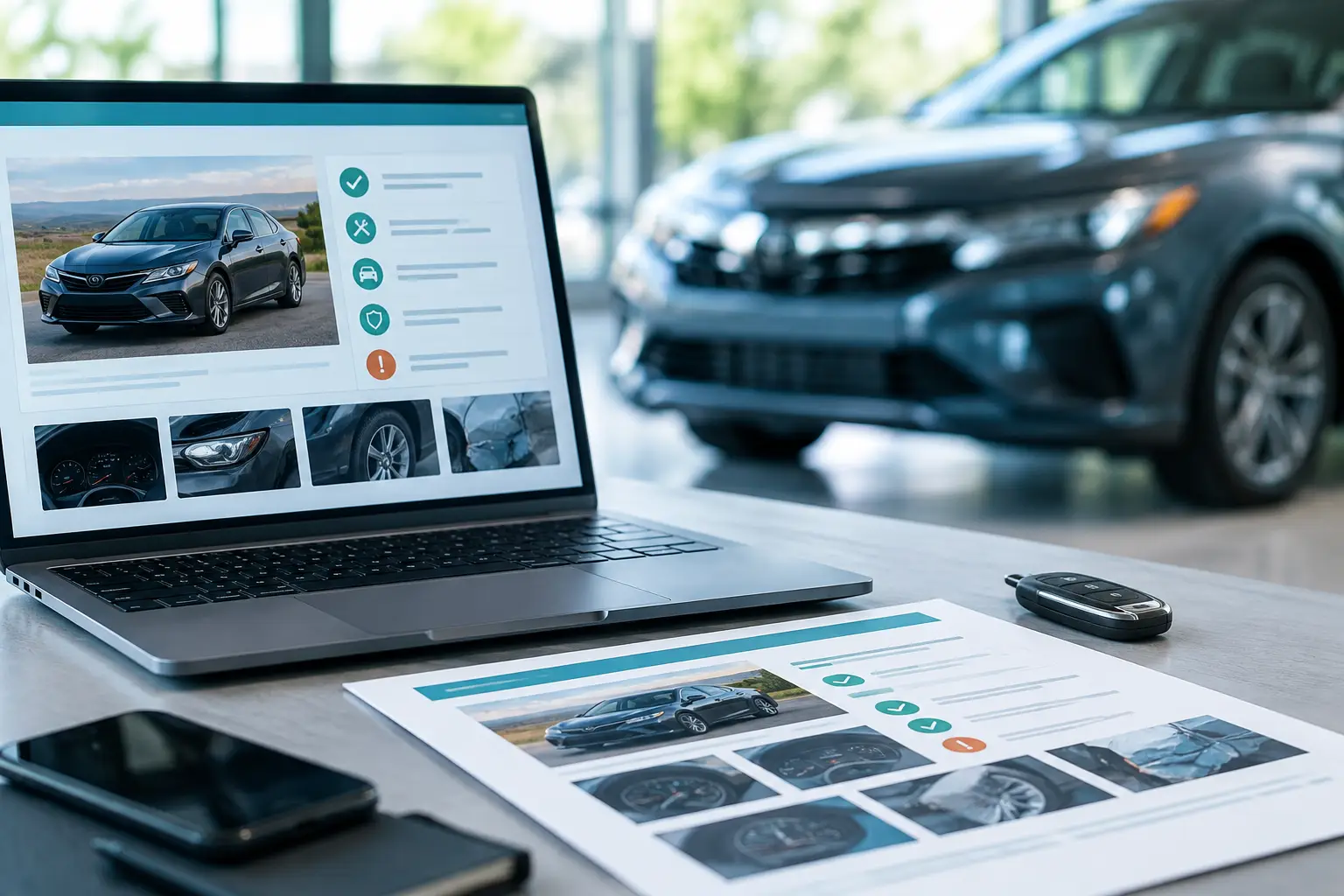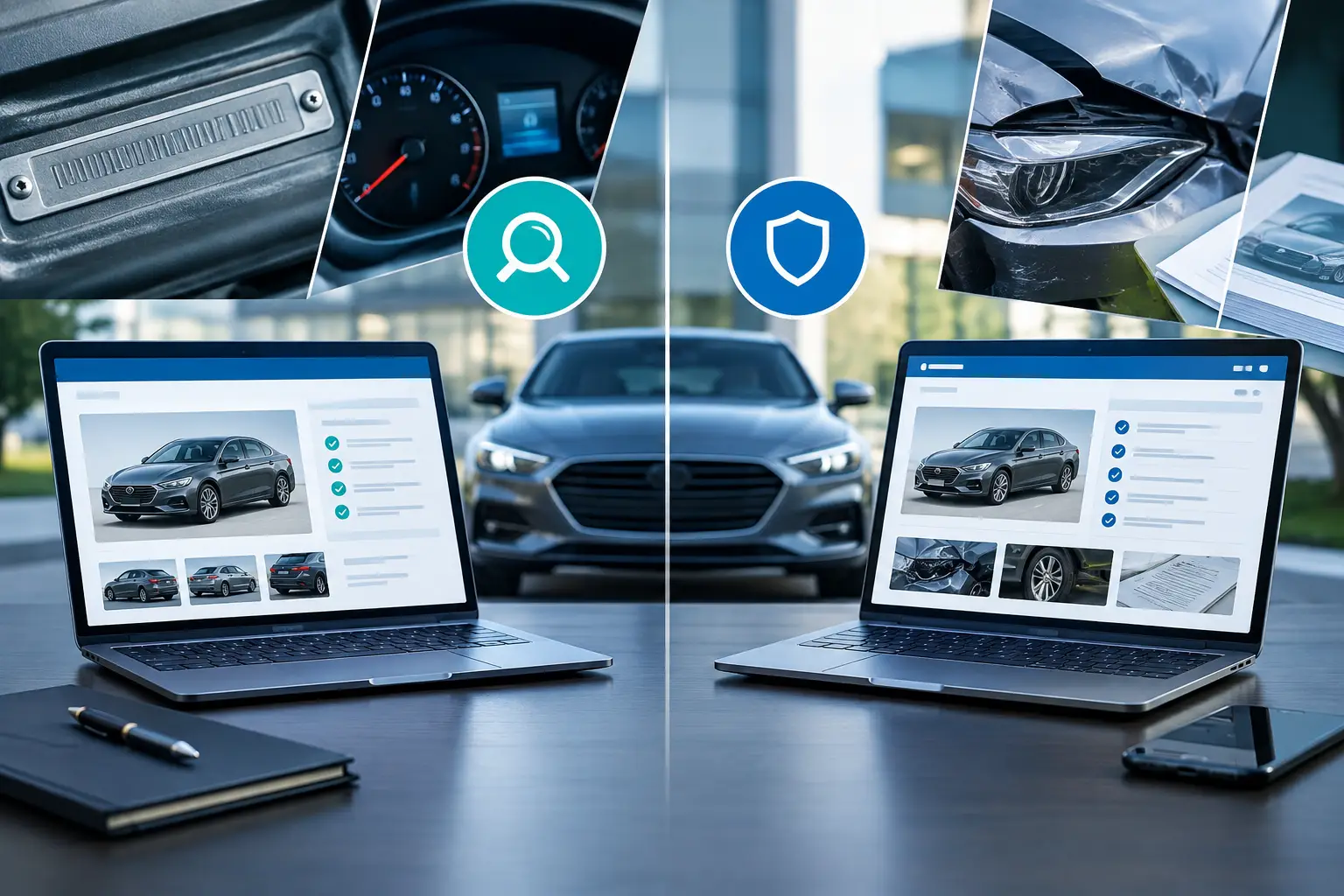
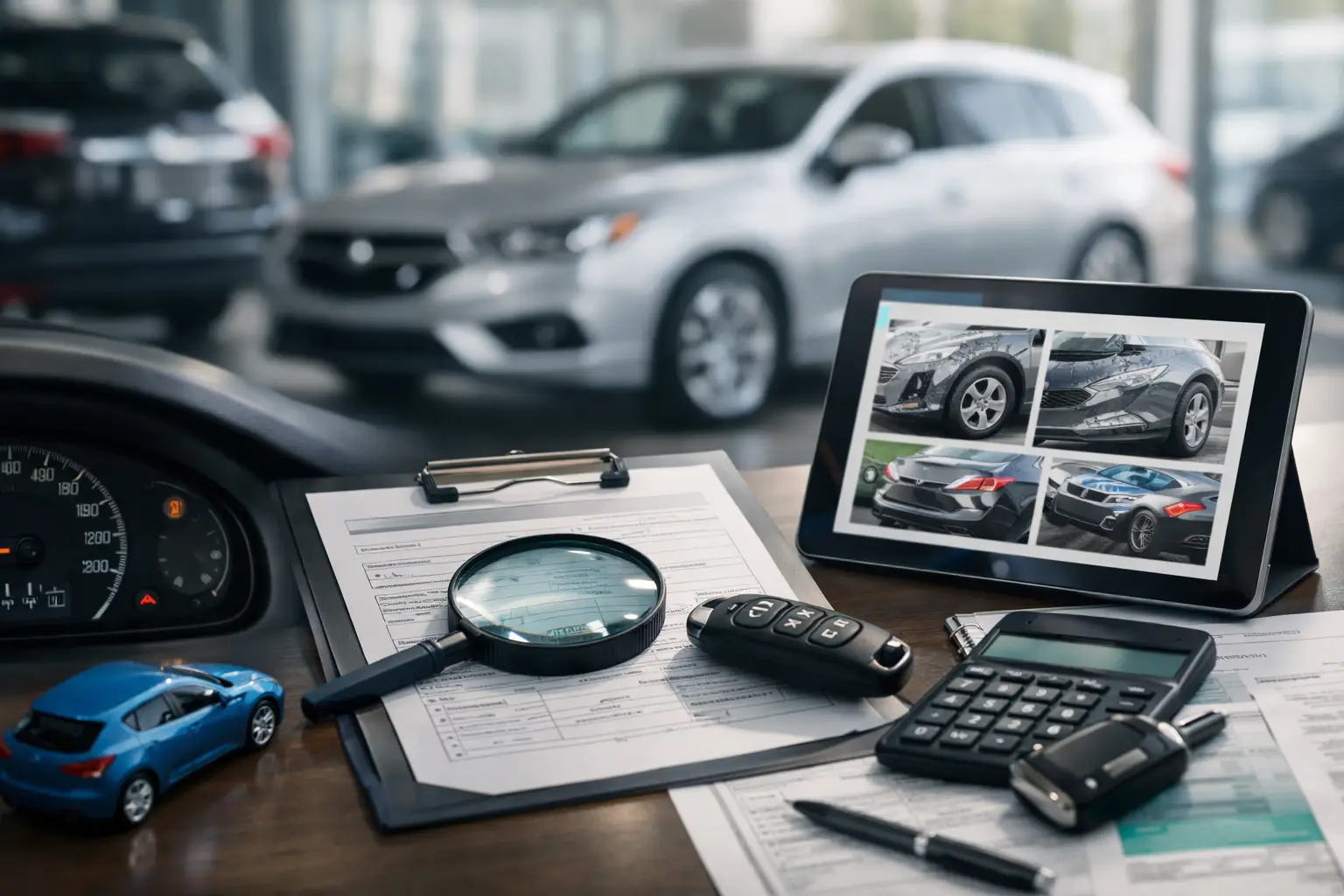
A used vehicle can look clean, drive well, and still carry a history that changes what it is worth and whether it is safe to buy. A rebuilt title, repeated odometer discrepancies, unrepaired recall, or prior flood exposure may not be obvious during a short test drive. Knowing how to read vehicle history gives you a way to verify the story before money changes hands.
A vehicle history report is not a pass-or-fail certificate. It is evidence. Read it alongside a mechanical inspection, a test drive, service receipts, and the seller’s answers. The goal is simple: identify what is documented, recognize what needs follow-up, and decide whether the price reflects the risk.
Start With the VIN and Vehicle Identity
Before reviewing accidents or ownership, confirm the report belongs to the exact vehicle in front of you. Match the 17-character VIN on the report to the VIN at the base of the windshield, the driver-side door jamb, and the title or registration. A mismatch is not a minor paperwork issue. Stop and verify it before moving forward.
Then check the basics: model year, make, trim, engine, drivetrain, body style, and major factory equipment. This step catches incorrect listings and helps you value the vehicle accurately. A seller may advertise a higher trim, all-wheel drive, or premium engine package that the VIN does not support.
Pay attention to where and when the vehicle was first titled. Regional history can add context. A vehicle registered in areas with severe winter weather may deserve closer inspection for corrosion. A vehicle that moved frequently between states is not automatically a problem, but frequent title changes should be explained.
Read Title Status Before Anything Else
Title information is one of the highest-value sections in a vehicle history report because it can affect safety, financing, insurance, resale value, and registration. A clean title generally means no major brand is recorded, but it does not mean the vehicle has never been damaged or repaired.
A branded title requires more scrutiny. Common brands include salvage, rebuilt, flood, junk, lemon, and odometer-related labels. Their meaning varies by state, but the practical question stays the same: what happened, was it repaired correctly, and is the discount large enough to justify the remaining risk?
A salvage title usually means an insurer or owner declared the vehicle a total loss. A rebuilt title means it was later repaired and approved for road use under state rules. That does not prove repair quality. Ask for before-and-after photos, itemized repair invoices, alignment records, and an independent inspection. On a performance vehicle, luxury model, EV, or advanced-driver-assistance-equipped car, hidden repair shortcuts can be especially expensive.
Flood history deserves an even firmer response. Water can affect wiring, connectors, restraint systems, interior materials, and electronics long after a vehicle appears dry and detailed. Signs such as a musty odor, corrosion under seats, silt in hidden compartments, or unexplained electrical faults should end the deal unless you have deep technical knowledge and are pricing for a high-risk project.
Put Accident and Damage Records in Context
An accident entry is not automatically a reason to walk away. A low-speed rear bumper repair is very different from structural damage, airbag deployment, or a total loss. The report helps you identify the event. A qualified inspection tells you what the event left behind.
Read each damage record for the date, reported severity, point of impact, airbag information, towing, and whether the vehicle was declared a loss. Compare those details against the vehicle’s current condition and any repairs the seller discloses. If the report shows front-end damage but the seller claims the car has never been in an accident, you have a credibility issue before you have a repair issue.
Look for patterns, not just individual events. Multiple accidents in a short ownership period may indicate hard use or poor repair history. Repeated damage in the same area can point to unresolved alignment, suspension, or bodywork problems. Ask a technician to inspect panel gaps, paint consistency, tire wear, weld points, underbody components, and diagnostic trouble codes.
Remember the limitation: not every accident reaches a data source. Private repairs paid in cash may leave no report trail. That is why paint-meter readings, a pre-purchase inspection, and service documentation still matter.
Verify Odometer and Usage History
Mileage drives value, maintenance needs, and expected wear. Read the odometer timeline rather than relying on the current dashboard display. You want to see a logical progression through registrations, inspections, service visits, emissions testing, auctions, and title transfers.
A mileage rollback may appear as a reading that is lower than an earlier record. It can also show up indirectly when a vehicle has unusually little documented mileage over several years, then reappears with a suspiciously favorable reading. Odometer discrepancies should be treated as a serious value and fraud risk, even if the seller offers a simple explanation.
Usage history adds another layer. Personal-use vehicles often accumulate miles differently than rentals, commercial vehicles, police units, taxis, or fleet vehicles. Fleet ownership is not inherently bad. Many fleet vehicles receive consistent scheduled maintenance. But higher idle time, frequent drivers, and heavier operating cycles can increase wear beyond what the odometer alone suggests.
Check whether the reported mileage aligns with the condition of the steering wheel, pedals, driver’s seat, brake rotors, tires, and cargo area. A low-mileage claim paired with heavy interior wear deserves questions.
Review Ownership, Service, and Registration Patterns
The number of owners is less meaningful than the ownership timeline. One long-term owner with routine maintenance may be lower risk than several short-term owners with limited records. Short ownership periods can occur for normal reasons, including leases, relocations, or changing family needs. They can also indicate a vehicle that buyers keep passing along.
Read for gaps and contradictions. Was the vehicle regularly registered but missing service documentation for years? Was it sold at auction shortly after a damage event? Did it change hands immediately after a title brand appeared? These are not automatic deal breakers, but they tell you where to focus your questions.
Service records are strongest when they show preventive work, not only repairs after failure. For higher-mileage vehicles, look for evidence of oil changes, transmission service where applicable, cooling-system work, brake service, tire replacement, and manufacturer-recommended maintenance. Missing records do not prove maintenance was skipped, but they reduce what you can verify.
Check Theft, Recalls, and Safety Information
A theft record can be associated with recovery, insurance claims, damage, or title complications. Verify the vehicle’s current status and ensure the VIN is clear for transfer. If a recovered theft vehicle is for sale, inspect it carefully for ignition damage, missing equipment, wiring issues, and poor-quality repairs.
Open recalls should be addressed before purchase or immediately after. Some recall repairs are performed at no cost by a franchised dealer, but availability and timing can vary. Read the recall description instead of assuming it is minor. A software update and a fuel-system fire risk are not comparable issues.
Safety ratings and factory specifications help you compare vehicles, especially when choosing among similar options. They should not outweigh a concerning history, but they can clarify which vehicle is the stronger overall fit for your family, commute, towing needs, or fleet use.
Turn the Report Into a Buying Decision
The most efficient way to read a report is to separate findings into three groups: verified positives, manageable issues, and deal-stopping risks. A clean title, consistent mileage, stable ownership, and documented maintenance are verified positives. Cosmetic damage with records may be manageable. Active theft concerns, title inconsistencies, flood history, or unexplained odometer conflicts can be deal-stopping risks.
Price is part of the decision, but it should not erase risk. A branded-title vehicle may be cheaper because its market value, financing options, and resale prospects are permanently affected. A clean-history vehicle priced above market may still be a poor purchase. Compare the full record against local market value, condition, and the cost of any needed repairs.
For buyers reviewing several vehicles, disconnected reports make comparison harder than it needs to be. DriveEvidence brings verified VIN data, risk signals, valuations, recalls, and ownership details into one place, with a 0-100 DriveEvidence Score to help prioritize what deserves attention. Use the score as a decision signal, then read the records behind it. No single number should replace due diligence.
Questions to Ask After Reading Vehicle History
Bring the report to the seller and ask direct, specific questions. Ask what caused any reported damage, who completed repairs, whether invoices and photos are available, and why the vehicle changed hands when it did. Ask whether there are known mechanical issues, warning lights, loan balances, or title concerns.
Their answer matters, but documentation matters more. A transparent seller will not be surprised by the vehicle’s recorded history and should be willing to support reasonable verification. If the facts and the story do not line up, walk away. There will be another vehicle.
The best purchase is not always the vehicle with a perfectly blank record. It is the one whose history is verified, whose risks are understood, and whose price leaves no room for surprises.