
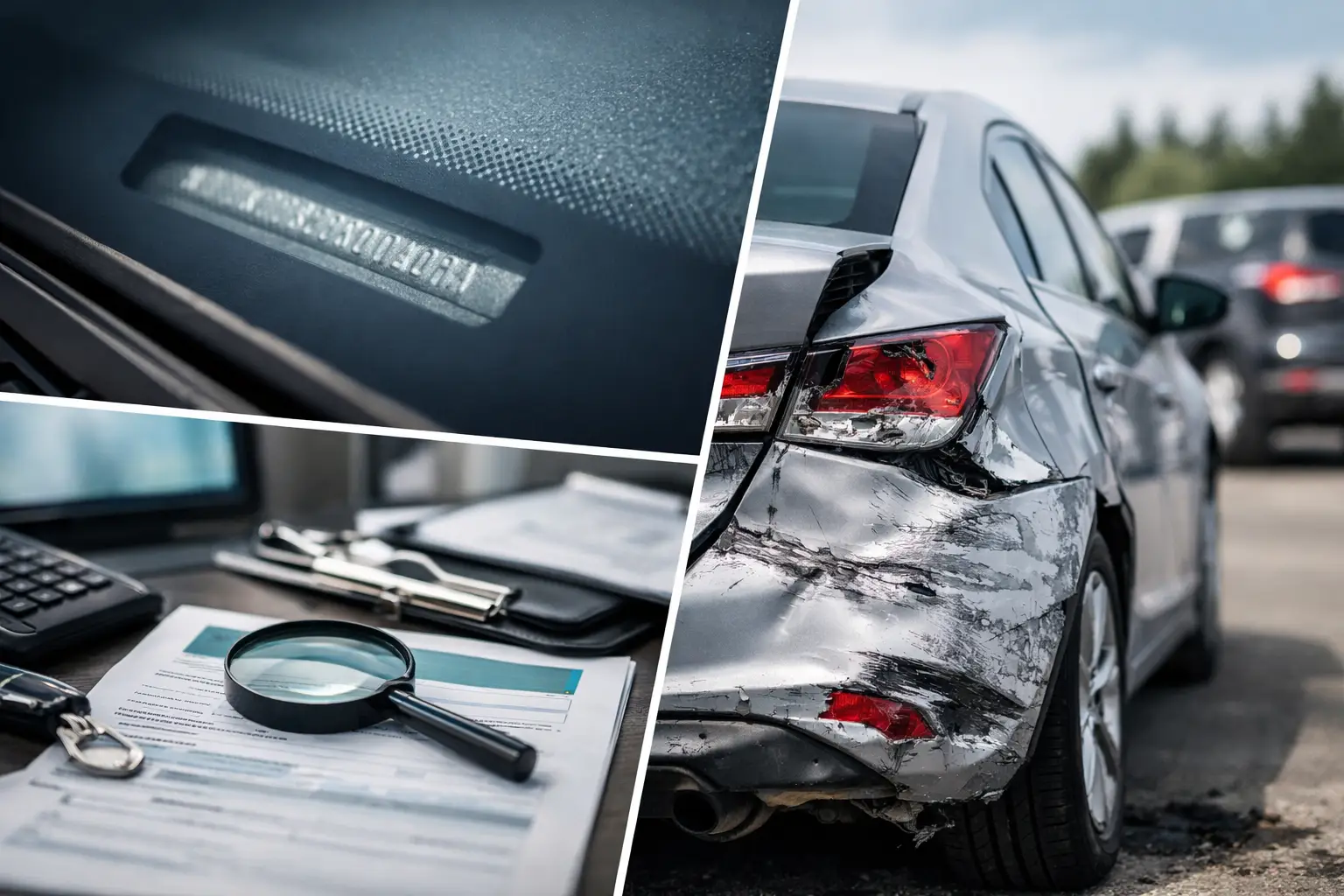
A clean vehicle history report can feel like a green light at the dealership or auction lane. But can VIN reports miss accidents? Yes. A report can only show damage that was documented and made available through its data sources. That makes VIN history a critical screening tool, not a replacement for a careful inspection, test drive, and purchase decision based on all available evidence.
For buyers, the gap matters because an unreported collision can affect safety, value, insurance, and resale. For dealers and fleet teams, it can create avoidable reconditioning costs, appraisal errors, and customer trust issues. The smart approach is not to dismiss VIN reports. It is to understand what they prove, where their limits are, and what to check next.
Why VIN Reports Can Miss Accidents
A vehicle history report is built from records generated by third parties. Those records may come from insurers, state motor vehicle agencies, repair facilities, auctions, law enforcement, salvage operations, inspection stations, and other contributing sources. If an incident never enters one of those systems, it may never appear on a VIN report.
The most common reason is a private repair. A driver backs into a pole, damages a bumper, and pays a local body shop in cash. No insurance claim is filed, no police report is created, and the shop may not submit repair information to a vehicle-history database. The repair can be professionally completed, but the accident may leave no reportable trail.
Minor collisions are also less likely to be documented. A scrape in a parking lot or a low-speed impact may cost enough to repair but not enough for the owner to involve an insurer. That does not automatically make the vehicle unsafe. It does mean a clean report cannot prove that the car has never been damaged.
Timing can create another gap. Records do not always appear immediately after an accident. An insurance claim, auction entry, title action, or repair record can take time to process and reach reporting systems. A report pulled today may look different weeks or months later as new data becomes available.
There are also differences in reporting practices. Not every insurer, shop, jurisdiction, or organization supplies the same type or depth of information. Some records identify damage without stating the severity. Others may report an accident date but provide no repair details. A VIN report reflects the records available for that specific vehicle, not a complete reconstruction of every event in its life.
A Clean Report Is Evidence, Not a Guarantee
The phrase “no accidents reported” is easy to misread. It usually means no accident record was found in the sources searched at the time the report was generated. It does not mean “the vehicle has never been in an accident.”
That distinction protects you from two bad decisions. The first is walking away from a good vehicle solely because it has one reported incident, even if the damage was minor and repairs were properly completed. The second is paying a clean-history premium for a vehicle with hidden repairs because the report was treated as a guarantee.
Severity matters more than the word “accident” alone. A documented rear bumper repair is not comparable to structural damage, airbag deployment, flood exposure, or a salvage title. Look at the full pattern: title status, odometer consistency, number of owners, maintenance records when available, auction history, valuation, recalls, and any damage entries. A single data point should not make the decision for you.
Signs of Prior Damage a VIN Report May Not Show
A report should guide your inspection. It tells you where to look harder and helps you identify risks that need verification. Even when it shows no accidents, inspect the vehicle for physical signs of prior repair.
Start outside in daylight, ideally when the car is clean and dry. Compare paint color and texture across adjacent panels. Slight differences in shade, metallic flake, gloss, or orange-peel texture can point to repainting. Repainted panels are not automatically a problem, but they deserve a question: why was this panel refinished?
Check panel gaps around the hood, trunk, doors, fenders, and headlights. Factory gaps are generally consistent. Uneven spacing, doors that require extra force to close, a hood that sits high on one side, or headlights that do not align cleanly can signal previous impact repair.
Look closely at fasteners under the hood and inside the trunk. Scratched bolts, mismatched hardware, missing clips, overspray on rubber seals, and fresh seam sealer can indicate parts were removed or replaced. Again, these clues are not proof by themselves. They are reasons to investigate further.
Inside the cabin, inspect airbag covers, dashboard panels, seat belts, and warning lights. Uneven dashboard trim, airbag covers with a different texture or fit, or a seat belt that retracts poorly can be warning signs. During the test drive, pay attention to pulling, vibration, steering-wheel alignment, unusual tire wear, and noises over rough pavement. These issues can have ordinary causes, but they can also reveal poor collision repair or unresolved suspension damage.
The Pre-Purchase Inspection Is the Deciding Step
If you are serious about a used vehicle, have an independent mechanic perform a pre-purchase inspection. This is especially valuable for vehicles with high mileage, premium pricing, a reported accident, signs of repainting, or a limited paper trail.
A qualified technician can put the vehicle on a lift, inspect the frame and underbody, measure tire wear, identify leaks, scan onboard systems, and spot repairs that are difficult to see from a parking lot. They can also assess whether visible repair work appears cosmetic or whether it affects structural components, suspension geometry, cooling systems, or safety equipment.
For auction buyers and dealers, inspection discipline needs to be repeatable. Build a process that combines VIN research, condition reports, photos, paint-meter readings when appropriate, diagnostic scans, and a reconditioning estimate. A low acquisition price can disappear quickly if hidden damage turns into alignment work, sensor calibration, airbag repairs, or a title problem.
How to Read an Accident Entry Without Overreacting
When a VIN report does show an accident or damage entry, ask practical questions before you decide the vehicle is a pass.
First, determine what is actually documented. Does the record identify the location of damage, airbag deployment, towing, structural damage, a total-loss event, or a salvage title? A vague “damage reported” entry requires more verification than a detailed record.
Next, compare the event date with ownership and mileage history. A collision early in the vehicle’s life followed by years of normal mileage, clean inspections, and stable ownership may present a different risk than a recent damage record with an immediate resale. Look for abrupt changes in mileage patterns, repeated auction appearances, title transfers across states, or a price that is unusually low for the market.
Then inspect the repair quality. Documentation such as invoices and photos can help, but physical inspection carries more weight. Quality repairs can restore a vehicle to dependable service. Poor repairs can create water leaks, premature tire wear, electronic faults, corrosion, and reduced resale value long after the body panels look acceptable.
Use Multiple Signals Before You Buy
The strongest buying decisions come from layered verification. Run the VIN before you invest time in a test drive. Confirm that the VIN on the dashboard, door label, title, and seller paperwork match. Review title brands, theft records, odometer history, recalls, ownership changes, and reported damage. Then inspect the vehicle and arrange a pre-purchase inspection.
A platform such as DriveEvidence can make this faster by putting vehicle history, valuation, recall information, and risk signals into one workflow, including a 0-100 DriveEvidence Score. The score is useful for prioritizing which vehicles deserve a closer look, particularly when comparing several listings or managing inventory. It should support your judgment, not replace verification of the actual vehicle in front of you.
Be direct with the seller. Ask whether the vehicle has had paintwork, body repairs, insurance claims, or airbag replacement. Ask for repair invoices and service records. An honest seller may not know every event from before their ownership, but evasive answers, mismatched paperwork, or resistance to an inspection are meaningful signals.
When a Clean VIN Report Still Deserves Extra Caution
Some situations justify a more conservative approach, even when no accident is listed. Be careful with a vehicle priced well below comparable listings, a recently titled vehicle with limited maintenance history, or a car showing fresh paint on multiple panels. The same applies to vehicles sold “as is” without allowing an independent inspection.
Pay added attention to late-model vehicles with advanced driver-assistance systems. A bumper, windshield, headlight, mirror, or suspension repair may require sensor calibration. If a prior repair was incomplete, the vehicle may show no obvious body damage while safety features do not operate as intended. A diagnostic scan and a technician familiar with the model can verify more than a visual walk-around.
For collectors and enthusiast vehicles, originality changes the equation. A clean report may matter, but original paint, factory panels, documented restoration work, and provenance can matter just as much. For fleet purchases, consistency matters more: establish inspection thresholds and reject units that cannot meet them, rather than making exceptions based on a seemingly clean report.
A VIN report gives you the proof that exists in the record. Your inspection, questions, and independent assessment help uncover what the record cannot. Treat both as part of the same safeguard, and you will make decisions based on evidence instead of assumptions.