A clean-looking SUV with a fair asking price can still be a bad deal. One undisclosed accident, branded title, odometer issue, or overdue repair can change its real value by thousands of dollars. The best ways to value used cars go beyond checking a single price estimate. They combine market data with verified evidence about the specific vehicle in front of you.
That distinction matters whether you are buying one car, stocking dealership inventory, bidding at auction, or reviewing a fleet asset. A market guide can estimate what a typical vehicle should sell for. It cannot tell you whether the vehicle you are considering is typical.
Best ways to value used cars accurately
A reliable valuation starts with the correct vehicle identity and ends with a number adjusted for condition, history, location, and likely ownership costs. Treat the advertised price as a claim to test, not a conclusion.
1. Start with the exact vehicle configuration
A year, make, and model is not enough. The same model can vary widely in value based on trim, drivetrain, engine, cab or body style, transmission, seating, packages, and factory equipment. A four-wheel-drive pickup, for example, should not be compared with a two-wheel-drive version just because both share the same badge.
Use the VIN to confirm the vehicle’s true configuration before pricing it. Verify the model year, trim, engine, drivetrain, and key options against the listing and the vehicle itself. Sellers sometimes use a higher trim in an ad, make assumptions about options, or carry forward incorrect details from an old listing.
For dealers and auction buyers, this step prevents a common inventory mistake: assigning a price based on the right model but the wrong build. For private buyers, it prevents paying premium-trim money for a base vehicle with cosmetic upgrades.
2. Compare local listings, not national averages
National price guides are a useful starting point, but used-car markets are local. Demand for all-wheel drive rises in snowy regions. Convertibles, trucks, hybrids, and luxury vehicles can move very differently by city, season, and fuel prices. Supply also matters. A vehicle with ten comparable listings nearby gives buyers leverage; a hard-to-find configuration may command more.
Look for recently listed and recently sold comparables within your market area. Match the year, trim, mileage range, condition, title status, and major equipment as closely as possible. Then separate retail asking prices from private-party prices, trade-in estimates, and wholesale auction values. These are different markets with different risk and reconditioning assumptions.
An asking price is especially important to interpret correctly. It shows what a seller wants, not necessarily what the market will pay. If comparable vehicles sit unsold for weeks and receive repeated price cuts, their original asking prices should not become your benchmark.
3. Adjust for mileage the right way
Mileage is one of the fastest ways to move a used-car valuation, but the adjustment is not a flat dollar amount per mile. A 20,000-mile difference can be substantial on a late-model vehicle and less meaningful on an older truck with strong demand and documented maintenance.
Start by comparing the vehicle’s mileage with the expected range for its age. A simple annual average gives context, but do not stop there. Consider how those miles were accumulated. Highway miles supported by consistent service records can be less concerning than lower mileage paired with long storage periods, incomplete maintenance, or irregular odometer readings.
Low mileage is not automatically a premium. A ten-year-old vehicle with unusually low miles may have aging tires, dried seals, a weak battery, stale fluids, or deferred maintenance. Value the whole ownership story, not the odometer number alone.
4. Put condition into dollars, not vague labels
“Excellent condition” in a listing has no standard meaning. Build your own condition adjustment based on what you can verify. Exterior damage, paintwork, interior wear, tire life, glass chips, warning lights, odor, missing keys, and worn brakes all affect the number.
A professional inspection is often the clearest way to turn uncertainty into a repair estimate. If the vehicle needs tires, brakes, suspension work, paint correction, or scheduled maintenance, price those items into your offer. Use realistic local repair costs, including parts, labor, taxes, and the time required to complete the work.
Condition also includes the quality of prior repairs. A repaired bumper is not necessarily a reason to walk away. Poor panel alignment, inconsistent paint texture, missing fasteners, active diagnostic codes, or water intrusion are different signals. The issue is not merely whether a repair occurred. It is whether the repair restored the vehicle safely and correctly.
5. Verify title and history before making a final adjustment
Vehicle history can have a larger effect on value than mileage alone. A clean title, consistent odometer record, stable ownership pattern, and documented service history generally support market value. Salvage, rebuilt, flood, lemon, or other branded titles can materially reduce it, even when the vehicle looks presentable.
Accident history requires judgment. Minor damage with clear documentation and sound repairs may warrant a modest adjustment. Structural damage, airbag deployment, repeated collision events, or an unclear repair record can affect safety, insurability, financing, resale value, and buyer confidence. Those risks should be reflected in the price.
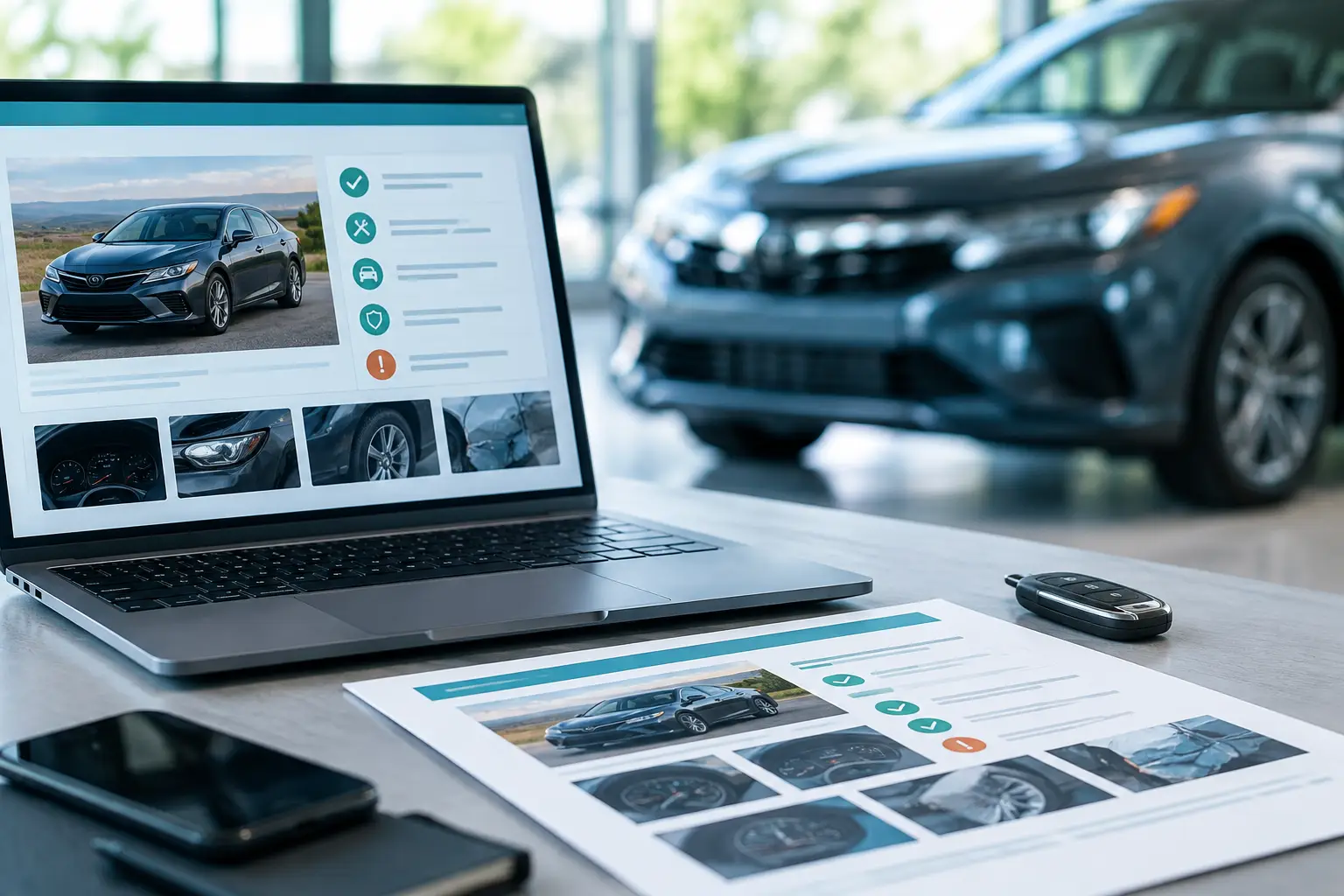
Use VIN-based records to check for title brands, theft or recovery records, reported accidents and damage, ownership history, and odometer consistency. Also verify open recalls. An unresolved safety recall does not always mean the car is worth less, since many recall repairs are completed at no charge, but it should be addressed before delivery or purchase.
DriveEvidence helps turn those separate records into a clearer decision with verified vehicle data and a 0-100 risk-based score. That is useful when comparing several candidates because the lowest-priced car is not always the lowest-risk car.
6. Separate retail value from your actual deal value
The vehicle may be priced fairly while the transaction is still expensive. Your actual deal value includes sales tax, title and registration fees, documentation fees, financing costs, warranty products, transport, inspection, and immediate repairs. A dealer’s advertised price may also exclude fees or incentives that not every buyer qualifies for.
For a private-party purchase, factor in the cost of handling title transfer, transportation, inspection, and any issues discovered after the sale. For dealers, include acquisition cost, transport, recon, lot time, flooring, warranty exposure, and expected gross. For fleet managers, add downtime, maintenance planning, fuel use, and replacement timing.
This is where a slightly higher-priced vehicle can be the better purchase. Paying $1,000 more for a clean-title vehicle with documented maintenance, healthy tires, no open issues, and stronger resale demand can be smarter than buying the cheapest comparable and immediately spending $2,500 to stabilize it.
7. Use a valuation range, then set a walk-away number
Used-car pricing is not precise enough for one magic number. Build a range: a low-end value for a quick sale or high-risk condition, a fair-market value for a properly documented vehicle in average condition, and a top-end value for an exceptional example with desirable equipment and strong records.
Then decide what the vehicle is worth to you after your own costs and risk tolerance. A buyer who needs dependable transportation may place more value on clean history and inspection results. A collector may pay more for originality and provenance. A dealer may pass on a retail-ready vehicle if the margin does not cover recon and market exposure.
Your walk-away number should be set before negotiation. If new evidence appears - a title issue, a mismatch in mileage, accident damage, or a repair estimate - revise the number. Do not let a long test drive, a persuasive seller, or fear of missing out replace the evidence.
When a book value is enough and when it is not
A book value can be enough for an initial screen, a routine trade estimate, or a clean, common vehicle with no obvious concerns. It is not enough when the price is unusually low, the vehicle has a complex history, the mileage is questionable, the title is branded, or the model is rare enough that ordinary comparables do not fit.
The more money, risk, or volume involved, the more important verification becomes. A first-time buyer may use it to avoid a costly mistake. An inventory manager may use it to keep a questionable unit from consuming recon dollars and lot time. The workflow is the same: confirm the vehicle, test the market price, price the condition, and verify the history.
A used car is worth what the market will support after the facts are known. Get those facts before money changes hands, and the right price becomes much easier to defend.