A used vehicle can look perfect on a dealer lot and still carry safety questions that a walk-around will not answer. Safety ratings by VIN help you identify how the vehicle was designed and tested, but they are only one part of the proof you need before money changes hands.
A strong crash-test record is valuable. It can show how a specific vehicle generation performed in controlled frontal, side, rollover, and crash-avoidance evaluations. But a five-star vehicle with unrepaired collision damage, an open recall, or missing safety equipment is not automatically a safe purchase. The smart move is to use VIN-based safety data as the starting point, then verify the vehicle's real-world history and condition.
What Safety Ratings by VIN Actually Tell You
A Vehicle Identification Number is a 17-character identifier tied to one individual vehicle. It can confirm the manufacturer, model year, model, body style, engine, assembly plant, and other production details. That identity data helps match the vehicle to the relevant safety information for its model year and configuration.
When you check safety ratings by VIN, you are usually not seeing a crash test performed on that exact vehicle. You are seeing published test results for the vehicle line, body style, and configuration that the VIN identifies. The distinction matters. Safety ratings describe the original design and tested performance of a vehicle model. Vehicle history and inspection findings describe the condition of the individual vehicle in front of you.
For buyers, that match is still useful. A VIN can prevent a common research mistake: looking up ratings for the wrong model year, a redesigned generation, or a different body style. For dealers and fleet teams processing inventory at speed, VIN matching reduces manual lookup errors and creates a more consistent appraisal process.
The Main Sources Behind Vehicle Safety Ratings
In the United States, the two most recognized sources are the National Highway Traffic Safety Administration and the Insurance Institute for Highway Safety. Their methods are different, so their results should be read together rather than treated as interchangeable.
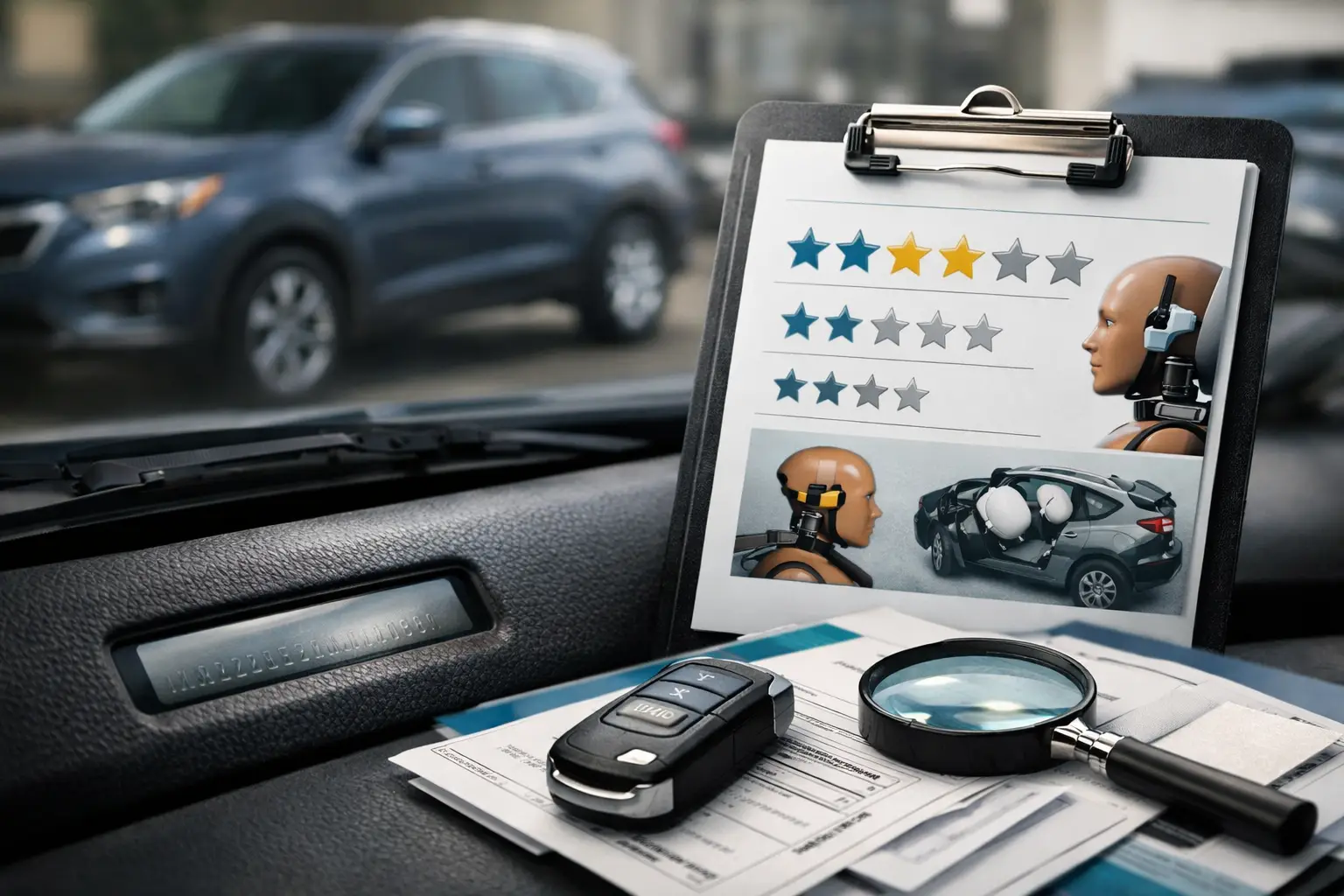
NHTSA's New Car Assessment Program uses a five-star scale. Its evaluations may include frontal crash, side crash, and rollover resistance. A higher overall star rating is generally favorable, but buyers should also look at the component scores. A vehicle with a strong overall score may have a weaker result in one category that matters to your driving needs.
IIHS ratings use categories such as Good, Acceptable, Marginal, and Poor for crashworthiness tests. It also evaluates crash avoidance technology and, for many vehicles, headlight performance. These details can reveal differences that an overall score alone may hide, especially between trims with different standard driver-assistance equipment.
Why the Exact VIN Match Matters
Automakers frequently make changes that seem small in an advertisement but matter in a safety review. A sedan may receive a mid-cycle redesign. A crossover may add automatic emergency braking only on higher trims. A two-door version can perform differently from a four-door model, even when both share a nameplate.
The VIN helps establish which vehicle you are actually researching. Start by confirming the model year, body style, drivetrain, and trim or equipment details available in the vehicle specifications. Then review safety ratings that apply to that exact generation and configuration.
Still, a VIN cannot solve every matching issue. Public crash testing may cover only certain versions of a model, and rating organizations sometimes change their test criteria. A 2018 vehicle with a top rating under its original protocol should not be compared directly with a 2025 vehicle tested under newer, tougher standards. The older vehicle may still be a solid choice, but the label alone does not make the comparison fair.
What Safety Ratings Do Not Reveal
Crash-test data cannot tell you whether the vehicle has remained safe since it left the factory. That is where many used-car decisions go wrong. Buyers see a strong rating and stop asking questions.
A vehicle can have excellent factory engineering and still have issues that compromise its protection. Prior structural damage, poor-quality repairs, deployed airbags, flood exposure, warning lights, worn tires, and unresolved recalls all require separate investigation. So does equipment verification. If a rating or award depends on a particular crash-prevention feature, confirm that the vehicle actually has it.
Pay close attention to these four gaps between a model rating and a vehicle's current condition:
- Accident and damage history: Collision records can signal repairs that deserve a closer inspection, particularly when the impact involved the front end, side structure, roof, or undercarriage.
- Title status: Salvage, rebuilt, flood, or other branded titles can change the risk profile dramatically, even if the vehicle's original model earned high safety marks.
- Open recalls: A recall may involve airbags, braking, fuel systems, steering, or other components. A vehicle is not fully evaluated until you know whether the repair has been completed.
- Safety equipment status: Airbags, cameras, sensors, seat belts, tires, and advanced driver-assistance features need a hands-on check. A VIN report can identify expected equipment, but it cannot replace a qualified inspection.
This is not a reason to dismiss safety ratings. It is a reason to use them correctly. They measure the vehicle's baseline design. The rest of your research determines whether that baseline has been preserved.
A Better VIN Safety Check Before You Buy
An efficient review does not require opening a dozen tabs or relying on a seller's description. Build a repeatable process around the VIN so every candidate is evaluated against the same standard.
First, decode the VIN and compare the returned specifications with the vehicle itself. Confirm the model year, trim, body style, engine, and drivetrain. If anything conflicts with the listing, window sticker, or badges, pause the deal until the discrepancy is explained.
Next, review applicable crash-test and crash-avoidance ratings. Look beyond the headline score. If you regularly carry children, side-impact performance and rear-seat considerations may deserve more weight. If you drive long highway routes, headlights and front crash-prevention features may matter more. For a truck or SUV, rollover resistance and stability-control history should be part of the conversation.
Then check open recalls and title history. An open recall is not always a deal-breaker, particularly if the repair is available and can be completed quickly. A branded title is not automatically disqualifying either, but it changes the burden of proof. You should expect documentation, a thorough inspection, and a price that reflects the added uncertainty.
After that, review accident history, ownership records, odometer consistency, and maintenance evidence where available. A clean history report does not guarantee a clean vehicle, but conflicting mileage entries, repeated damage events, or unexplained ownership patterns are reasons to investigate further.
Finally, arrange an independent pre-purchase inspection. Ask the technician to focus on the areas that the history and safety review made relevant: structural repair quality, restraint-system codes, suspension damage, tire condition, ADAS sensor calibration, and signs of water intrusion. This turns data into a decision rather than just a report.
How to Compare Two Vehicles With Similar Ratings
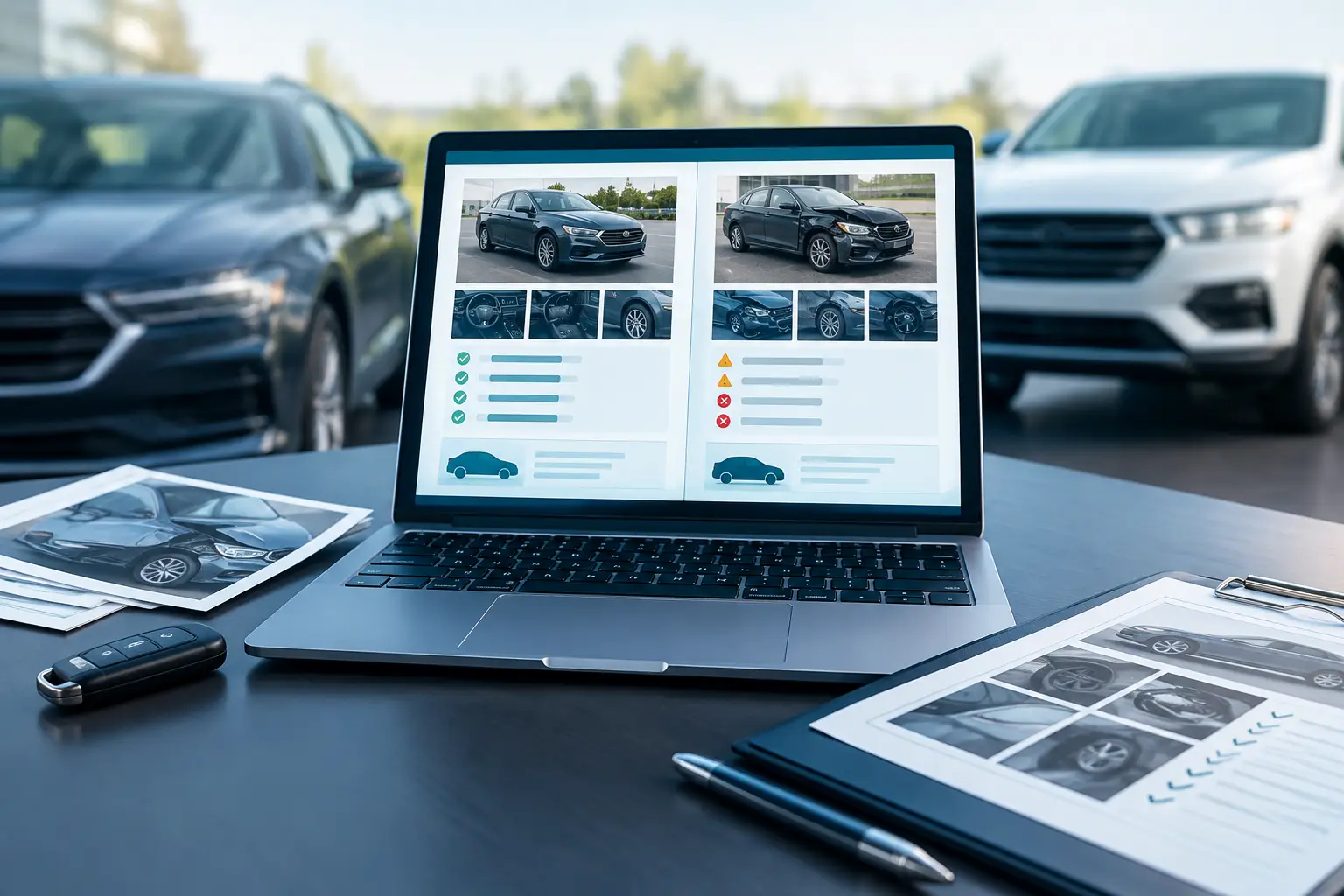
Two vehicles can both earn favorable safety ratings yet present very different buying risks. One may have one owner, consistent odometer records, no title brands, and a documented recall repair. The other may have a high rating on paper but a rebuilt title, a prior airbag deployment, and missing service records. The first vehicle is usually the easier decision, even if both began with similar factory safety credentials.
This is where a side-by-side workflow pays off. Instead of evaluating one report at a time, compare safety results with accident records, title status, recalls, specifications, market value, and risk indicators in one view. DriveEvidence is built for that type of decision, helping buyers, dealers, and fleet managers separate a good-looking listing from a vehicle supported by evidence.
Price should also be part of the comparison. A lower-priced vehicle with a weaker rating may be acceptable for some budgets if its condition and history are clean. But the savings should be real enough to account for the trade-off. Do not let a small discount persuade you to accept unresolved safety questions or incomplete records.
When a Strong Safety Rating Should Not Close the Deal
There are several situations where you should slow down, regardless of the model's rating. A seller who will not provide the VIN, a report that conflicts with the listing, an active warning light, or evidence of major repair without invoices all deserve attention. So does a vehicle with safety features that appear disabled, damaged, or unavailable due to parts shortages.
For auction buyers and inventory managers, the same rule applies at scale: score the risk, not just the model. Use safety ratings to establish a vehicle's design potential, then let title history, damage records, recalls, mileage, and inspection findings determine whether that particular VIN meets your buying standard.
The best used-car decision is rarely based on one number. Let safety ratings guide your shortlist, then require the history, documentation, and inspection results that prove the vehicle is still worthy of that rating.