A clean-looking used car can still carry a salvage brand, a lien problem, or a stolen-vehicle record that turns a good deal into an expensive mistake. The best title check tools help buyers and inventory teams verify what the vehicle is before money changes hands, using the VIN rather than a seller's description.
Title research is not one single database or one universal answer. Different tools pull from different reporting networks, refresh at different intervals, and reveal different parts of the record. A smart process uses the right source for the question at hand, then treats conflicting information as a reason to investigate further.
What a title check should verify
A useful title check starts with identity. Confirm that the 17-character VIN on the dashboard, driver-side door label, title paperwork, and listing all match. A report cannot protect you if the VIN entered is wrong or if a vehicle has been altered.
From there, look for title status and brands. A brand is a permanent or semi-permanent label attached to a vehicle record, such as salvage, rebuilt, flood, junk, lemon, hail damage, or odometer discrepancy. The exact terminology and reporting rules vary by state, so the label alone is not always the whole story. A rebuilt title, for example, may be legal to register and insure, but it still calls for repair documentation, a close inspection, and pricing that reflects the risk.
The strongest checks also look beyond the title. Theft and recovery records, accident or damage events, odometer readings, prior registrations, open recalls, and liens can change whether a car is worth pursuing. Title status is a critical signal, not a substitute for a mechanical inspection or a test drive.
The 8 best title check tools for different needs
1. NMVTIS-based vehicle history reports
The National Motor Vehicle Title Information System is the central federal framework for title data reported by state motor vehicle agencies, salvage yards, insurers, and other qualifying sources. Consumer-facing providers that access NMVTIS are often the most direct option when your priority is title history, state-issued brands, odometer data, and total-loss or salvage information.
For a buyer who needs a fast title-focused screen, this is usually the logical starting point. Read the provider's coverage description carefully. NMVTIS is valuable, but a report may not capture every event instantly, and it does not replace records held by a specific state DMV.
2. State DMV title and lien services
When a transaction is close to closing, the issuing state's DMV or equivalent motor vehicle agency is the authority that matters most for current title transfer requirements. Some states offer online VIN, title, registration, or lien inquiry services. Others require a written request, a seller authorization, or an in-person visit.
This step is especially useful when the seller claims the title is clean but the paperwork looks unusual, when an out-of-state title is involved, or when you need to verify whether a lien release is valid. Do not assume a paper title proves ownership is clear. Ask to see the lien release and verify the process required to transfer the vehicle in your state.
3. NICB VINCheck
NICB VINCheck is a free screening resource for vehicles reported as stolen but not recovered and, in certain cases, vehicles reported as salvage by participating insurers. It is a practical early check when a price is suspiciously low, a seller refuses to provide documents, or a vehicle has moved through private-party listings quickly.
Its limitation is equally important: a no-record result does not certify that a vehicle is not stolen or free of title issues. It is a targeted fraud screen, not a complete history report. Use it to identify a major red flag, then pair it with title data and documentation review.
4. DriveEvidence VIN reports and comparison dashboard
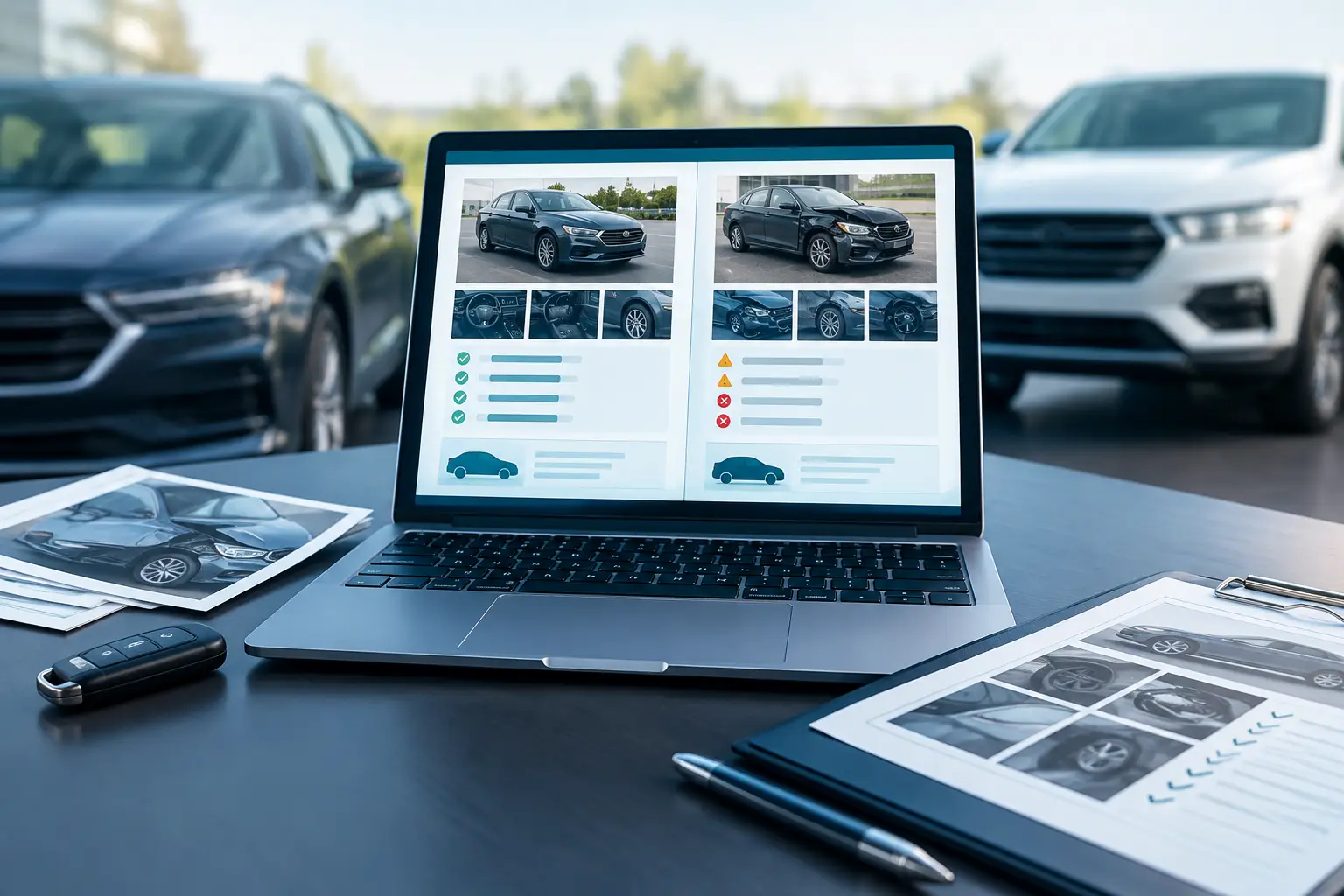
A multi-record platform is most useful when you are evaluating more than one vehicle. DriveEvidence combines VIN-based title status and brands with damage, theft and recovery, ownership, odometer, recall, specifications, valuation, and safety information. Its DriveEvidence Score turns multiple risk signals into a 0-100 decision aid, while the dashboard lets users save, compare, sort, and export vehicles instead of reviewing disconnected reports one at a time.
That workflow matters for dealers, auction buyers, and consumers comparing several listings. A score should direct attention, not replace judgment. Open the supporting details behind a low score, confirm the title status, and decide whether the price and documentation justify further inspection.
5. Commercial vehicle history reports
Broader commercial history reports can add useful context around reported accidents, service history, registration events, prior use, and title information. They are often a good fit for a buyer who wants one report that goes beyond title records, particularly for newer vehicles with a deeper service and insurance footprint.
The trade-off is cost and interpretation. More data does not automatically mean more certainty. An accident-free report does not prove an accident never occurred, and a gap in reported maintenance does not prove neglect. Look for consistency between the report, seller disclosures, repair invoices, and the condition of the vehicle.
6. Auto auction condition reports
For dealers and frequent auction buyers, an auction condition report can expose issues that a title tool cannot show clearly: frame concerns, panel damage, warning lights, tire condition, key count, and visible signs of prior repair. It is particularly valuable on vehicles with a salvage, rebuilt, or branded history because the title explains the status, while the condition report may show the current result.
Condition reports have limits too. They are observations at a point in time and may be based on a limited inspection. Review photos closely, understand the auction's arbitration rules, and calculate transport, repair, title, and resale costs before placing a bid.
7. Recall lookup tools
A recall lookup is not a title check, but it belongs in the same pre-purchase workflow. Open safety recalls can affect safety, time to delivery, and buyer confidence. Some recalls have straightforward repairs, while others may require unavailable parts or dealership scheduling.
Check recalls by VIN, not only by model year. A model may have a recall campaign, but a specific vehicle could already have received the remedy. For a dealer, documenting the status before retailing the vehicle helps avoid last-minute surprises.
8. A title company or attorney for complex ownership cases
Most transactions do not require legal help. But when there is a missing title, deceased owner, disputed ownership, unreleased lien, abandoned vehicle claim, imported vehicle, or a seller who cannot explain the chain of ownership, automated tools are not enough.
A qualified title company, DMV specialist, or attorney can explain the applicable state process and identify documents needed to transfer ownership legally. This is slower and more expensive than a VIN lookup, but it is far less expensive than buying a vehicle you cannot title.
How to choose the right tool
Choose based on the decision you need to make. A private buyer considering one clean-title car may begin with an NMVTIS-based report, theft screening, recall lookup, and a VIN-matched document review. If the report or paperwork raises questions, move to the relevant DMV before paying.
A dealer or fleet buyer needs a repeatable system. The priority is not simply obtaining reports faster. It is sorting a group of vehicles by risk, spotting branded-title exposure, comparing valuations against condition, documenting decisions, and escalating exceptions before acquisition. Dashboard-based tools are better suited to that workload than a one-off report workflow.
For salvage or rebuilt vehicles, use more than one source every time. Verify the brand, inspect repair quality, request before-and-after photos and parts invoices, assess insurability, and check local rules for registration. The purchase price may look attractive because the vehicle carries permanent resale and financing disadvantages.
Red flags that deserve a stop, not a guess
Pause the deal when the VIN differs across documents, a seller will not show identification or title paperwork, a lien release is missing, or the title appears altered. Also stop when the report shows a title brand the seller did not disclose, odometer records move backward, or the vehicle's condition conflicts with the claimed history.
A delayed record is possible. So is a reporting error. Neither is a reason to ignore a discrepancy. Ask for documentation, contact the appropriate DMV when necessary, and make the seller resolve ownership questions before you release funds.
The right title tool does not tell you what to buy. It gives you proof, exposes the questions worth asking, and helps you walk away before a hidden record becomes your problem.