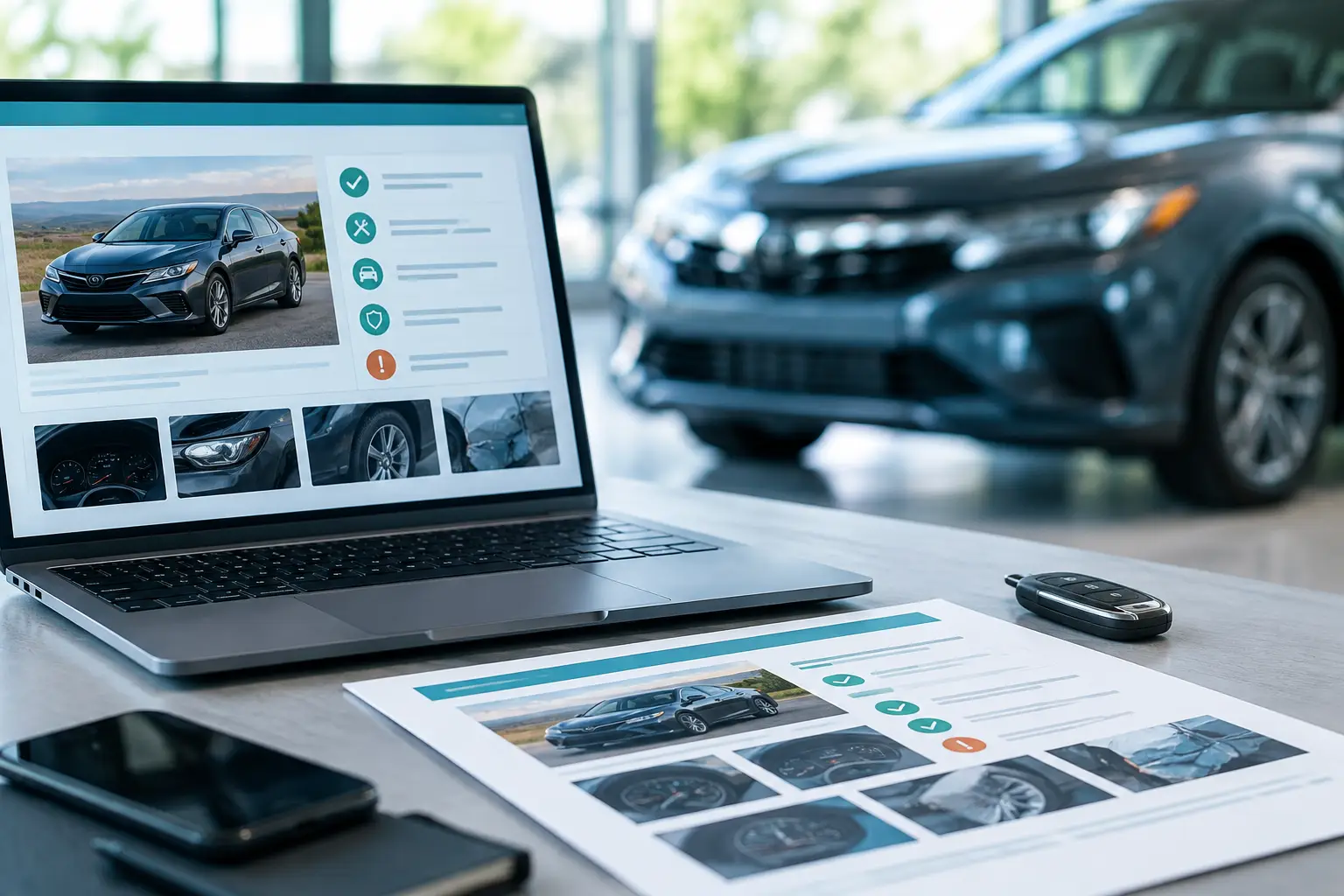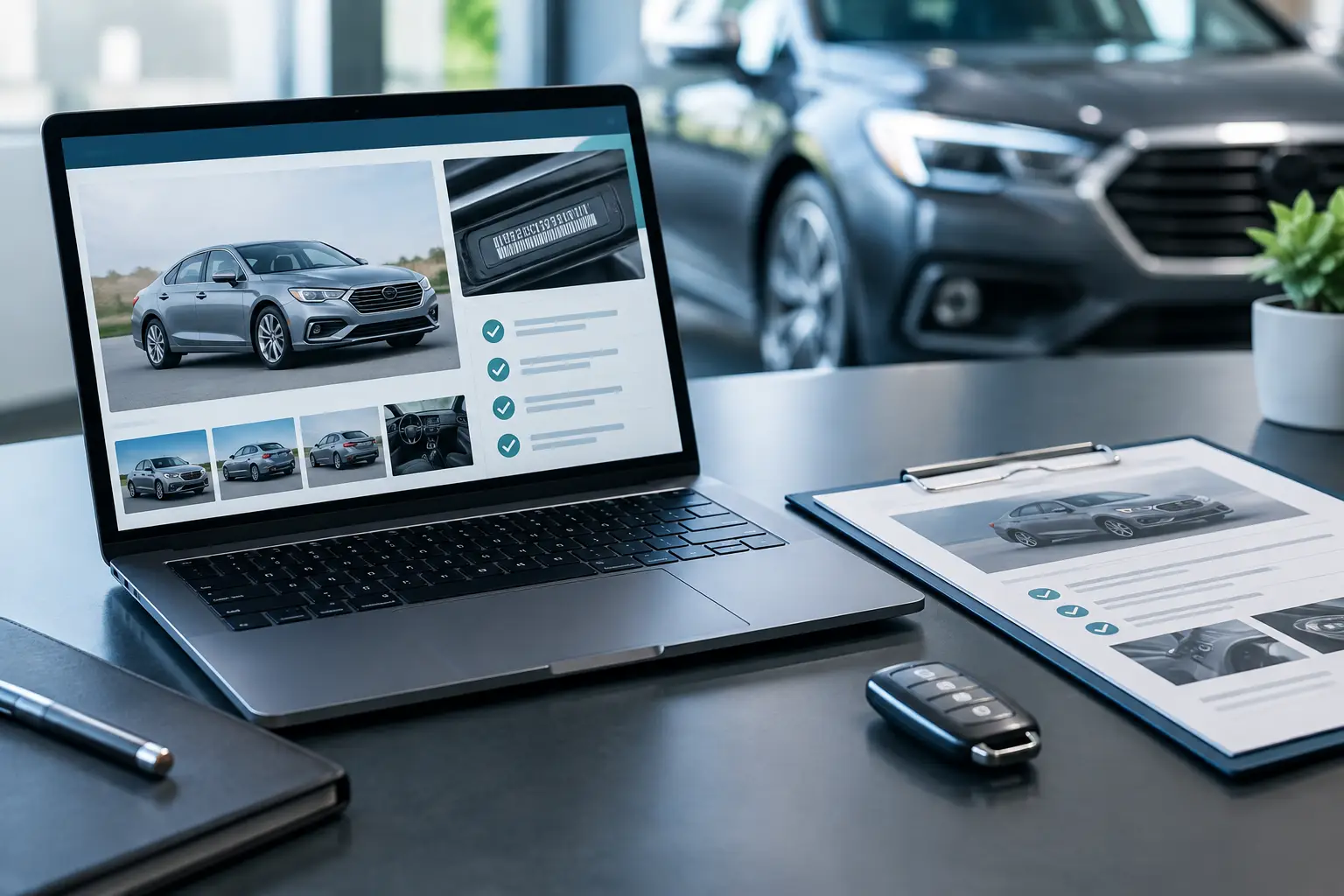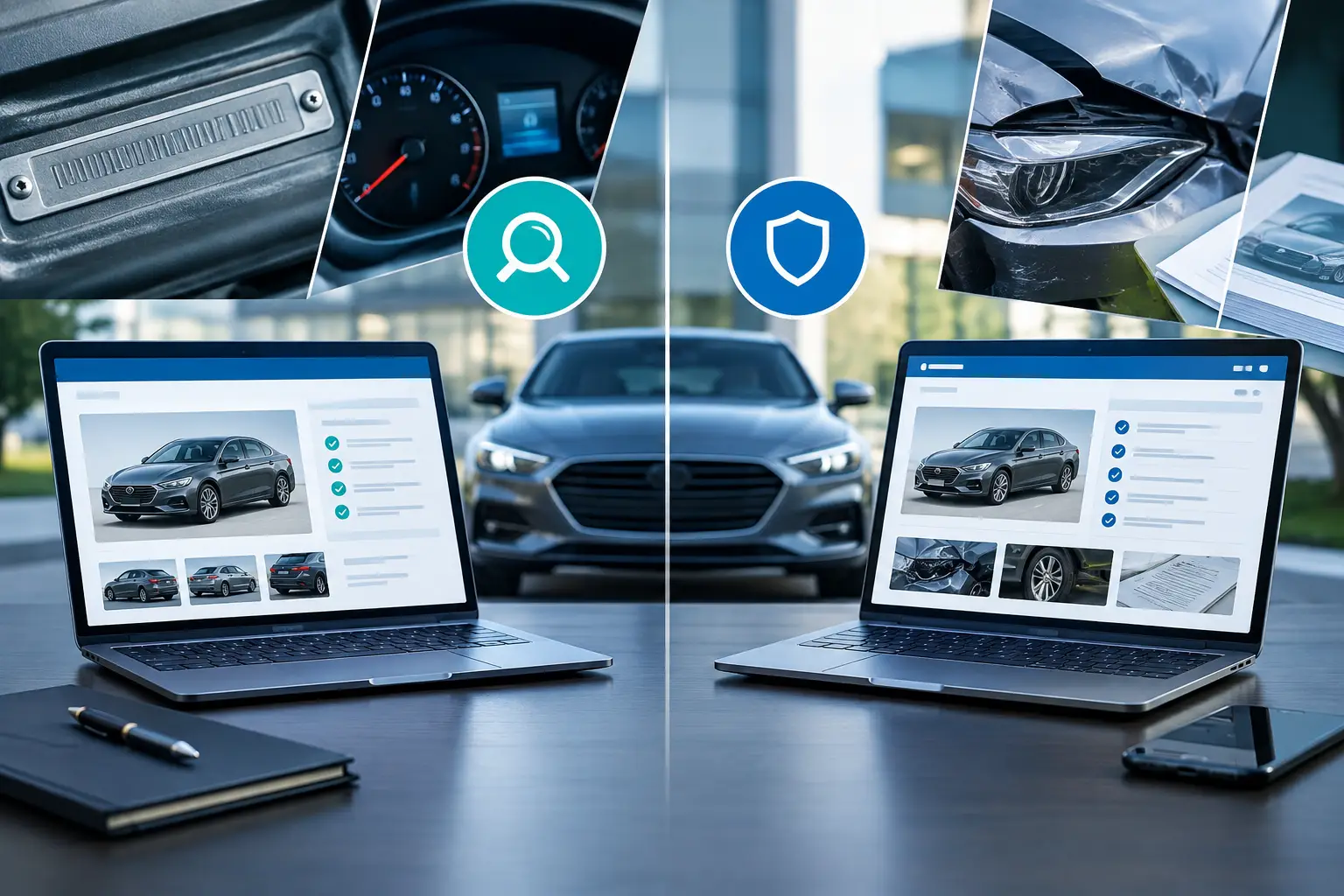
A used car can look clean in photos, sound fine on a test drive, and still carry a branded title, mileage problem, or unrepaired recall. That is why so many buyers start with vehicle history reports free online. The move makes sense. A free lookup can surface basic facts fast and help you rule out obvious risks before you spend more time or money.
But free does not mean complete, and it definitely does not mean verified across every source that matters. If you are comparing vehicles seriously, buying at auction, stocking inventory, or trying to avoid a costly mistake, the real question is not whether free data is useful. It is how far it gets you before you need stronger proof.
What vehicle history reports free online can actually tell you
A free VIN lookup usually gives you a starting layer of vehicle intelligence. Depending on the provider, that may include year, make, model, engine, trim, body style, drivetrain, and basic equipment details. Some platforms also show open recalls, safety information, or a limited title check.
That is valuable for one simple reason: it helps confirm the car in front of you matches the VIN being advertised. If the seller says the vehicle is a higher trim, has a different engine, or carries features that do not line up with the decoded VIN, you already have a reason to slow down.
In some cases, free tools also reveal whether a vehicle has been reported stolen, marked as salvage, or tied to a total loss record. Those are meaningful flags. Even one of them can change the deal, the financing options, the insurability, and the resale value.
For shoppers early in the process, that kind of screening is efficient. You can check multiple candidates quickly and avoid wasting energy on cars with immediate disqualifiers.
Where free vehicle history reports online fall short
The gap usually comes down to depth, recency, and context.
A free report may tell you a vehicle has a title brand, but not explain when it happened, what event triggered it, or how that history affects market value. It may mention an accident record without showing severity, damage location, airbag deployment, or whether there were later inspections and repairs. It may decode the VIN perfectly while missing ownership patterns, lien signals, auction events, odometer inconsistencies, and regional data that never made it into a basic feed.
That matters because vehicle risk is rarely one data point. It is the pattern.
A car with one minor damage event and clean mileage may still be a solid buy at the right price. A car with frequent transfers, mileage anomalies, title movement across states, and an insurance loss on record is a different story. Free reports often show fragments. Buyers need the full chain.
Professionals feel this limitation even more. If you are reviewing ten or twenty VINs, disconnected basic checks create friction. You end up copying notes into spreadsheets, revisiting each record, and trying to compare risk manually. That is slow, and slow decisions cost money.
The smartest way to use free reports
Use free data as a filter, not a final decision tool.
Start with the VIN before you call, visit, or bid. Confirm the vehicle specs. Check for open recalls. Look for obvious title brands or theft records. Compare that information against the seller's listing, photos, and description. If anything conflicts, ask direct questions early.
This step is especially useful in high-volume shopping. Maybe you are cross-shopping compact SUVs under a budget. Maybe you are a dealer scanning fresh inventory. Maybe you are a fleet buyer looking for replacement units with clean operating histories. In each case, free checks help narrow the field.
Once a vehicle makes the short list, the standard changes. At that point, basic data is not enough. You need report depth that can support a buy, no-buy, or price-adjustment decision.
What a premium report should add
A serious vehicle history platform should move beyond raw records and help you interpret risk.
That means accident and damage history with clearer event timing, title status and brands, theft and recovery records, ownership history, odometer verification, market valuation context, safety ratings, and open recalls in one place. Just as important, it should make the report easy to scan. Buyers do not need more noise. They need evidence they can act on.
This is where scoring models become useful if they are built well. A score should not replace the underlying data, but it can help prioritize attention. For example, a vehicle with a stronger overall history profile may deserve faster review, while a lower score tells you to inspect the title chain, mileage trail, or damage events before moving forward.
That is the logic behind platforms like DriveEvidence, which combine verified records with a clear risk score and a dashboard built for side-by-side comparison. For a single shopper, that means less guesswork between two similar cars. For dealers and fleet teams, it means faster triage across many VINs without losing detail.
How to spot red flags free reports often miss
The biggest mistake buyers make is treating an absence of bad news as proof of a clean car. Records can be delayed, incomplete, or uneven across jurisdictions and reporting sources. A quiet free check is not the same as a low-risk vehicle.
Watch for seller behavior that does not match the data. If the VIN lookup shows one trim and the listing claims another, ask why. If mileage is oddly low for the age but there is no service trail or ownership pattern to support it, do not assume it is a lucky find. If the title is clean today but the vehicle moved through multiple states in a short period, look closer.
Pricing can also expose risk. A vehicle listed far below market may have a hidden problem that basic checks do not fully explain. Sometimes that problem is structural damage. Sometimes it is title branding. Sometimes it is simply a car the seller wants gone before a buyer asks harder questions.
For dealers, there is a separate operational red flag: inconsistent appraisal logic. If your team evaluates one VIN with a full report and another with only a free check, your inventory decisions stop being consistent. That creates margin risk on both acquisition and resale.
When free online history is enough, and when it is not
If you are casually browsing and just want to verify that a VIN matches the advertised vehicle, free is enough for the moment. It is also useful for checking recalls or screening out obvious salvage and theft issues before you engage further.
If money is about to change hands, the threshold changes.
A private-party purchase, auction bid, trade-in appraisal, collector review, or fleet acquisition deserves more than a surface-level lookup. The higher the transaction value or the larger the batch of vehicles, the less sense it makes to rely on incomplete data. What looks like savings on report cost can turn into overpayment, surprise reconditioning, title trouble, or a vehicle that sits because the story does not hold up.
That is the real trade-off. Free tools save time at the top of the funnel. Better reports protect decisions near the bottom.
What to look for in a reporting platform
Choose a platform that is clear about what is free, what is paid, and where the data comes from. Transparency matters. If a provider is vague about coverage, update timing, or report scope, assume you may be missing something important.
Speed matters too, but usability matters just as much. A good platform should let you review multiple vehicles, compare them directly, and keep your research organized. That is not just a convenience feature. It reduces decision fatigue and lowers the chance that a meaningful warning gets lost across tabs and screenshots.
For professionals, export options and shared workflows are worth paying attention to. For consumers, a clean score and straightforward report layout can make the difference between seeing a red flag and missing it.
The best approach is simple: use free online history checks to screen fast, then escalate to verified, decision-ready reporting before you buy. The goal is not to collect more data for its own sake. It is to know the truth before the deal gets expensive.